
Kingsbury Episcopi: The Secret Heart of Somerset’s Cider Land
Apples, Oak, and 'Time Travellers': A Day in Ciderland
Some places are special. It’s a fact of life, but one that is difficult to prove because often you cannot put your finger on exactly why a certain place might be exceptional. However, we all come across locations which somehow boast an extra pizzazz and I reckon there ought to be some kind of British listing of such places.
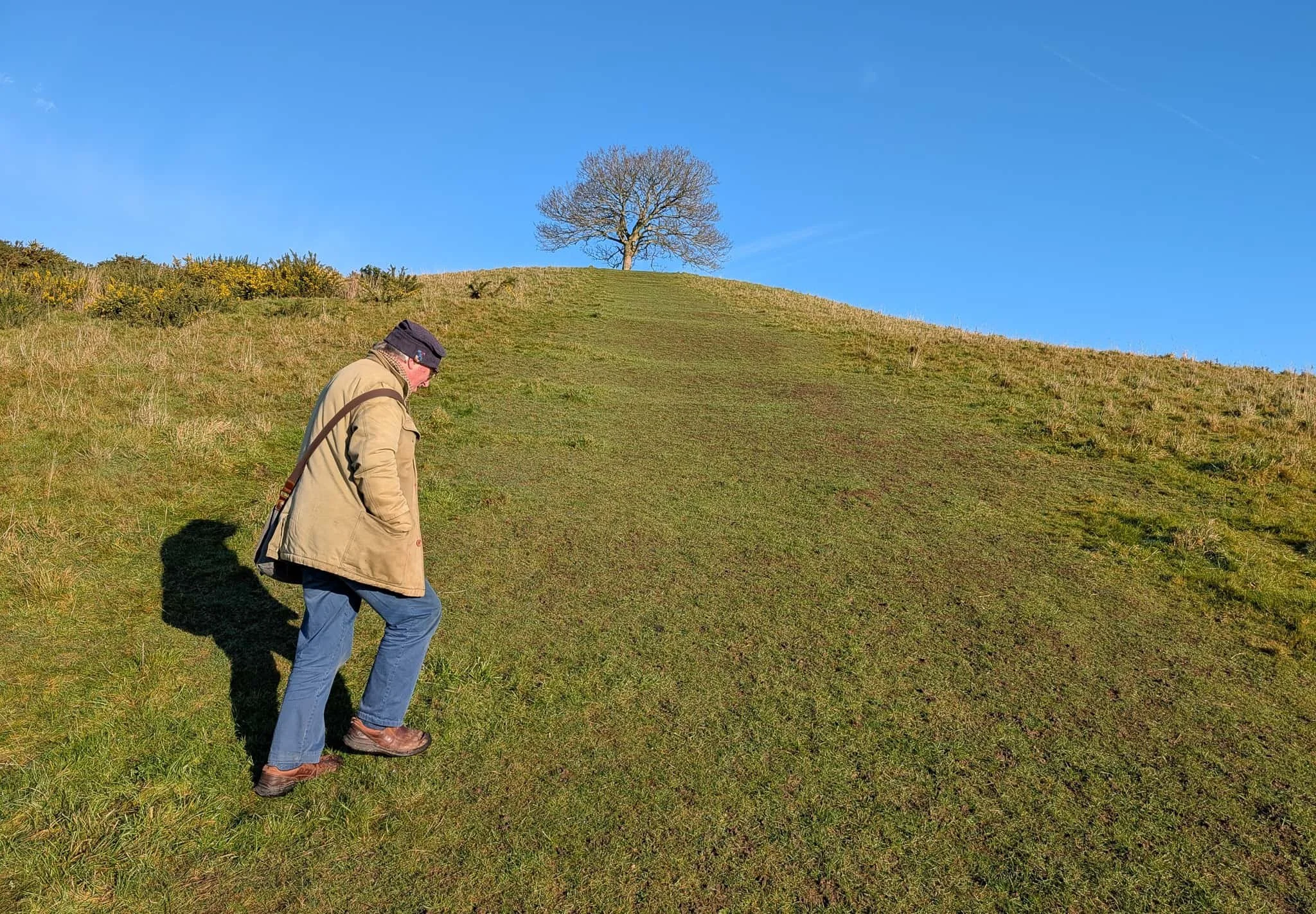
James Crowden climbs one Tree Hill
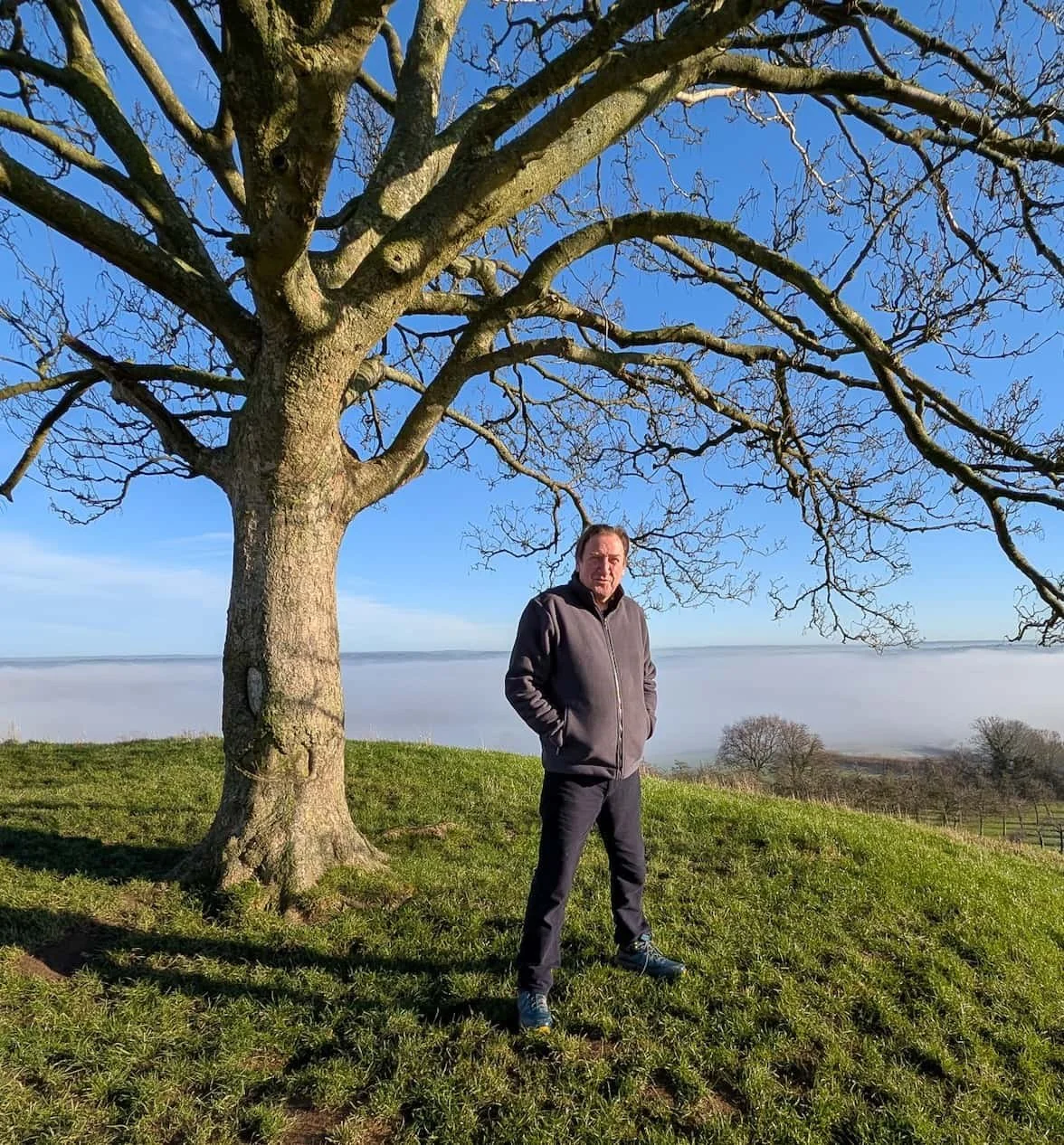
Kingsbury Episcopi would be high on the list. That’s what I was thinking as I stood on a small but remarkable West Country eminence one sunny morning this week looking down at a sea of thick mist which shrouded the Somerset Levels. One Tree Hill is a dome-shaped job crowned, as its name suggests, by a single tree…
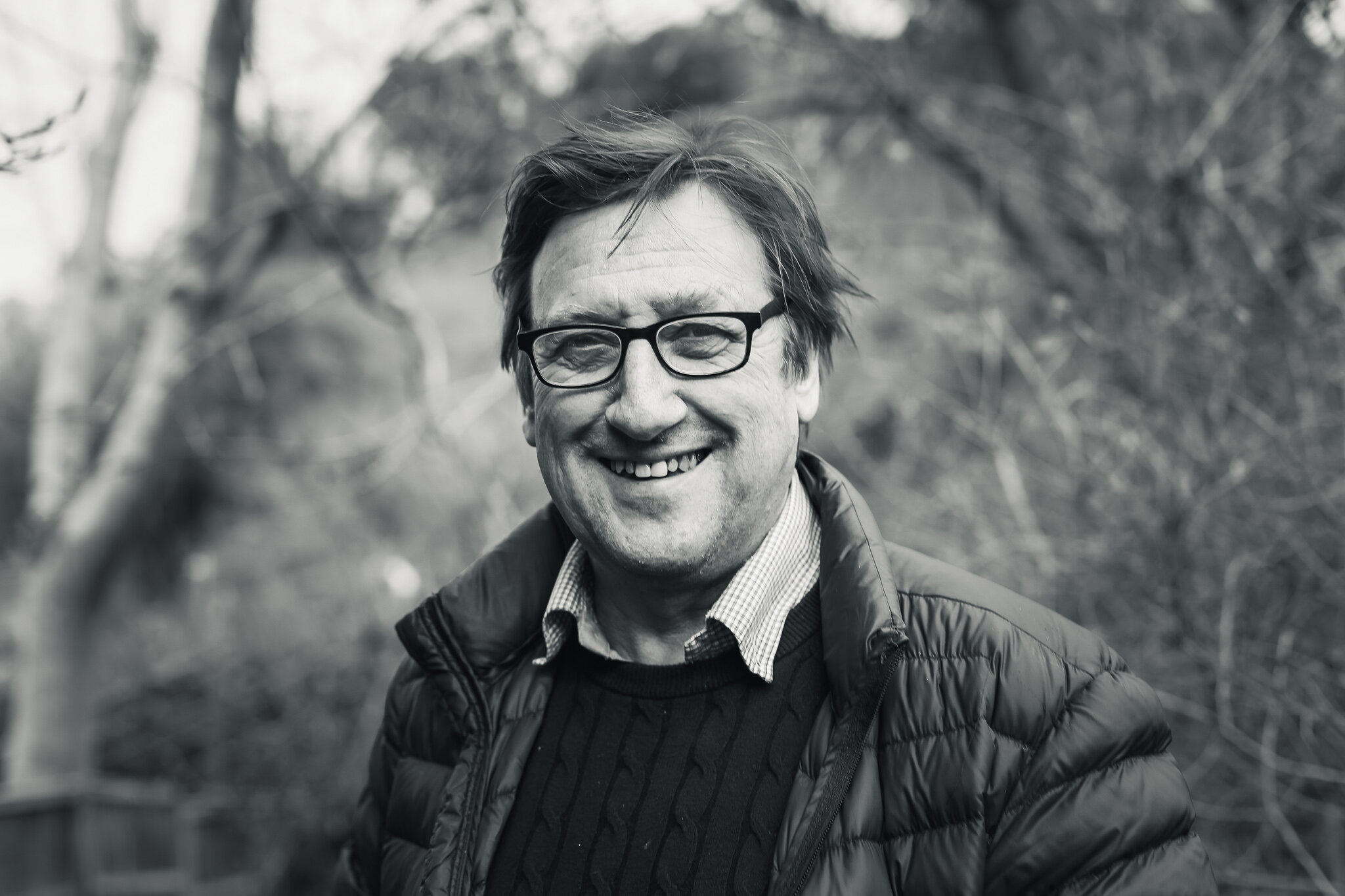
I’d been invited to the parish of Kingsbury Episcopi by James Crowden, who’ll be well known to readers as a poet, writer, and historian - and quite relevantly in this particular case, author of the best selling book Ciderland. James occasionally invites me on days out which never fail to be interesting... The sort of day most people would probably not be able to enjoy, unless they had some special “way in”. You need to know the right people, and when it comes to a great many corners of this region, James does seem to know everyone.
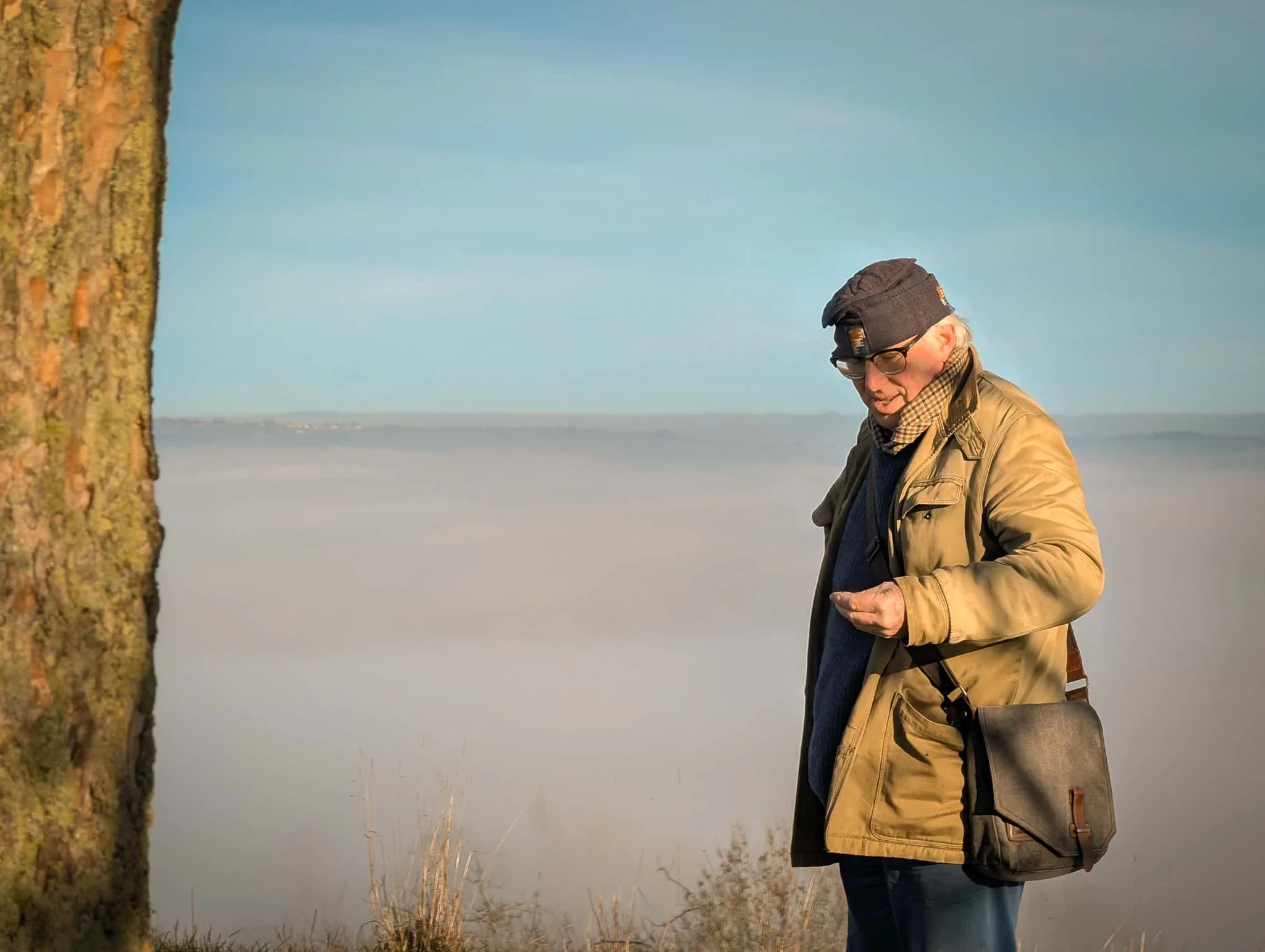
James Crowden muses over Ciderland
The theme of our Kingsbury Episcopi adventure was this: that the parish isn’t just a place where cider is made - it’s the heart of the cider world. An orchard-laden landscape full of history, from the ancient folksongs collected by the famous Cecil Sharp, to specific apple varieties (like Lambrook Pippin and Dabinett). Our visit was to be framed as a journey through the inhabitants of this cider-land, from the legendary Julian Temperley to local historians and publicans.
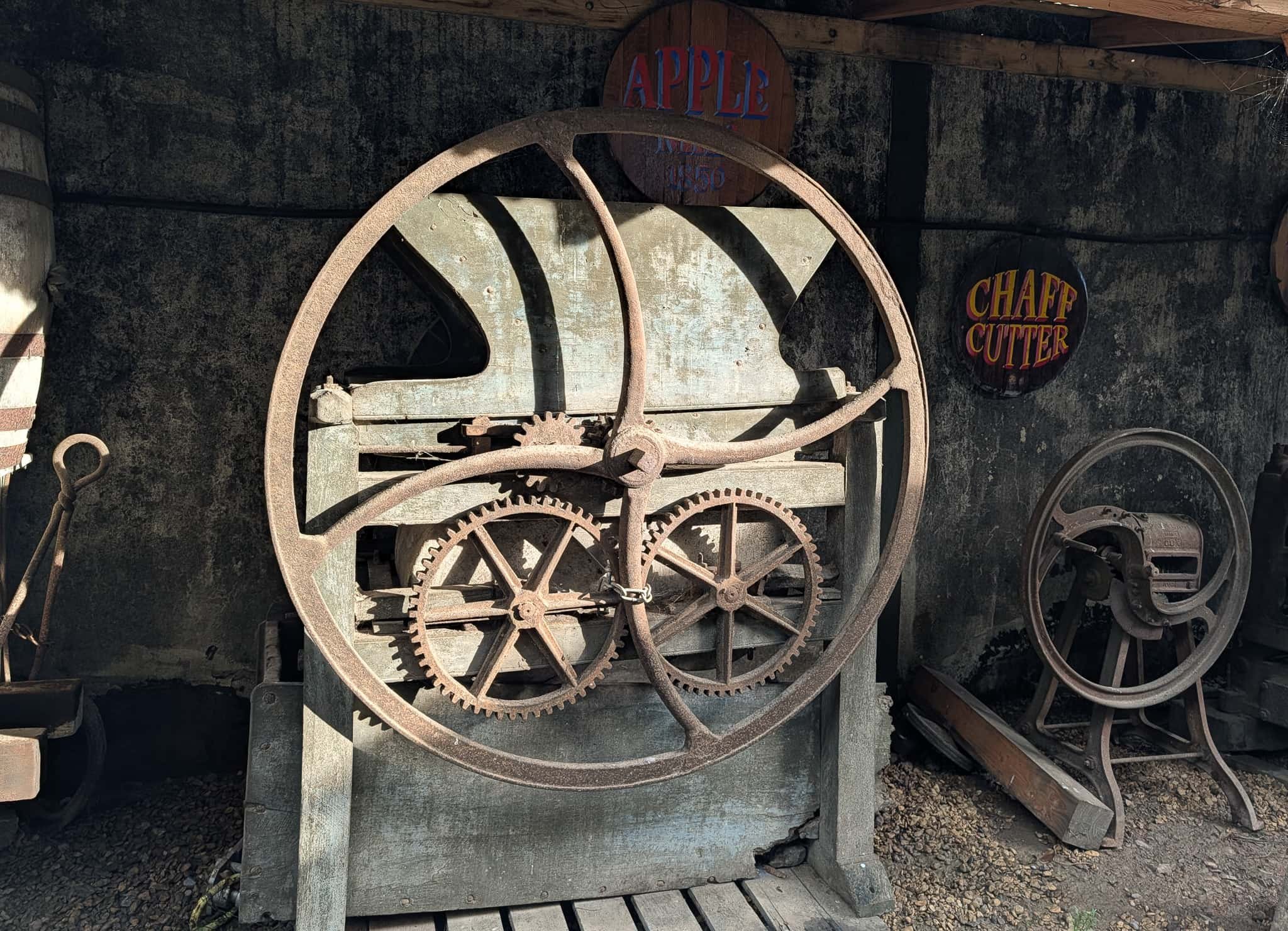
Old apple mill
A Journey into Ciderland with James Crowden
Good old James… He should be a public relations guru - he certainly sells a place or a subject well. As we stood there in the sunshine looking down at the much celebrated Burrow Hill Cider Farm beginning to appear out of the mists, he told me… “That’s where I did my cider apprenticeship - I worked there for 12 seasons making cider. I also did their sheep shearing; when you’re a sheep-shearer, you get quite thirsty, so the two things go together.
“This really is the heart of cider land. A lot of the varieties people know came from within a few miles of here. First, we’ll go down and talk to Matilda Temperley (daughter of well-known Julian, who founded the Somerset Cider Brandy company). They’ve got a new product which is fantastic: cider brandy matured for five years in oak barrels actually made from Somerset oak.”
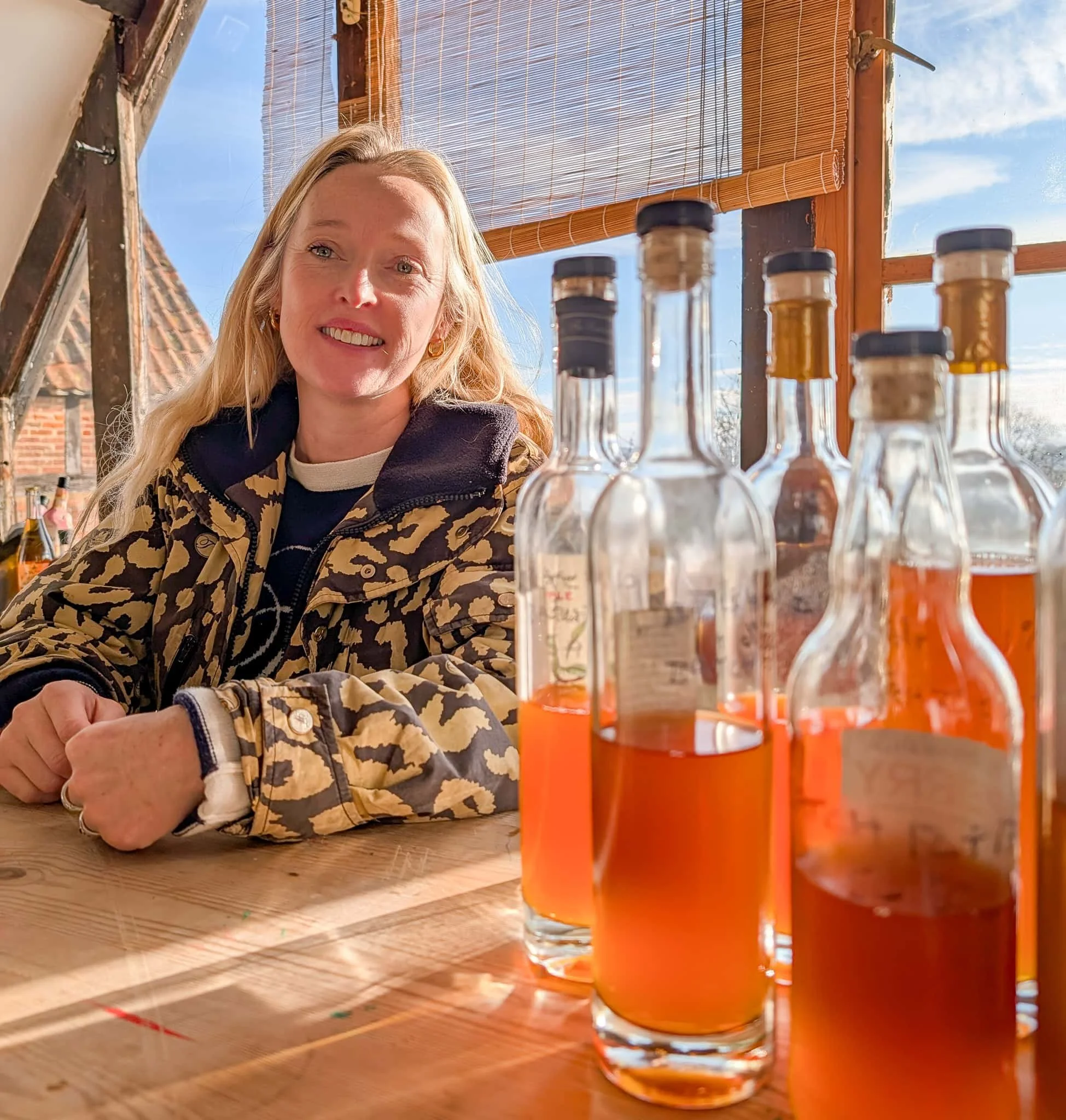
Matilda Temperley, Somerset Cider Brandy
Matilda and Julian Temperley: The Quest for Somerset Oak
Matilda is one of four Temperley children and she has now taken over much of the running of the cider brandy company - and in the loft of an old French barn we talked as the view beyond began clearing to reveal hundreds of apple trees stretching into the distance. Matilda explained the complex journey of creating cider brandy aged in barrels made from Somerset trees. Most barrels in the industry are French oak because the UK lacks the 130-year-old managed plantations required for coopering. Matilda’s project involved a multi-year "treasure hunt" for fallen or storm-damaged local oaks.
“The trees need to be around 130 years old,” she told us. “Turning a tree into a barrel is a complicated process because you need to quarter-saw it - a specialist process. We managed to find an oak from Jamie Montgomery, of Montgomery’s Cheese in South Cadbury. That was our first tree, and we turned it into two oak barrels.”
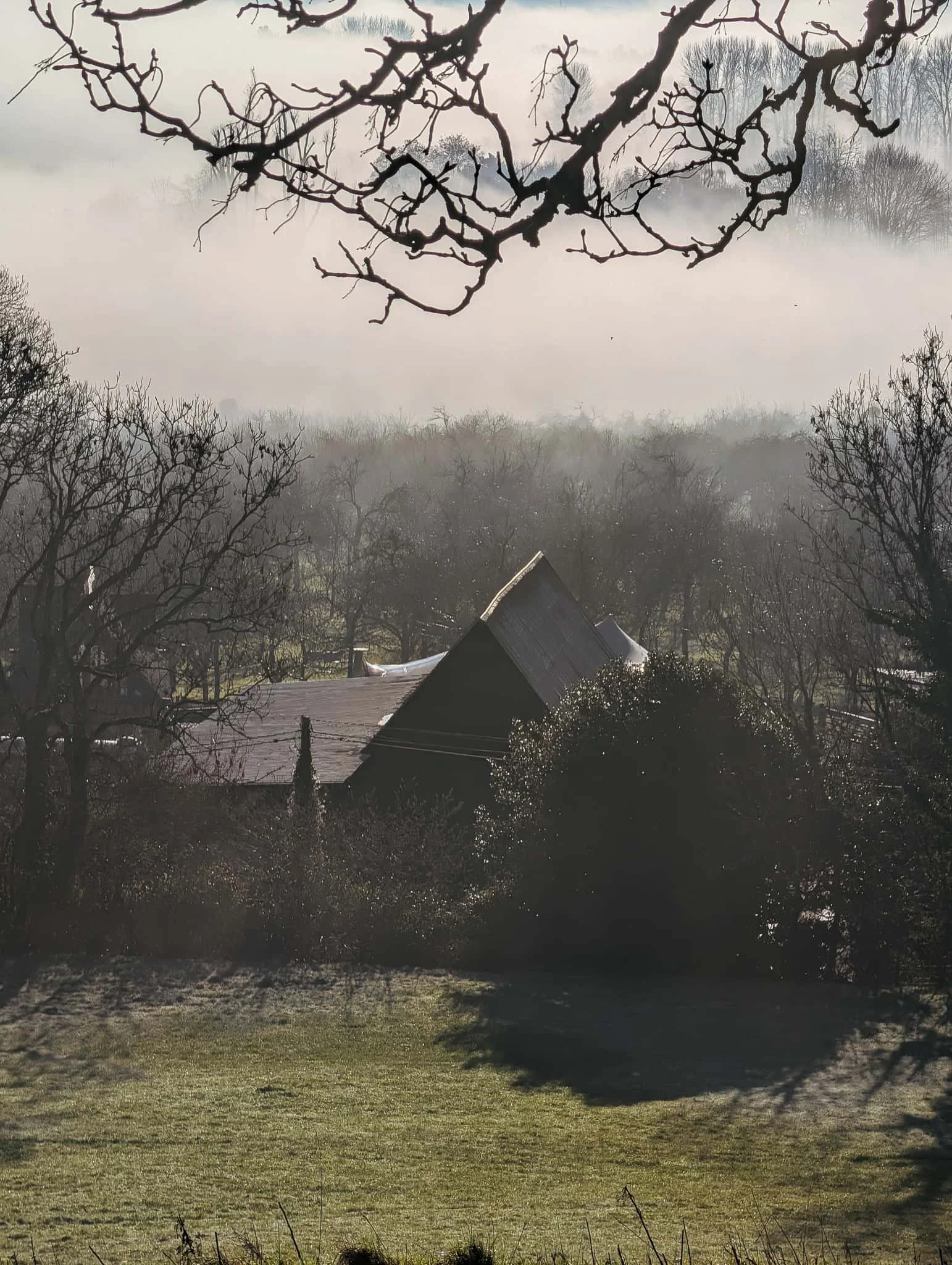
Burrow Hill Cider Farm, emerges from the mist
Five years later they’ve just started bottling cider brandy from one of the barrels. The result? “It’s totally not what we expected... there are lots of exotic notes. There’s lots of coconut - you almost get sort of exotic fruits in there.”
We were joined by Julian, the pioneer who in the 1980s fought and won a major battle for the legal right to distil cider brandy. His Somerset Cider Brandy is now served in the most elite circles, including three-Michelin-starred restaurants in the UK.
“Kingsbury is essentially the centre of cider apple growing in England,” said Julian. “We produce some of the best cider in this village, and that’s what we need to make the eau de vie (the basis for the cider brandy). And now we have royal approval - we had a letter from the King to say that he and the Queen enjoyed a bottle at Christmas... It was a bottle of 20-year-old cider brandy, which we now have on sale.
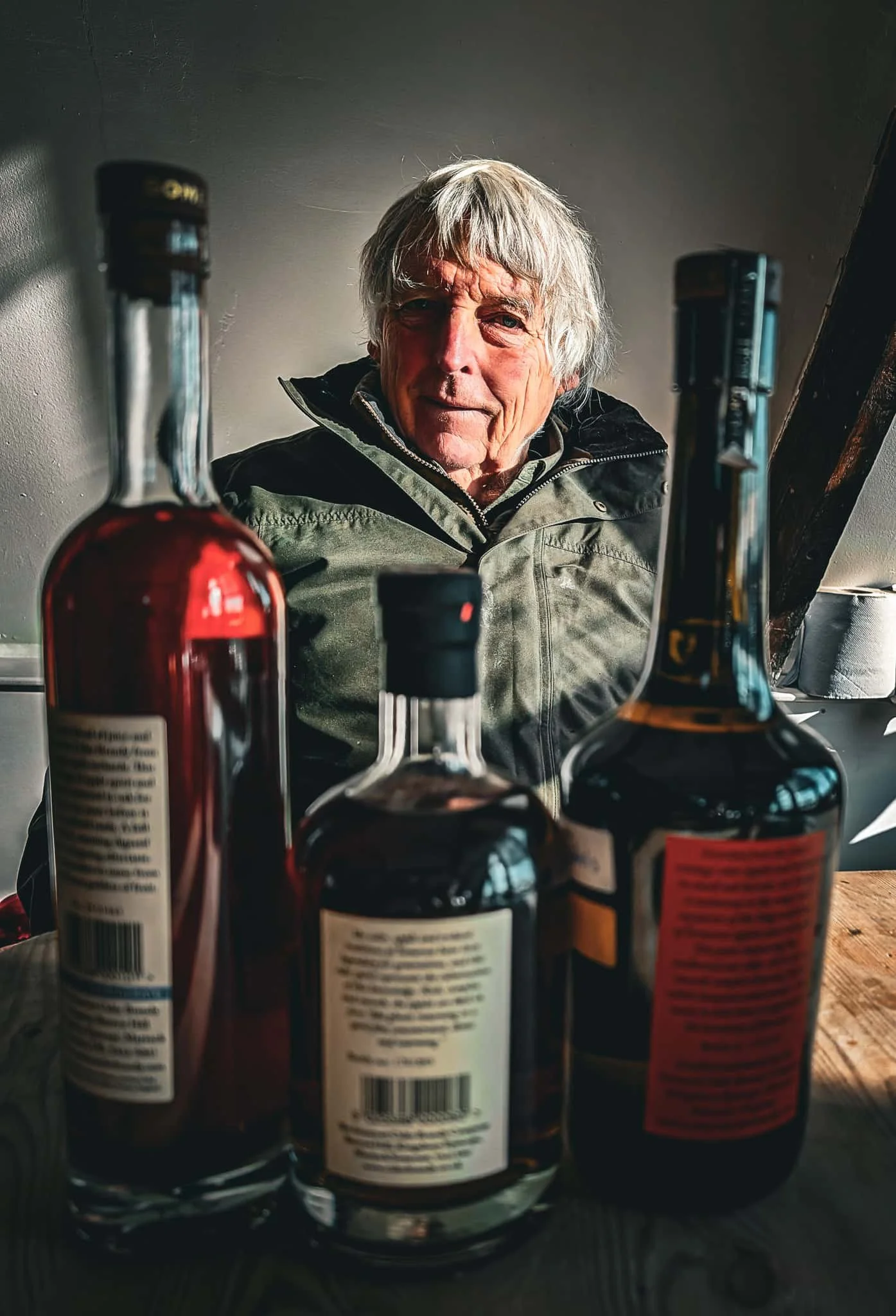
Julian Temperley, Somerset Cider Brandy Co
“That gives you an idea of how this is a long-term thing - a multi-generational quest. It needs to be handed over to the next generation, and the next. I will bequeath the quest, the ambition, to the next generation.”
We could fill these pages with our chat with Julian, but we need to move on - however the entire interview, along with the others from Kingsbury can be found on my podcast, Adventures in Journalism - free to listen to - available on any podcast platform.
The DNA Revolution: Searching for 'Ghost' Apples
Now we move down the hill to an old orchard at Stembridge, which is part of the parish. As the mists cleared we met Tim Gray of the Parrett Cider Company, and Liz Copas, the renowned pomologist. They told us about how Somerset cider is currently undergoing a “DNA revolution” - a high-tech detective hunt which sees leaf samples being sent to laboratories in a bid to identify “lost” apple varieties. One target is the Lambrook Pippin, an indigenous variety thought to be the parent of the famous Porter’s Perfection. While the variety is thriving in America and New Zealand, it has become a "ghost" in its home soil.
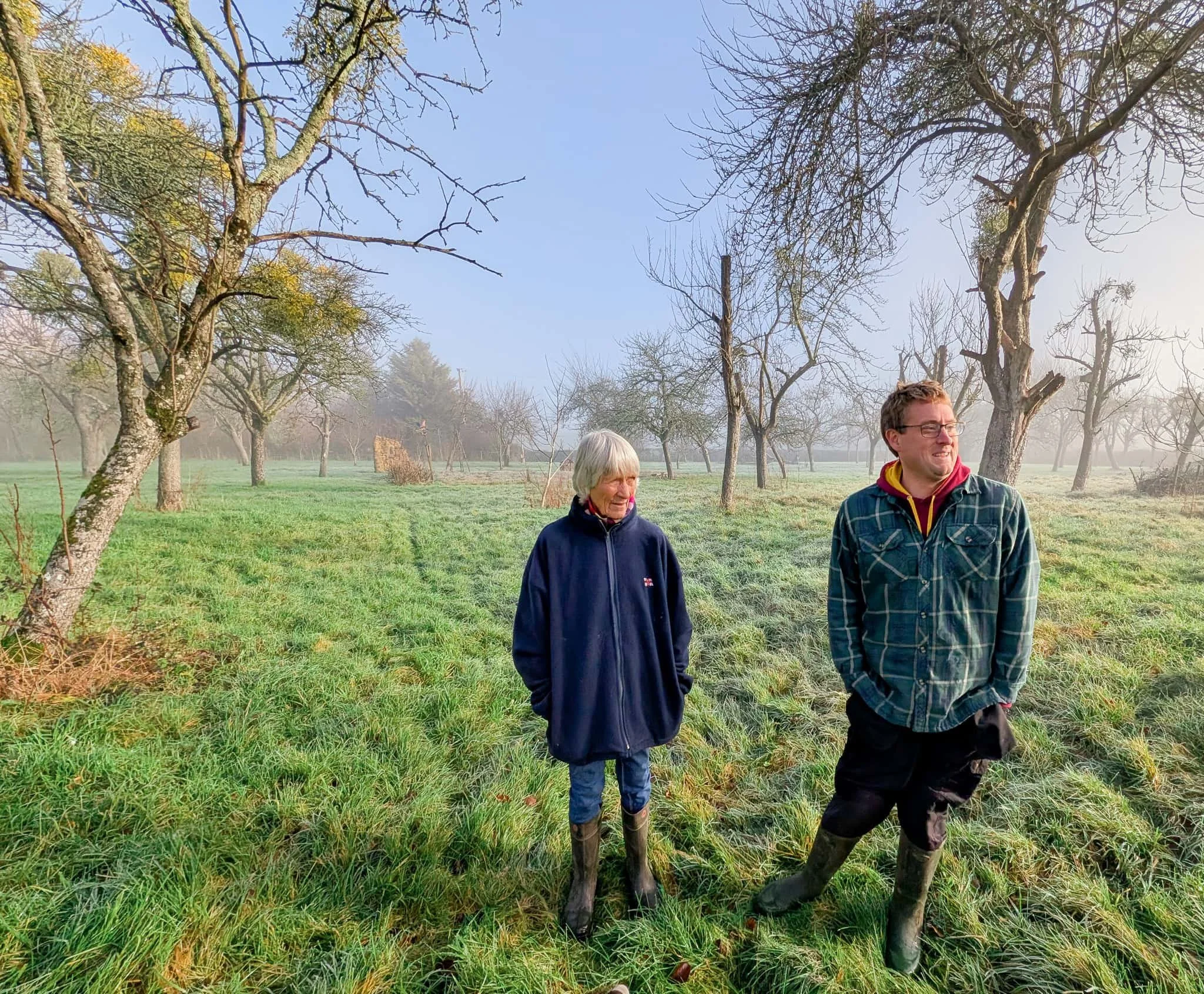
Liz Copas and Tim Gray at Stembridge
“We send a few leaves to a laboratory and they do all the analysis,” explained Liz. “They compare what they find with trees in the National Fruit Collection. We’ve been searching for the legendary Lambrook Pippin for seven years. We keep finding other things in the meantime, but we’re still on that detective hunt.”
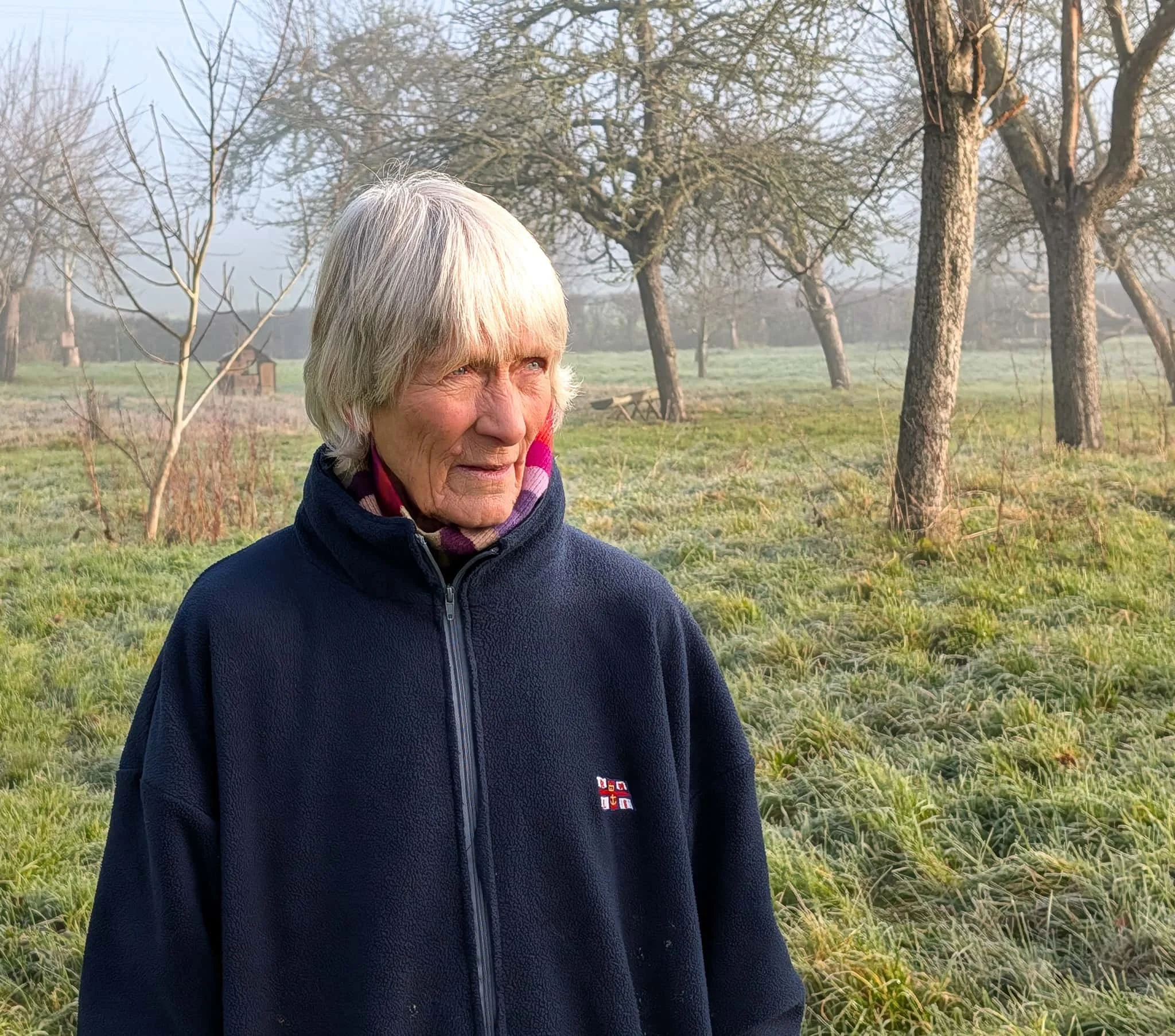
Pomologist Liz Copas
“I want to continue making single variety ciders in order to tell the story of what they are,” added Tim. “We’re trying to put together the 'Kingsbury Pomona' (an historic term for a botanical book describing apples in detail) and we’ve got about 15 different varieties growing now from around the parish. We found three trees in this orchard we thought were a lost variety called Churchill. We’ve managed to match them... now we can get it registered as a local variety. At least then it’s in the collection and it’s preserved.”
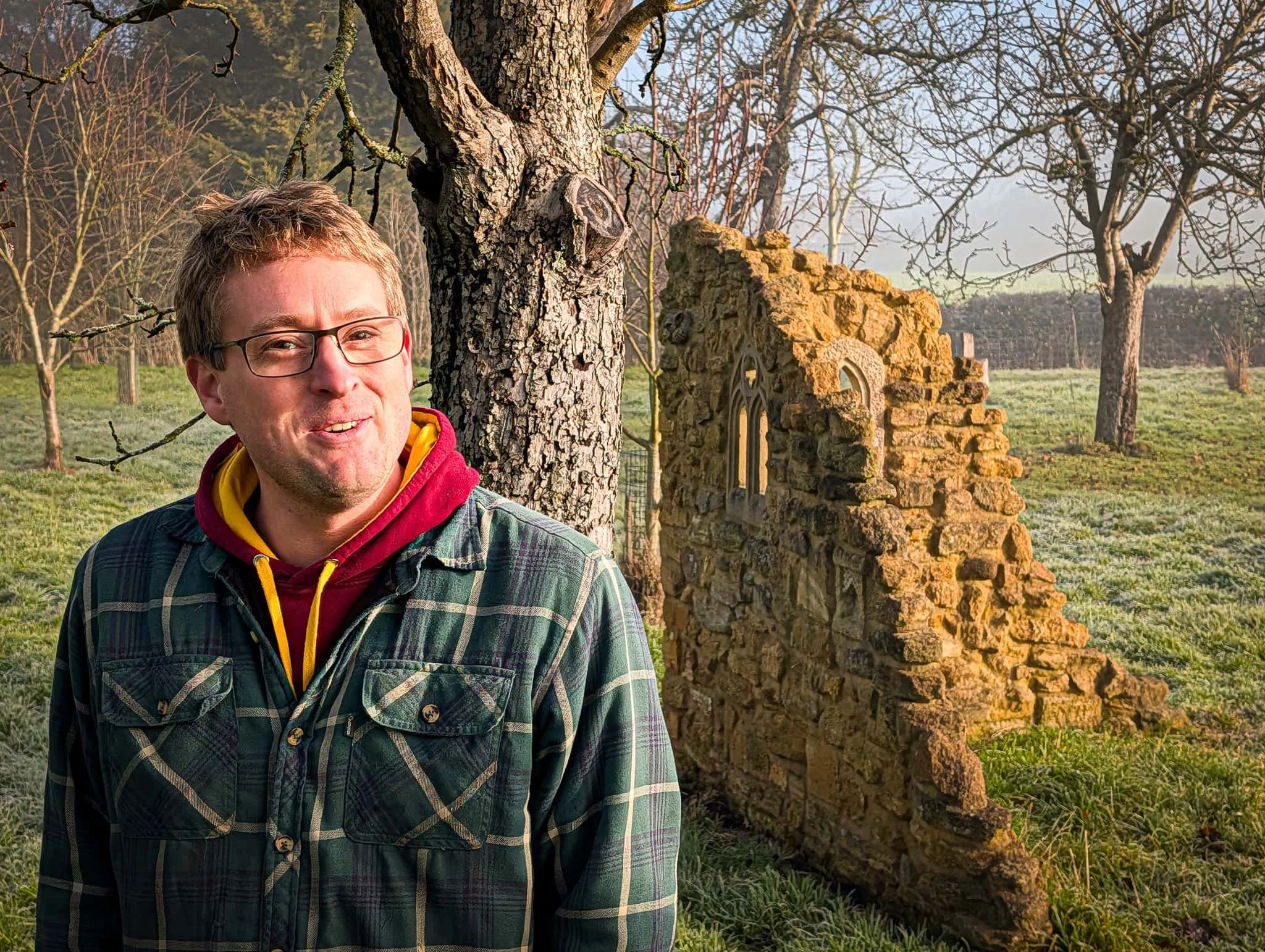
Tim Gray of Parrett Cider Company
The Time Travellers: Mapping a Digital Parish
All this tied in with a project being run by our next interviewees. Working in an office filled with artefacts and computer screens, Helen Aldhous and Adrian Wills are part of a volunteer team - digital archivists of this parish with a history that predates the Normans. The ‘Time Travellers’ aren't just looking at ancient Romanesque masonry, they are capturing the "invisible" history of the community.
From the 19th-century engineering feats of George Parsons to photographic memories of local families, the group is building a digital encyclopaedia of village life. They’ve even created "Apple Blossom Trails" with QR codes, linking the physical beauty of the orchards to the stories of the people who planted them.
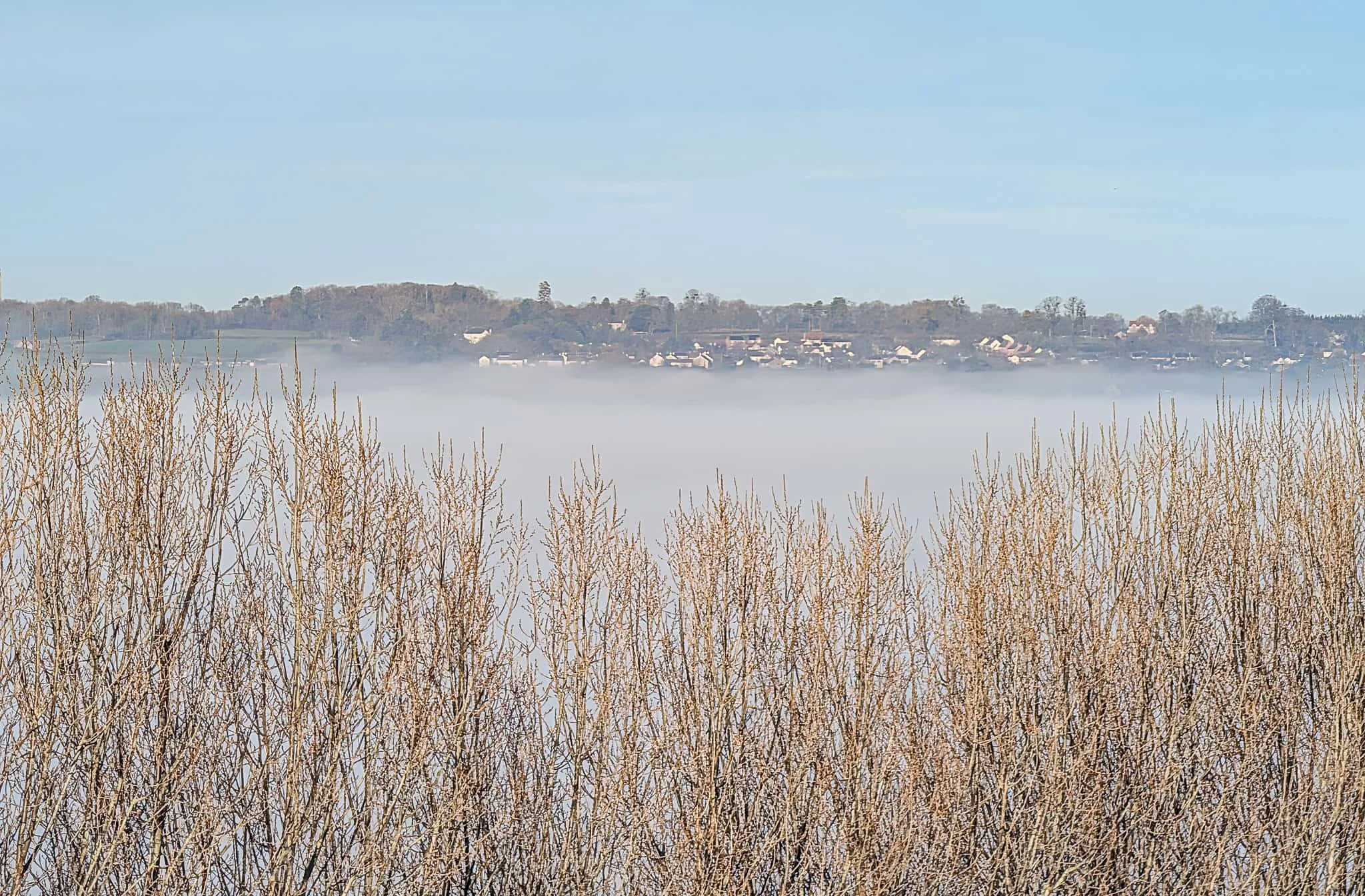
Looking across the mist filled Levels
“Episcopi means 'belonging to the Bishop’,” explained Helen. “Behind us here are the archaeological remains of a 9th or 10th-century Bishop’s Palace... it’s an unfolding story you never get to the bottom of.”
Adrian added: “The River Parrett is part of our DNA. It’s the artery out into the Mediterranean... an intriguing piece of land on the boundary between the civilised and not-so-civilised worlds.”
When asked about the cider story, Adrian became lyrical… “The smell of those orchards in blossom time… It’s like walking through a fairyland. When the wind blows, it’s like confetti pouring down. Part of the DNA of this parish is the smell of the 'withy-boilers' - it’s wonderful - the traditional boiling of willow for basket making.”
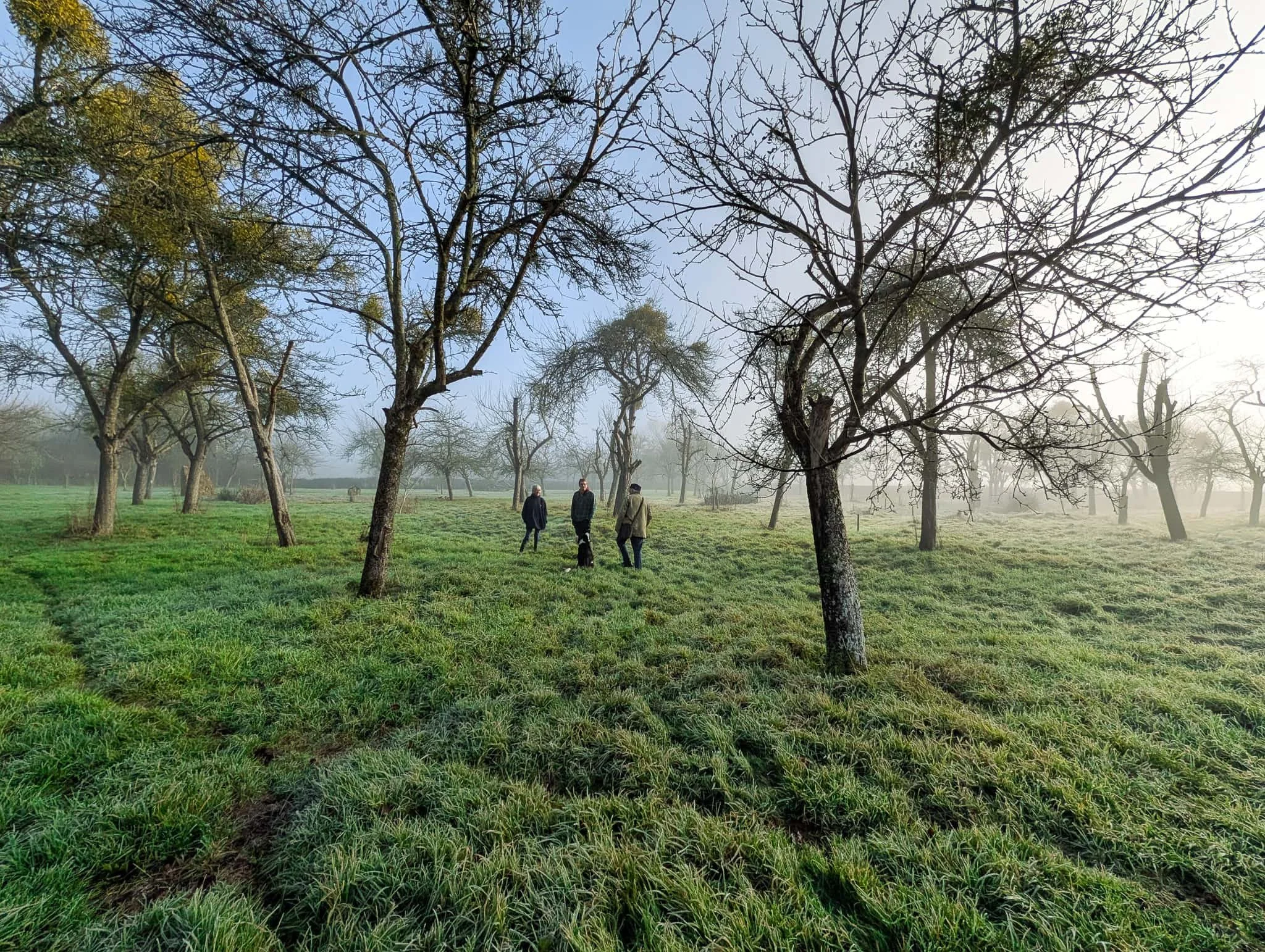
The Wassail orchard in the January mist
Again, we only have room to scratch the surface - listen to the full interview on Adventures in Journalism. Talking to Adrian and Helen helped frame the village not just as a place to visit, but as a "multi-layered" landscape where the 14th century is still present in the surnames of the people you meet at the pub.
Craftsman’s Cabin and Somerset Time
Which is where we’ll be going next, but not before a lunch kindly provided by Decca Lang, a descendant of a farming family that has tilled local soil since the 1700s. Not long ago Decca returned from London to build Craftsman’s Cabin - a guest retreat located in a paddock just behind the main village - a lovely little holiday home that serves as a living gallery for local artisans and makers.
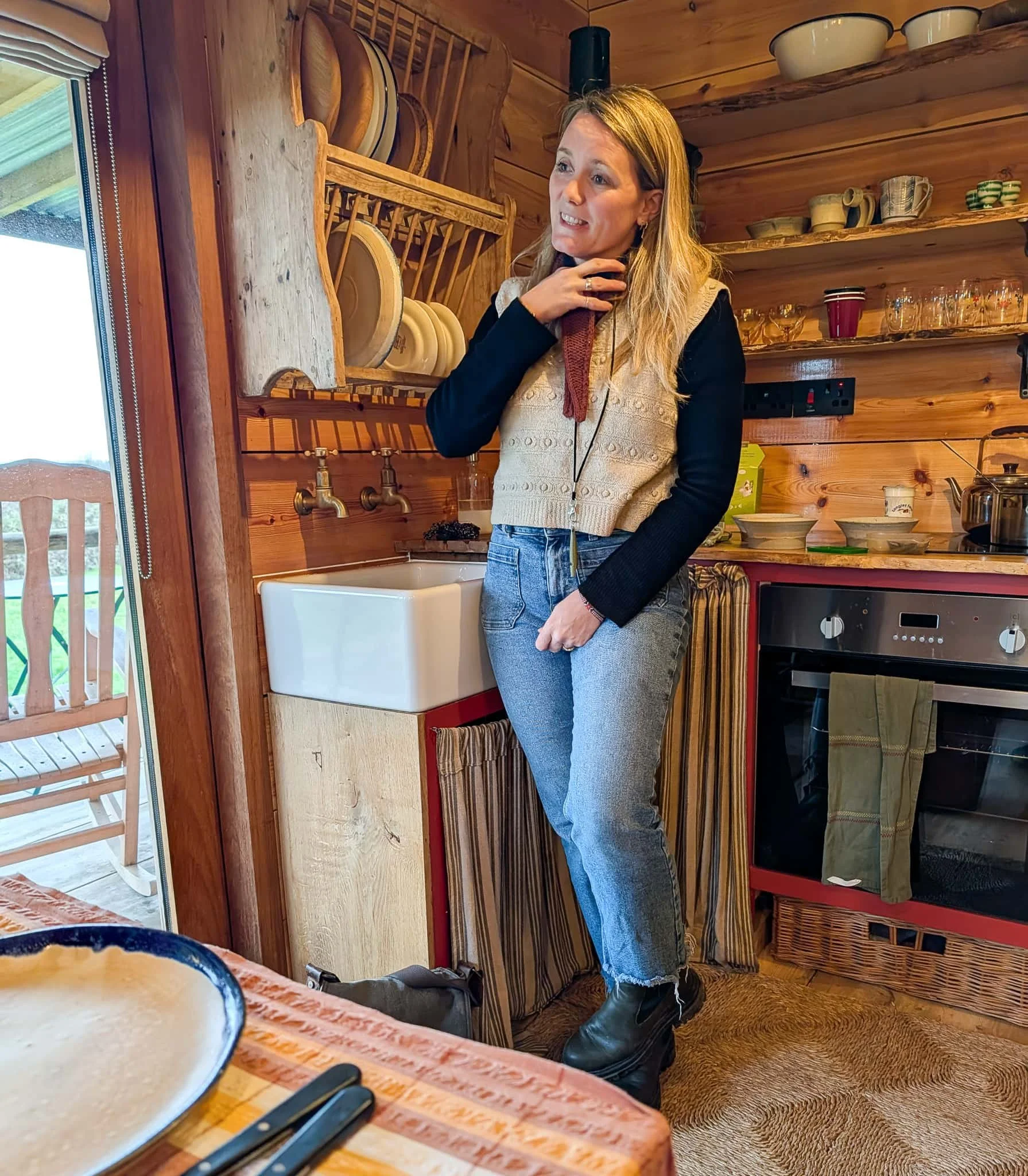
Decca Lang in the Craftsman’s Cabin
“The view is west-facing, looking directly across Westmoor... in mid-summer the sun sets over the Burton Pynsent Monument,” said Decca as we sat in the cabin enjoying delicious homemade parsnip soup. “I wanted to shine a light on local makers and craftsmen. The fire-pit is made by Nicholas Ostroumoff at Muchelney Forge - the oak table was made by Bertie Clark from wood found on my family farm. These are brilliant craftsmen making things with hands, care, and love.”
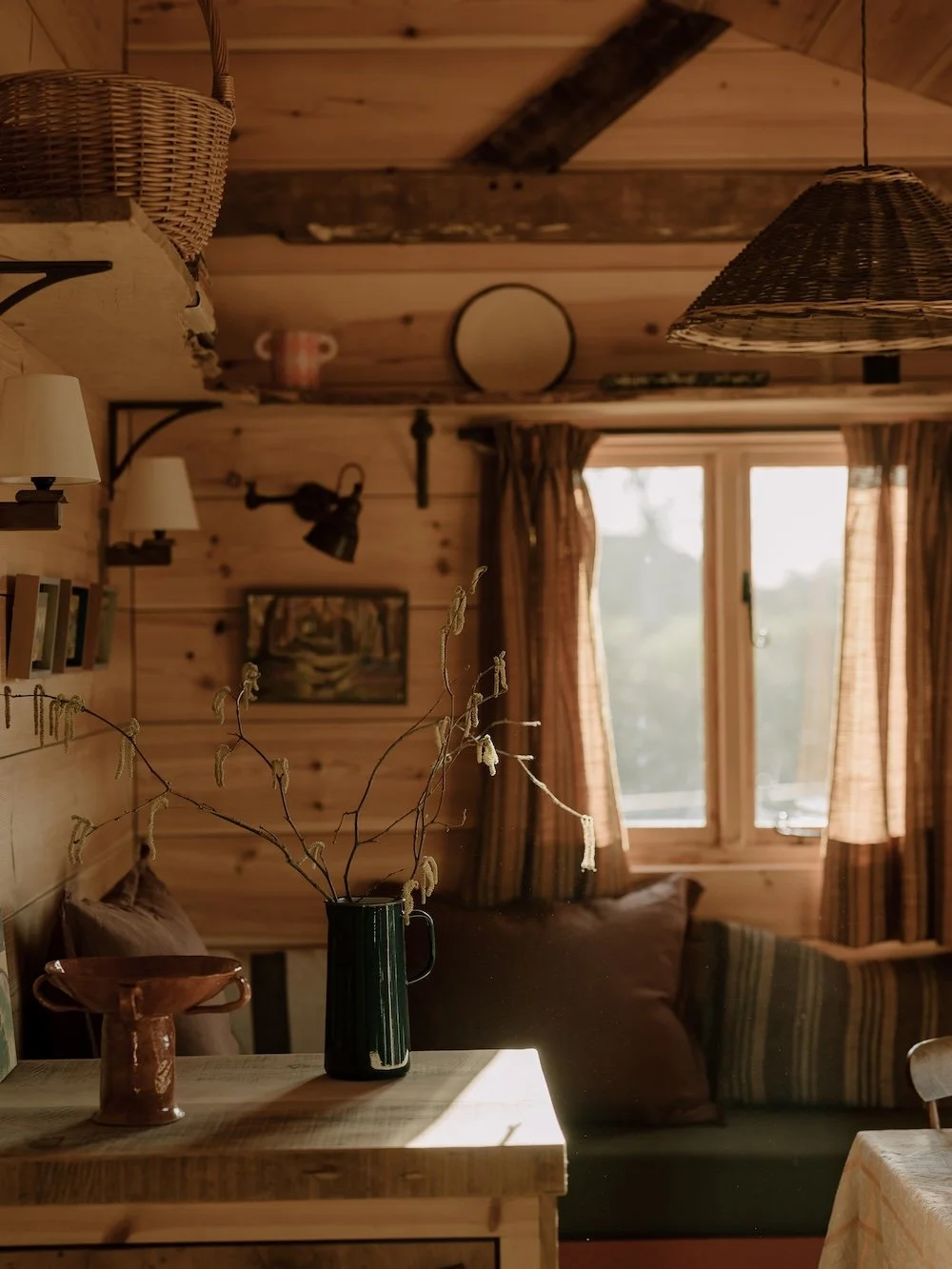
Craftsman’s Cabin interior: photo Dave Watts
The Craftsman’s Cabin has been open for hire for the past couple of years, and Decca told us: “People come with plans to go here, there, and everywhere, but lots end up just staying put. It’s a step out of people’s frenetic lives... they log into 'Somerset time' when they’re here.”

Craftsman’s Cabin: Photo Dave Watts
The Wyndham Arms: A Proper Cider House
Last but not least was our visit to the wonderful Wyndham Arms, the pub in the middle of Kingsbury Episcopi, now run by a remarkable woman called Willow Reed. Willow is no stranger to the West Country cider scene; her former pub, The Plough in Taunton, was once Britain’s Cider Pub of the Year.
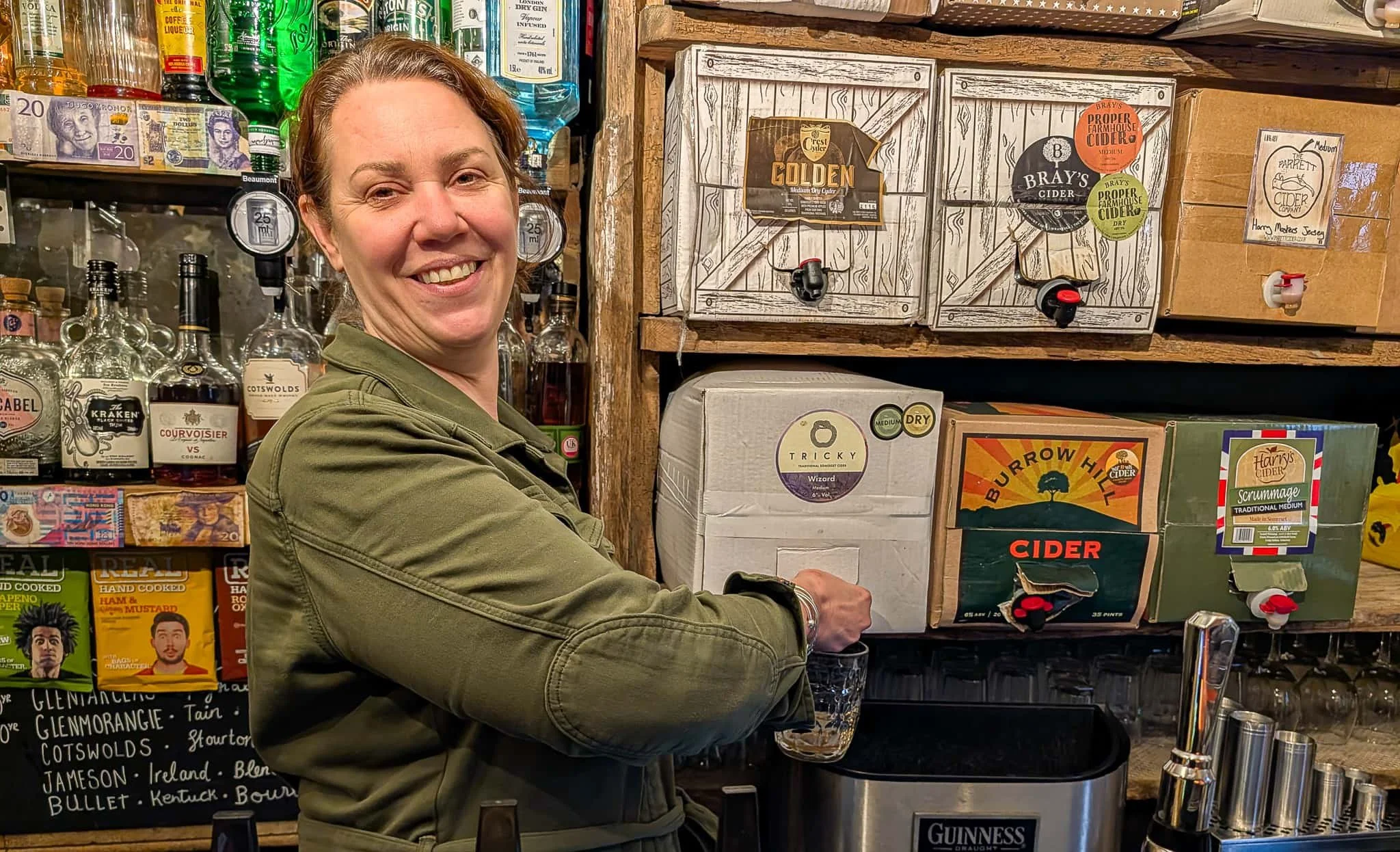
Will Reed, Wyndham Arms, Kingsbury Episcopi
After a stint living on an island in Belize, she returned to Somerset, feeling it was “written in the stars” that she should take over this historic inn. The way she puts it is that The Wyndham isn’t a “trendy gastro-pub”—it is a proper, old-fashioned cider house that celebrates the "errant sons of farmers" who become the region's best cider makers.
“I like an old-fashioned, real, proper pub - there are very few left,” smiled the affable Willow as we chatted by the log fire. “We aren’t a food pub - in summer, if you're lucky, you can get a Scotch egg and a pork pie. But we have about 20 local ciders, all made in Somerset.
“I like to support them. I do think the 'errant sons of farmers' become the cider makers. Those are the people I like—that's the crowd I want here. Call me a hippie, but I think there really is something special about the Somerset Levels. There is something in the air. Plus, my name is Willow Reed, and that is literally what is grown around here.”
Fair enough. I liked Willow. I loved her pub. Indeed, I fell in love with the whole of that remarkable parish known, so mellifluously, as Kingsbury Episcopi.
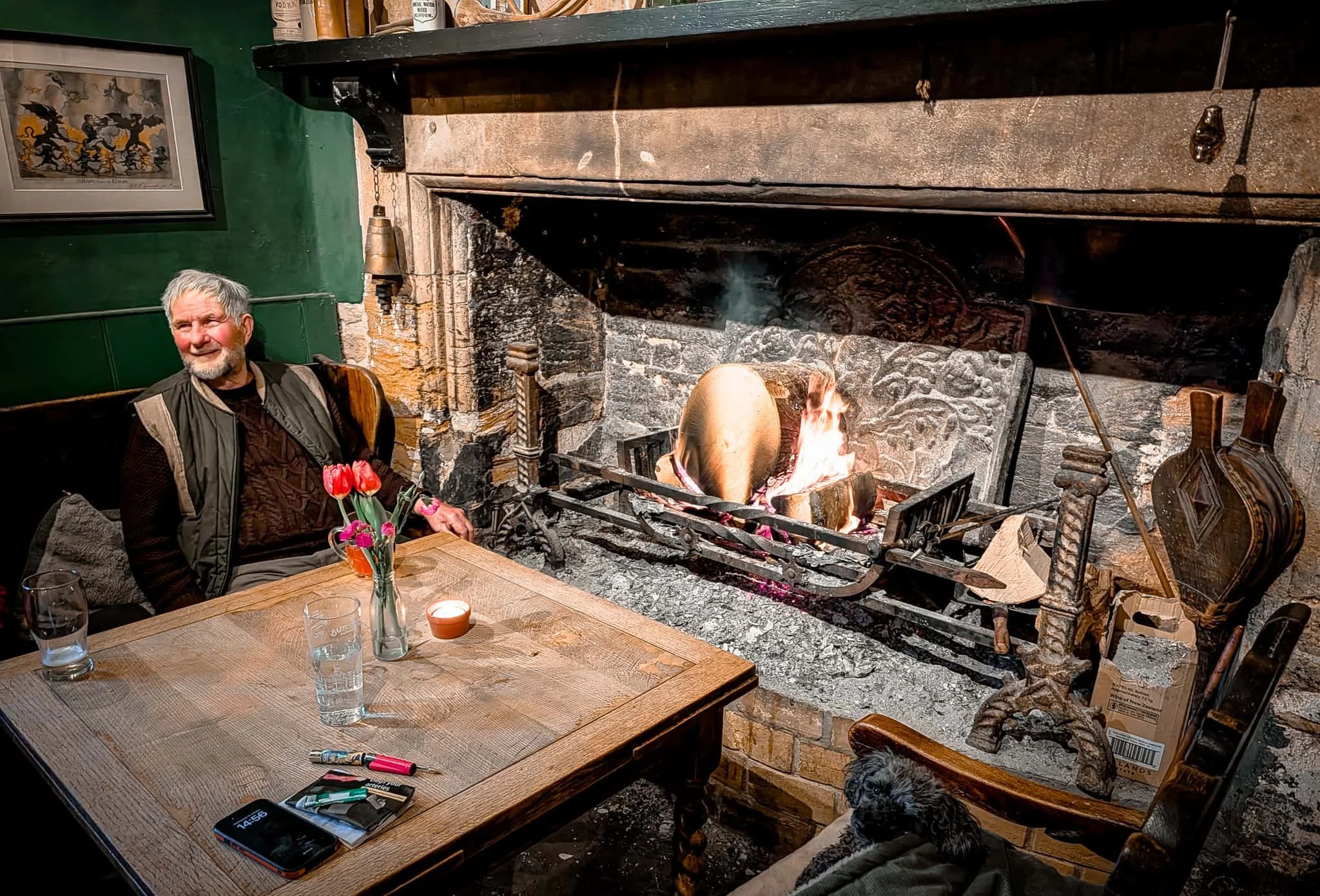
Fireplace, Wyndham Arms Kingsbury Episcopi