
The Dordogne Travel Guide: Why South West France Is One of Europe's Greatest Destinations

Updated: Aug 11

Introduction: The West Country Spirit in South West France
If you're dreaming of a part of France where mediaeval castles crown wooded hills, rivers drift through golden limestone valleys and lunch can happily stretch into late afternoon, then the Dordogne deserves to be high on your list. During a week exploring this remarkable corner of south-west France, I discovered not just three exceptional hotels but a region that reminded me, in many ways, of the England I remember from childhood. This is my guide to one of France's most rewarding destinations.
The West Country how it used to be. That would be one way of describing central south-western France. Highly rural, un-urbanised, unspoilt and gloriously beautiful.
Last week these pages were all about the incredible food served in three Relais & Chateau hotels, but I decided to write a second article because this wonderful area is only a day’s drive if you cross to France by ferry, so almost within what I’d call “staycation status”. Which is important in these times when we don’t know if or when airlines will run out of fuel for their planes.
In this guide
• Why visit the Dordogne?
• The best luxury hotels
• Beautiful villages
• Great food and wine
• Castles and rivers
• Things to do
• Suggested itinerary
• Frequently Asked Questions
Why Visit the Dordogne?
There are parts of France that dazzle you with grand boulevards, glamorous beaches or famous landmarks. The Dordogne works its magic rather differently. It doesn't shout for attention. Instead, it quietly wins you over with its gentle landscapes, timeless villages and an almost old-fashioned way of life that seems to have survived while much of the modern world rushed on ahead.

It is a region that rewards those prepared to slow down. The roads twist lazily through rolling countryside where walnut groves, vineyards and sunflower fields compete for your attention. Around almost every corner there seems to be another honey-coloured village, another magnificent château perched high above the river or another inviting café where lunch is regarded as an important event rather than something to be hurried through.
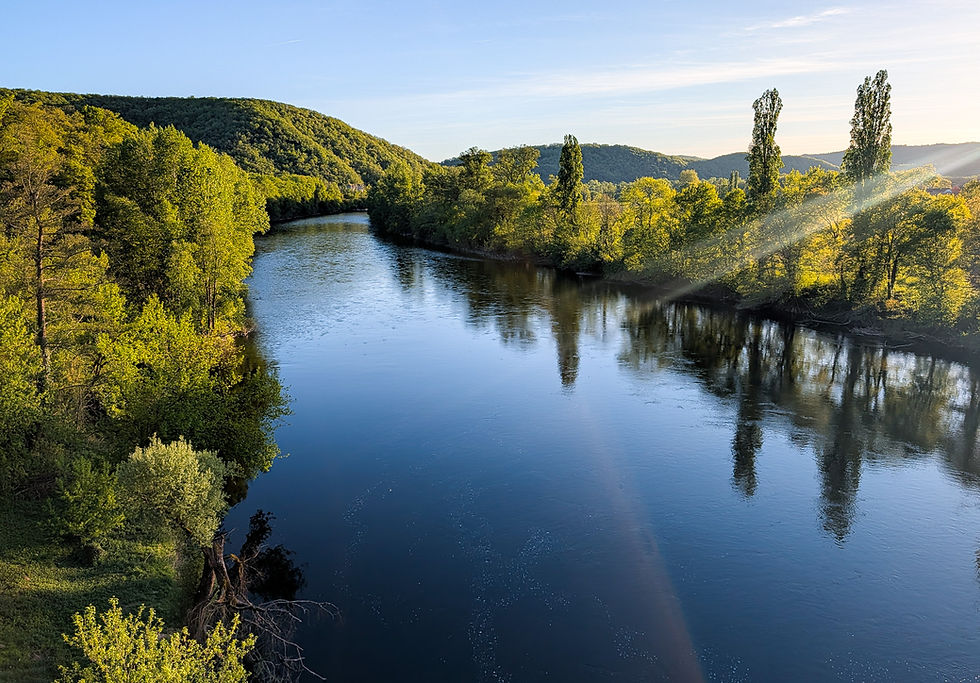
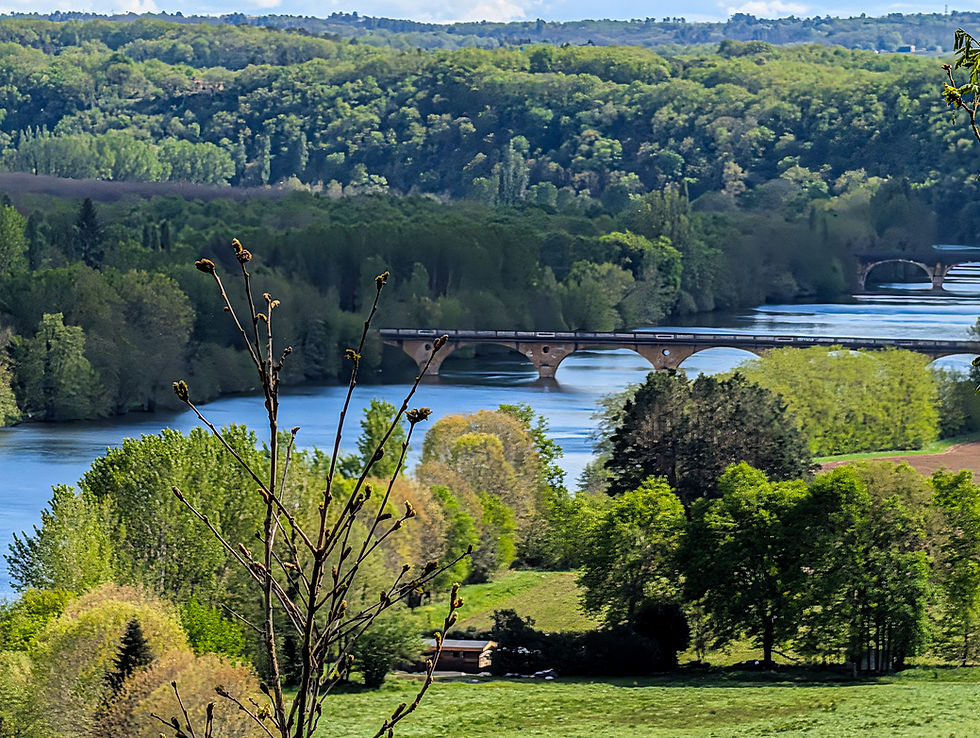
The River Dordogne is the lifeblood of the region. It winds gracefully through wooded valleys, beneath ancient bridges and past medieval castles that have watched over its waters for centuries. Whether you choose to paddle a canoe downstream, drift along on a traditional gabarre, or simply sit beside the river with a glass of local wine, it is impossible not to feel yourself slipping into a slower rhythm of life.
History is everywhere. Some of Europe's finest prehistoric cave paintings lie hidden beneath these hills, while bastide towns, Romanesque churches and ancient fortresses tell stories stretching back hundreds, even thousands, of years. Yet the Dordogne never feels like an open-air museum. These places are still lived in, loved and very much part of everyday life.

Then there is the food. For many people, that alone is reason enough to visit. This is one of France's great gastronomic regions, famous for duck, foie gras, black truffles, walnuts, strawberries, goat's cheese and the excellent wines of nearby Bergerac. Village markets overflow with fresh local produce, while family-run restaurants and Michelin-starred dining rooms celebrate ingredients that rarely have to travel more than a few miles.
Perhaps what I like most about the Dordogne is that it feels reassuringly real. It has not been polished into perfection for visitors. Farmers still work the land, church bells still punctuate the day and village life carries on much as it always has. For those seeking authentic France rather than manufactured attractions, this beautiful corner of the country is hard to better.
Spend a few days here and you'll soon understand why so many visitors return again and again. The Dordogne has a quiet charm that lingers long after you've packed your suitcase and headed home. It is the sort of place that gently gets beneath your skin, leaving you already planning your next visit before the first one has quite come to an end.
Great Food and Wine
If there is one thing the people of the Dordogne understand better than most, it is how to enjoy good food. Meals here are not simply about satisfying hunger; they are occasions to be savoured, shared and remembered. Even the simplest village restaurant often serves dishes prepared with a care and pride that would put many city establishments to shame.
This is one of France's great food regions, blessed with an astonishing abundance of local produce. Duck appears in almost every imaginable form, from confit and magret to rich foie gras. Black truffles, known locally as the 'black diamonds' of the Périgord, add their unmistakable flavour to many winter dishes, while walnuts, strawberries, mushrooms and artisan cheeses all play starring roles on local menus.

Markets are a joy to explore, their colourful stalls piled high with freshly picked vegetables, homemade pâtés, crusty bread and tempting pastries. It is the sort of place where you find yourself buying ingredients for an impromptu picnic simply because everything looks so irresistible.
The wines deserve equal attention. Nearby Bergerac produces excellent reds, whites and rosés, along with the celebrated sweet wines of Monbazillac. They may not enjoy the international fame of neighbouring Bordeaux, but that is very much to the visitor's advantage, offering outstanding quality and remarkable value. Together, the food and wine provide one more compelling reason why the Dordogne is such a rewarding destination.

Castles and Rivers
The River Dordogne has shaped this region for centuries, carving its way through wooded valleys and beneath towering limestone cliffs before meandering past some of the finest castles in France. It is difficult to imagine a more picturesque landscape. Time and again the road rounds a bend to reveal another magnificent château standing proudly above the river, as though keeping watch over the countryside below.
Many of these castles date back to the Hundred Years' War, when this corner of France found itself on the frontier between England and France. Today they provide a fascinating glimpse into a turbulent past, their towers, battlements and great halls remarkably well preserved. Among the most impressive are Beynac, Castelnaud and the fairy-tale Château de la Treyne, each offering spectacular views across the valley.

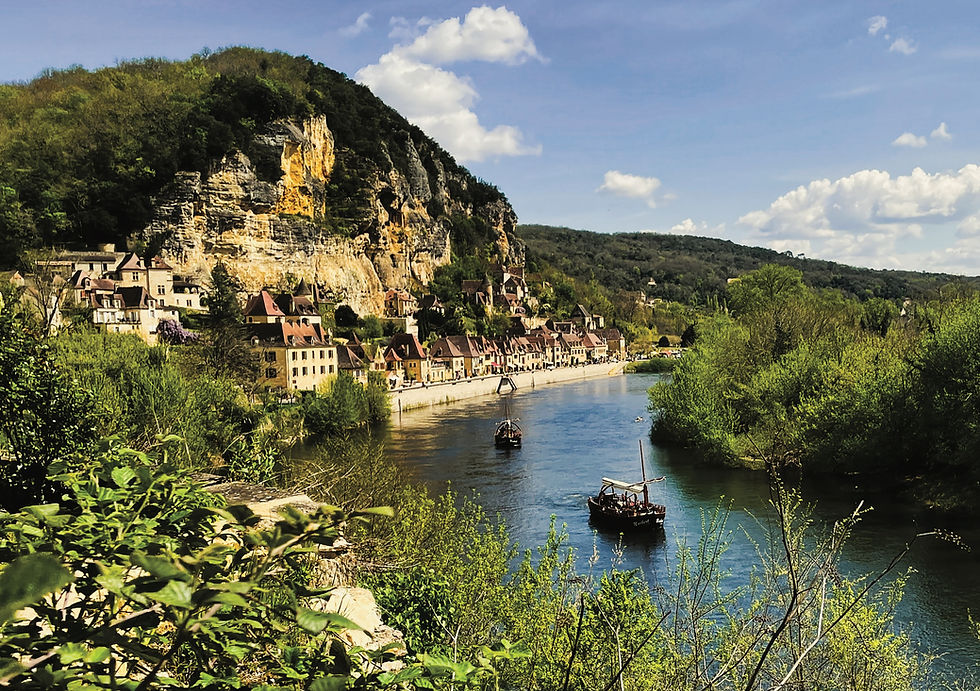
The river itself is every bit as captivating. Traditional gabarre boats once carried timber and wine downstream, while today visitors are more likely to explore by canoe or kayak, drifting peacefully beneath ancient bridges and past sleepy riverside villages. Others simply choose to sit beside the water with a leisurely lunch or a glass of Bergerac wine, watching the world glide gently by. In the Dordogne, the river is not just part of the scenery – it is the heartbeat of the region.
Things to Do in the Dordogne
The beauty of the Dordogne is that there is no shortage of things to see and do, yet nothing ever feels hurried. One day might be spent wandering around a bustling market in Sarlat, the next exploring a mediaeval castle or discovering one of Europe's most remarkable prehistoric cave sites. Every outing seems to uncover another layer of the region's rich history and culture.

Those who enjoy the outdoors are particularly well served. Canoeing along the River Dordogne is one of the classic experiences, offering a wonderfully peaceful way to admire the castles and villages from the water. Walkers and cyclists will find miles of quiet country lanes and woodland paths, while gardeners can visit some of France's finest formal gardens, many attached to magnificent country houses.
Food lovers are equally spoiled. Morning markets brim with local produce, vineyard tours introduce the excellent wines of Bergerac and Monbazillac, and countless restaurants celebrate the region's celebrated gastronomy, from rustic village bistros to Michelin-starred dining rooms.

Perhaps the greatest pleasure of all, however, is simply taking your time. Stop for coffee in a sleepy village square, linger over lunch beneath the shade of a plane tree or pause at a viewpoint overlooking the river. In the Dordogne, some of the happiest moments are the unplanned ones, when you stumble upon a hidden village or a breathtaking view that never appeared in the guidebooks.
What is Relais & Châteaux? A Unique Luxury Travel Experience
While each of the three hotels we visited is unique, they share a common DNA as members of Relais & Châteaux. This global association is not a hotel chain, more a fellowship of independent “Maîtres de Maison”, dedicated to the “Art of Living”. In order to belong, an establishment must offer more than luxury - it must possess a distinctiveness and a deep-rooted connection to its local terroir.
The Dordogne’s “Triple Crown” of Luxury Hotels
The holy trinity I choose consisted of Château de la Treyne - a jaw-droopingly beautiful cliff-top sentinel perched above the River Dordogne. Le Vieux Logis offers an intimate village sanctuary - homely luxury with a rich heritage, among the Dordogne of water meadows. And La Chapelle Saint Martin serves as the pastoral gateway, a manor of parkland and porcelain history.
Château de la Treyne: A Cliff-Top Castle Above the Dordogne
We’re in the more easterly, upstream end of the Dordogne River when we visit the first. You drive across a narrow suspension bridge to reach Château de la Treyne and, as you go, you can see it perched dramatically on its cliff above the river. It is one of those “wow” moments. Even I, after 40 years of travel-writing, muttered to my wife: “Blimey! Are we really staying there?”
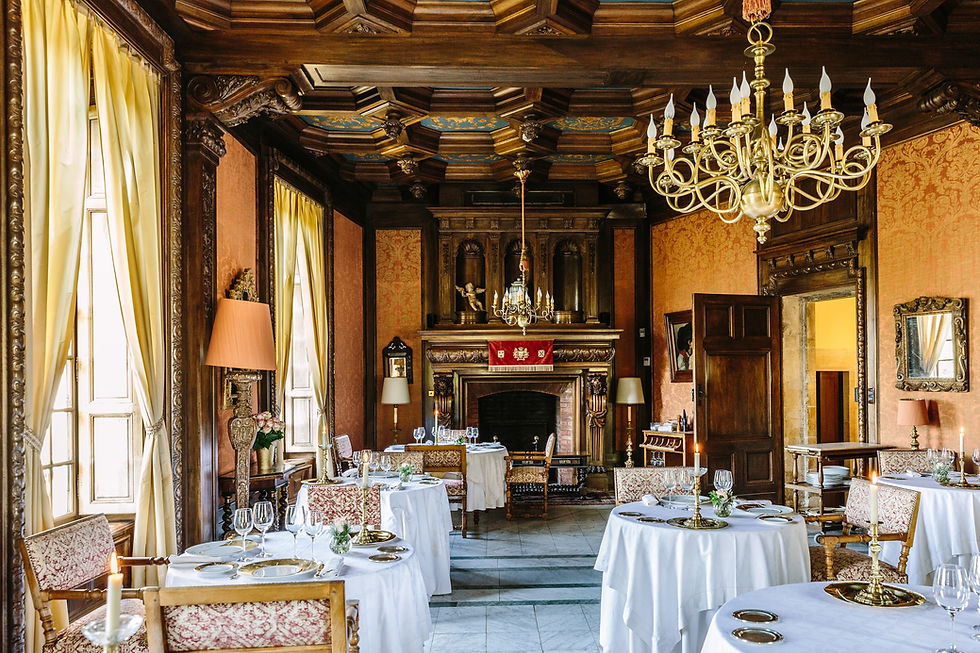
Its beautiful proportioned towers and weathered stone battlements are reflected on the surface of one of France’s loveliest waterways. The castle doesn’t just sit by the river, it looms over it. But once you’ve arrived up the splendid private drive, you find that Château de la Treyne manages a magic of its own. Despite being such an imposing place (you really do feel this is a place reserved for the French aristocracy of old) you discover that this ancient fortress feels like a home.

The staff are so warm and friendly, you instantly feel that you’re welcome to put up your feet here alongside any millionaires or celebrities who might be there. And you are likely to meet the owner, Stephanie, who couldn’t be more charming and welcoming. One night when the Michelin starred kitchen was closed she personally served us a lovely fresh salad she’d made along with some delightful local cheeses, and stayed chatting for an hour telling us all about how she and her husband had poured cash and much passion into the place over many years.
An investment which is noticeable. In my job I have visited a vast number of hotels and rarely do I come away muttering words like “absolute perfection”. At Château de la Treyne, I did.
Curated Silence: The Landscape and Atmosphere
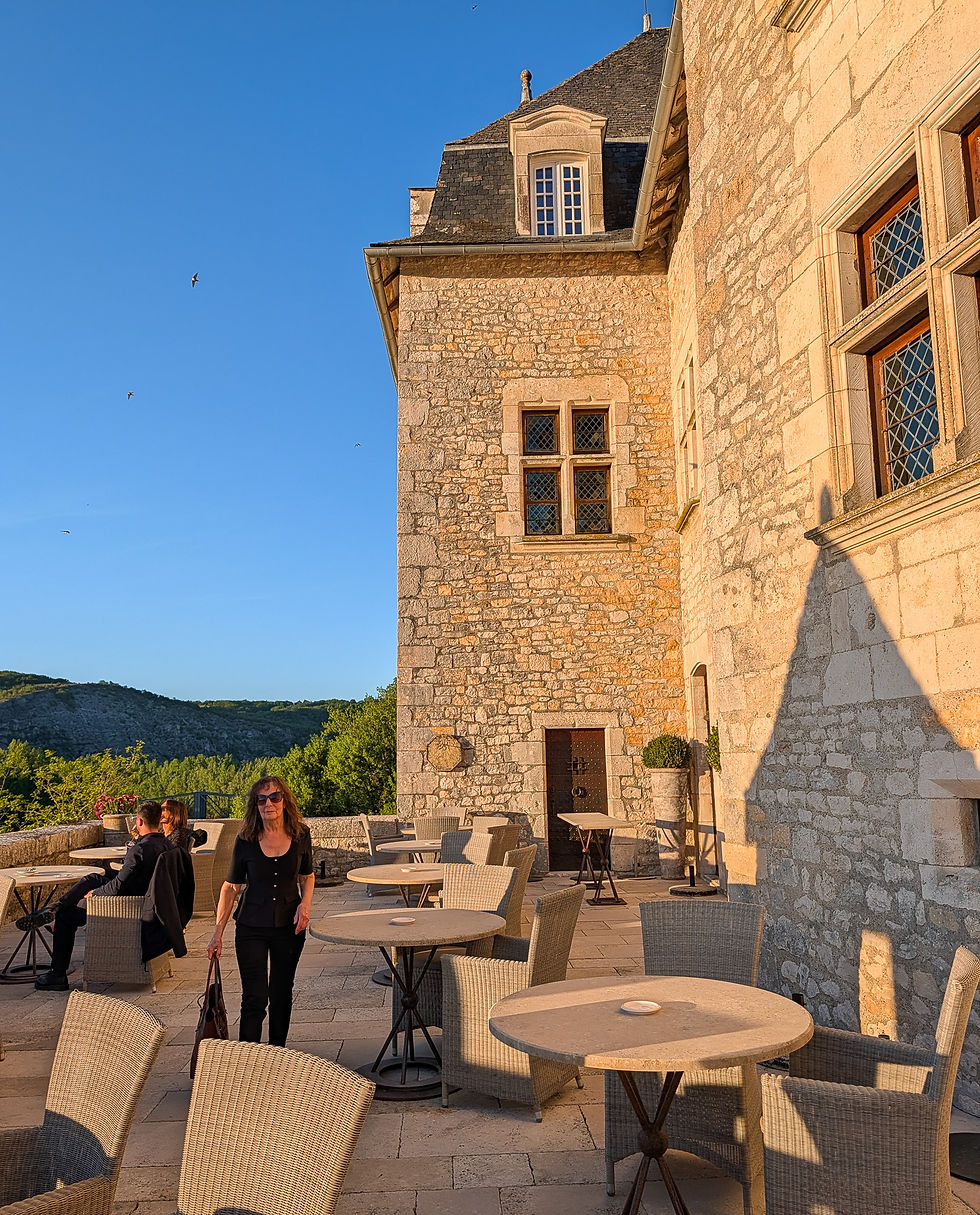
It’s a place defined by what I heard described as a “curated silence”. To the rear, a forest stretches across 120 acres of the estate and up into the steep hills - but this sense of wilderness is balanced by formal gardens which offer a contrast of manicured box-hedges and gravel paths. The kind of landscape that encourages a slow, rhythmic existence. You find yourself walking the terrace - a wide, stone-flagged expanse that feels like the deck of a great ship - simply to watch the way the evening light catches the grey-gold of the Quercy stone.
I could happily have stayed in our grand suite overlooking the river for days. From the four-poster bed we could see the river winding its way west among the steep hills and, as the martins and swifts came and went with their shrill cries, there were times when I didn’t know if I was waking or dreaming.

Le Vieux Logis: A Village Sanctuary in the Dordogne
Good dreams also happen at Le Vieux Logis, some 45 miles downstream. If you take the scenic route along the river, as we did, it is a truly memorable journey. You pass impossibly scenic villages such as La Roque-Gageac and Limeuil, to name but two.
The French colleague who arranged our trip put things this way… “If Château de la Treyne is a soaring aria, Le Vieux Logis is a masterfully composed piece of chamber music.”

Compared to the chateau, is a place of horizontal beauty where the stone buildings - a former priory and a collection of tobacco-drying barns - seem to have grown directly out of the water meadows. The delight here is found in the detail… the sound of the ancient mill leat trickling through the grounds and the architectural precision of the boxwood gardens, which look like a green velvet tapestry laid out in the spring sunshine.
And here too, there is an effortless, lived-in elegance that is a long way from the stiff formality of many high-end French hotels. You feel it in the way the sunlight filters through the lime trees onto the terrace and in the cosy, honey-coloured interiors that smell faintly of woodsmoke and beeswax.
Château de la Treyne
Best for: Romance, Michelin dining and spectacular river views.
Le Vieux Logis
Best for: Garden lovers, foodies and exploring the villages of the Périgord.
La Chapelle Saint Martin
Best for: Peace, parkland and discovering the Limousin.

Life in Trémolat: Authentic Rural France
This is a village sanctuary, deeply integrated into the life of the small and lovely community of Trémolat. The boundary between the hotel’s parkland and the surrounding village and countryside is somehow blurred. The chateau was perched aloft - somehow dreamily tucked away from the world - this place is very much part of a very pleasant, small, living, working community.
We met an English couple during our stay who’ve lived in another part of France for 15 years, and they described Le Vieux Logis as “one of the best small hotels in the country”. Which is saying something. A peaceful, garden-scented retreat where time slows down to the pace of the river looping lazily through the valley nearby.

And again, a wonderful warm and friendly staff. There is a story about how the previous owner - a well known figure in the district - spent years developing the place with his wife, then passed away leaving the property to a small handful of core members of staff. It was a good move. They have an undoubted passion for the place. I’ve stayed at Le Vieux Logis before and one of them, manageress Estelle, really did welcome me like an old friend the other day. Her husband, another of the owners, is the Michelin starred chef, and a very talented one at that.
This wooded hills and valleys around Trémolat are lovely. I’d go as far as to say it is one of the prettiest areas in all of South West France. I would happily spend a week or two here e-biking from village to village, or perhaps canoeing down the river.

La Chapelle Saint Martin: Limousin Elegance and Parkland Retreat
We flew to Limoges on our recent trip, which brings me to the third of our hotels - because La Chapelle Saint Martin is just minutes from the regional airport (about an hour-and-a-half’s drive from Château de la Treyne).
The highly regarded award winning establishment offers a different kind of charm, defined by the expansive rolling parklands of the Haute-Vienne. If the other two hotels are dominated by the Dordogne, this 19th-century manor house sits within a forty-acre estate of ancient cedars and sprawling lawns that provide a sense of exclusive peace and quiet.

The manor, once the country retreat of a wealthy porcelain manufacturer, overlooks wide lawns set in mature woodlands, punctuated by a series of small lakes. Walking the grounds feels like stepping into a nineteenth-century landscape painting - a manicured wilderness that manages to be both grand and deeply peaceful.
It’s the perfect environmental palate cleanser - a welcome transition from the hustle and bustle of travel to the stillness of a truly historic French retreat. And the couple who own and run the place are clever people. Gilles Dudognon and his partner Aude Bourliataux have built a small but impressive empire centred around Limoges, all under the “Collection Saint Martin” banner.

As I noted last week, chef Giles is celebrating 40 years of holding a Michelin star - and he has spread his talents to several other ventures. La Table du Couvent is an atmospheric restaurant set in a 12th-century former monastery canteen in the heart of Limoges, specialising in wood-fired meats and 100% Limousin beef cooked in a giant open hearth. Then there’s Le 27, a stylish, contemporary bistro and art gallery space in Limoges that offers high-quality, inventive seasonal cooking at a more casual price point.

They even own a famous cheese shop in town - La Maison du Fromage - one of the oldest and most respected cheese shops in the region, featuring a stunning three-level maturing cellar. The couple also have two other classy places in which you can stay locally, and they even have a side passion for vintage travel called LocaPassion, allowing guests at La Chapelle to rent classic 2CVs or Land Rovers for their own exploration of the countryside.

The Dordogne's Beautiful Villages
One of the greatest pleasures of exploring the Dordogne is that there is never any need to hurry. Every few miles another beautiful village appears, inviting you to park the car, wander its narrow lanes and discover yet another corner of rural France that seems almost untouched by time.
Many are built from the region's warm honey-coloured limestone, their shuttered houses tumbling down hillsides towards the river. Window boxes overflow with geraniums, ancient churches stand proudly at the centre of village life and tiny squares are shaded by plane trees beneath which locals linger over coffee or an unhurried lunch.
Some villages, such as La Roque-Gageac and Beynac-et-Cazenac, cling dramatically to cliffs overlooking the Dordogne, their mediaeval streets winding steeply between centuries-old buildings. Others, including Trémolat and Limeuil, have a quieter, more understated charm, offering peaceful riverside walks and a glimpse of everyday life far removed from the bustle of modern cities.
The delight is that every village has its own personality. One may be known for its bustling weekly market, another for a magnificent château, another for a Michelin-starred restaurant or simply for the timeless beauty of its setting. Together they create a region that seems almost designed for leisurely exploration, where every day's drive brings another unexpected discovery and another reason to fall just a little more in love with the Dordogne.
Exploring the Monts de Blond and Montrol-Sénard
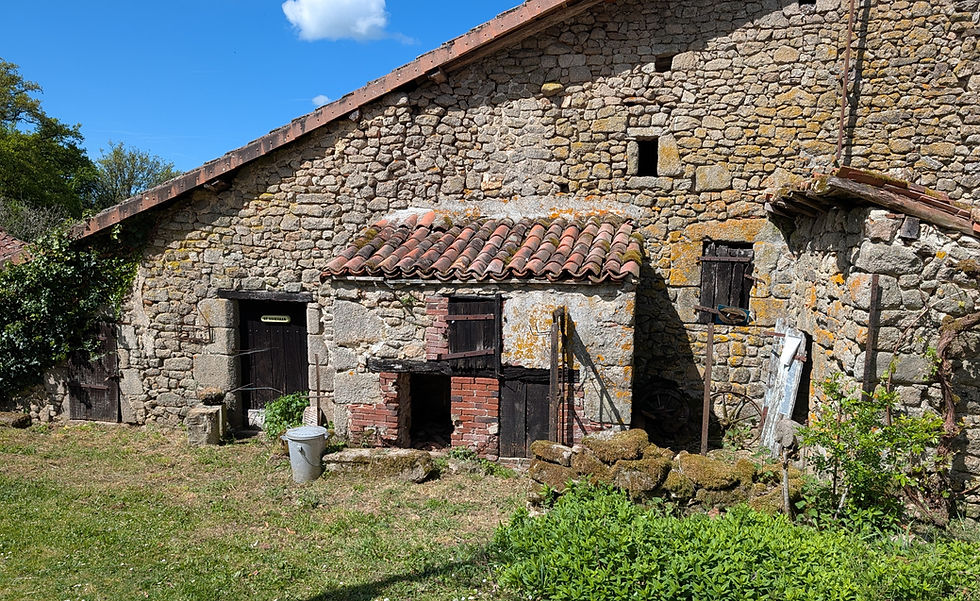
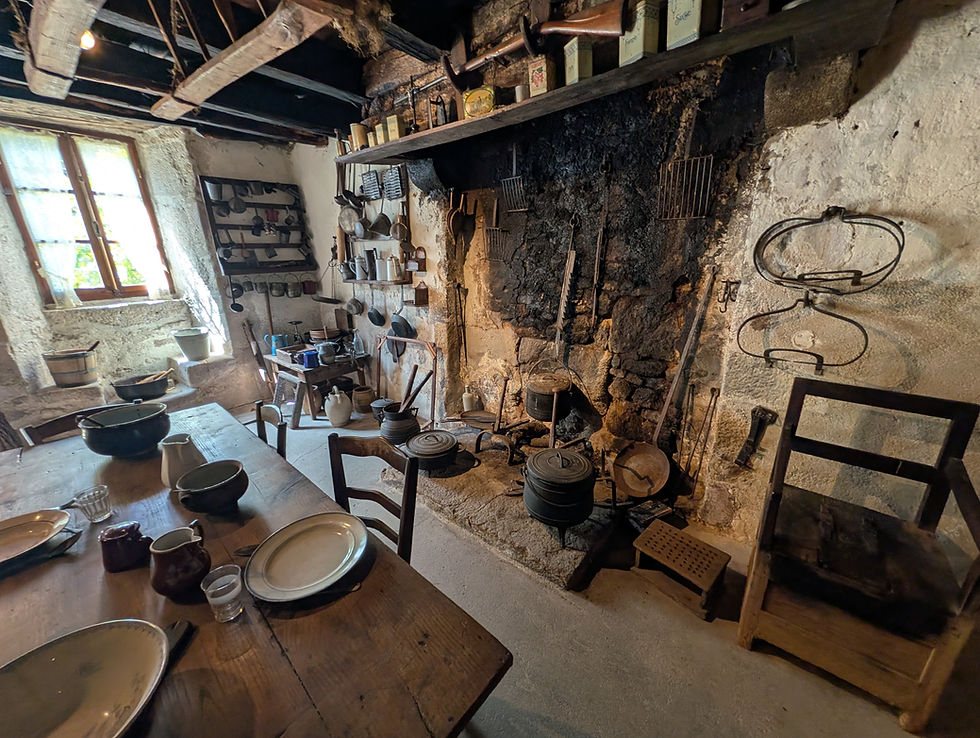
As we were only there a couple of nights, we took our hire car a few miles north to the Monts de Blond, a range of forested, granite-strewn hills. One of the highlights is Montrol-Sénard, a “village-musée” where time has effectively been frozen in the year 1900. We loved this quiet backwater and were delighted to stroll around the village entering the museum buildings quite freely without the need for any ticket or payment. A poignant, open-air museum focussing on the rural life of yesteryear, where you are free to wander through places like the old schoolhouse, the cobbler’s workshop, and traditional farm cottages, all perfectly preserved.
Montrol-Sénard captures the quiet, vanished nostalgia of the Limousin before the rush of the modern world. While I’m not quite 126 years old yet, the place did remind me in some ways of the West Country of my youth. Quiet. Silent even.
A deeply rural space that time has almost forgotten. I was spellbound. But then, I remained spellbound for the entire week.
Frequently Asked Questions About Visiting the Dordogne
Where is the Dordogne?
The Dordogne is a beautiful region in south-west France, known historically as the Périgord. It lies east of Bordeaux and north of Toulouse, with the River Dordogne winding through rolling countryside, mediaeval villages, vineyards and spectacular castles.
Why is the Dordogne so popular?
The Dordogne offers a wonderful blend of history, scenery and gastronomy. Visitors come for its fairytale villages, magnificent châteaux, prehistoric caves, excellent walking, river activities and some of the finest food and wine in France. It is a region that appeals equally to history lovers, food enthusiasts and anyone seeking a slower pace of life.
When is the best time to visit the Dordogne?
The Dordogne is delightful from spring through to autumn. May and June bring colourful gardens and pleasant temperatures, while September and early October are ideal for quieter sightseeing, harvest festivals and enjoying the region's famous food and wine. Summer is naturally the busiest season but also offers lively markets and long sunny evenings.
What are the most beautiful villages in the Dordogne?
Among the best-known are Beynac-et-Cazenac, La Roque-Gageac, Limeuil, Domme, Castelnaud-la-Chapelle and Trémolat. Each has its own character, from dramatic clifftop settings and mediaeval streets to peaceful riverside locations and bustling weekly markets.

How many days should I spend in the Dordogne?
To appreciate the region properly, allow at least five to seven days. That gives you time to explore several villages, visit a few castles, enjoy the local cuisine, browse traditional markets and relax beside the River Dordogne without feeling rushed.
What is the Dordogne famous for?
The Dordogne is renowned for its prehistoric caves, medieval castles, beautiful villages, duck dishes, foie gras, black truffles, walnuts and Bergerac wines. It is also one of France's finest destinations for scenic driving, walking and canoeing.
Is the Dordogne good for food lovers?
Absolutely. The region is one of France's gastronomic treasures. Traditional restaurants serve local specialities including duck confit, magret, foie gras, truffles, walnuts, artisan cheeses and seasonal produce, while Bergerac and Monbazillac produce excellent wines to accompany every meal.
What are the best things to do in the Dordogne?
Popular activities include visiting castles, exploring mediaeval villages, canoeing on the River Dordogne, discovering prehistoric cave art, wandering colourful food markets, enjoying vineyard tours, walking through the countryside and dining in both rustic inns and Michelin-starred restaurants.
Is the Dordogne suitable for a touring holiday?
Yes. The region is ideal for touring by car. Distances between attractions are relatively short, the countryside is wonderfully scenic and every day brings fresh discoveries, whether it's a hidden village, an impressive château or a riverside restaurant serving memorable local cuisine.
Is the Dordogne expensive?
The Dordogne caters for every budget. Alongside luxurious country house hotels and Michelin-starred restaurants, you'll find welcoming chambres d'hôtes, family-run hotels, village cafés and excellent-value restaurants serving authentic regional cooking. With a little planning, it is perfectly possible to enjoy the region without spending a fortune.
Fact File: The Southwest France “Triple Crown”
Le Vieux Logis
Set in a beautifully restored former tobacco-drying barn and priory, this hotel is the epitome of Périgord charm.Contact: +33 5 53 22 80 06 www.vieux-logis.com
Château de la Treyne
Dramatic 14th-century fortress perched on a limestone cliff directly overlooking the Dordogne river.Contact: +33 5 65 27 60 60 www.chateaudelatreyne.com
La Chapelle Saint Martin
A 19th-century manor house set within a 40-acre park. Serves as the perfect gateway to the region.Contact: +33 5 55 75 80 17 www.chapellesaintmartin.com
Travel Tip: Save Money on Airport Parking
Martin uses Holiday Extras, market leader in airport parking, hotels, lounges, and transfers – in 2025 its customers saved an average of £200 per trip by booking their airport parking in advance. For more information, HolidayExtras.com or call 0800 316 5678.


