
Exploring Sarawak - An Iban Longhouse Experience

Updated: Sep 7
I stayed in an Iban longhouse in the Sarawak rainforest and ate food cooked in bamboo.
After an hour of travelling, some of which was at high speed, we reached the longhouse where we’d be staying as guests of the local Iban people. Even before our arrival, I could hear the welcoming bell echoing through the lush jungle. A woman and a child came down to the riverbank to greet us, and we were ceremoniously marched up the ancient steps, carved from a single log, that led to the entrance of the longhouse.
I was the first in line to enter the long communal living space, receiving the traditional Iban greeting of fluttering flower petals thrown over me — it felt as if I were some errant bridegroom. Soon after, I was handed a compulsory cup of tuak, homemade rice wine, which instantly set the tone for the festivities.

I was taken as a guest into the rainforest by the Malaysian Government to show how people can still enjoy a sustainable and traditional lifestyle while refusing to sell out to large corporations who deforest the area and cause extreme ecological damage on a wide scale by putting in palm oil plantations.
For travellers looking for an authentic Sarawak experience, staying in an Iban longhouse offers a remarkable glimpse into one of Borneo's indigenous cultures. My visit combined a night in a remote longhouse with jungle walking, traditional hospitality and a remarkable lesson in rainforest cooking.
Staying in an Iban Longhouse
By now, it was late afternoon, and we had a choice: relax in the longhouse or go for a jungle walk. We did both. First, we explored the longhouse, home to 30 different families. This particular longhouse was half built on stilts — its back end sat on a hilltop above the river, while the front was elevated about 20 feet above the forest floor to avoid the many creepy-crawlies in the jungle.

The Iban people are incredibly laid-back. They didn’t mind us wandering around their communal home, nor did they seem to care if we peeked into their private living quarters. These private spaces were behind doors along one side of the longhouse, while a wide communal area stretched through the center, and a long raised platform ran along the other side. This platform was where we slept under mosquito nets, thoughtfully provided by the Iban.
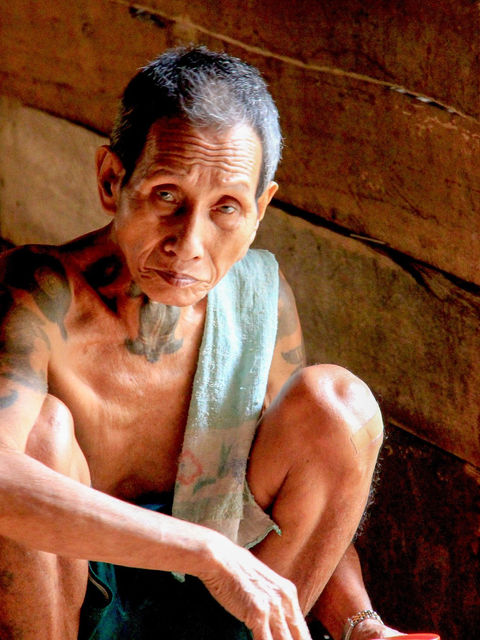
An Evening with the Iban

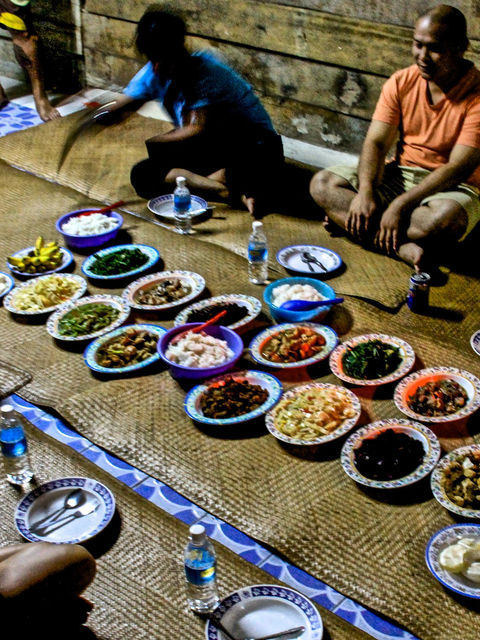
We spent the early evening sitting around, drinking green tea with the locals, watching them make mats, baskets, and handicrafts, and mend fishing nets. But as Henry, our guide, prepared our dinner in one of the private quarters, my companion and I decided to take a long stroll through the rainforest. In hindsight, this may have been a slightly reckless decision — there’s no dusk in the tropics, and if we had lost our way, we might have faced an uncomfortable night under the trees, surrounded by the countless creatures that inhabit the Bornean jungle.

As it turned out, that walk was perhaps the most magical one I’ve ever experienced. Being alone in a rainforest — or with just one other person — allows you to truly absorb the sensation of being somewhere incredibly alive and mysteriously exotic.
A Night of Celebration 🎶🍷
We returned safely, albeit somewhat speechless, just in time for an amazing multi-course meal prepared by Henry. Afterward, we joined the "Tuai Rumah" (headman) to spend an evening socialising. The Iban treated us to a performance, dressing in traditional headhunter gear and dancing to hypnotic music played on a collection of peculiar instruments. It was the only moment that felt a bit touristy, but then again, this was my adventure’s nod to eco-tourism.

And, of course, we were paying guests and had brought gifts, which had to be handed over with great ceremony — and plenty of homemade rice whiskey. By this point, I had moved on to the stronger rice whiskey, which made it easier to endure the painful spider bite I received during the dancing.

Despite this one unpleasant moment, the entire experience was magical, baffling, and enchanting. Though I didn’t meet the Wild Man of Borneo, I did discover a wilder side of myself — one that only surfaces in remote, exotic places like this. And that alone made the 30 hours of air travel and the jetlag worthwhile.

Learning the Art of Iban Rainforest Cooking
While I was in Borneo, I took the opportunity to learn more about authentic, primeval cooking from the experts. Deep in the remote hills of Sarawak, I met the Tuai Rumah and his charming ex-headhunter people. After some negotiations with our local guide Henry, the tribe agreed to put on a lunchtime picnic showcasing their rainforest cooking skills.




Bamboo Cooking in the Heart of the Rainforest
Our first task was to find a shady and beautiful spot along the river for our picnic. The rainforest in these parts is the real deal — thick, wild, and not exactly conducive to a leisurely lunch. There were plenty of mosquitoes, snakes, and other wildlife to consider.
We traveled by canoe to a shingle island in the shade. The tribal boatmen and women split into two groups: one group headed into the forest, machetes in hand, while the other stayed behind to build a large fire. Fallen tree limbs were fished out of the stream to construct a simple gantry above the flames, allowing the soaked hardwood to survive the heat without burning.

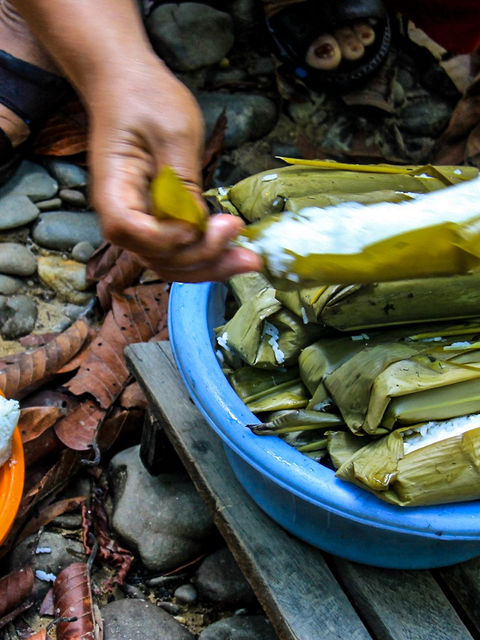
The others returned with long, fat poles of bamboo, freshly cut from the jungle. These were chopped into two or three-foot lengths and thoroughly cleaned. Meanwhile, banana leaves, which had been soaking in the river, were brought into play. Handfuls of wet, sticky rice were placed onto the leaves, folded neatly into cylindrical parcels, and placed inside the bamboo pipes.
After adding a bit of water, the bamboo pipes were propped upright over the fire, their bases resting on the shingle while their tops leaned against the hardwood gantry. The process was repeated with other ingredients: beef mixed with minced chillies, garlic, ginger, shallots, and white pepper — all sourced from the local gardens. Chicken and vegetables, including giant green beans and young bracken fronds, were given similar treatment.
All of the filled bamboo pipes joined the rice over the fire, creating a stunning arrangement of 30 to 40 green "organ pipes." Nearby, a basic wire mesh grill was used to barbecue larger cuts of meat, including local favourites like chicken gizzards.
The Feast
After about 15 minutes, which involved speechmaking and toasting with homemade rice whiskey, it was time to unpack the hot food. The bamboo pipes were emptied, revealing perfectly steamed rice and tender meat and vegetables. The sticky rice parcels were unwrapped and arranged in a bowl, while the other dishes were served in more bowls and placed along a central plank taken from the floor of one of the canoes.
That meal, eaten with our fingers on a mosquito-free shingle bank, was one of the best lunches I’ve ever had. It was a perfect blend of adventure, culture, and culinary delight, all in the heart of Borneo.

Is Sarawak's rainforest tourism becoming more sustainable?
Yes — although it is a continuing process rather than a finished achievement. When I visited Sarawak around ten years ago, I was struck by the possibility of combining tourism with the protection of the rainforest and by the opportunity for visitors to stay in Iban longhouses and experience something of traditional life. Since then, Sarawak has increasingly put sustainable and responsible tourism at the heart of its tourism policy.
The Sarawak Tourism Board now describes its ambition as making Sarawak a leading ecotourism destination driven by empowered communities and responsible actions. Its current sustainability policy places particular emphasis on protecting the environment, respecting cultural heritage and creating economic opportunities for local communities and businesses.

What does sustainable tourism mean in Sarawak?
It is not simply a question of putting the word "eco" in front of a tour. The idea is to make tourism work for the rainforest and the people who live in it, rather than allowing increasing visitor numbers to damage either.
That means protecting forests and wildlife, managing visitor impacts, reducing waste and environmental damage, respecting indigenous cultures and ensuring that local communities can benefit economically from tourism.
Sarawak's current tourism policies specifically link sustainable tourism with environmental, social, cultural and economic outcomes.
Can visiting an Iban longhouse actually help local communities?
It can, provided the tourism is organised responsibly and the community has a meaningful role in it.
Community-based tourism has become an important part of the sustainable-tourism approach in Sarawak. Visitors staying in longhouses, using local guides, eating locally produced food and buying local handicrafts can all contribute money directly to rural communities.

Research published in 2024 into Iban cultural heritage in Sarawak's Song District found considerable potential for community-based tourism based on the Iban people's traditional knowledge, culture and participation in village activities.
There is an important distinction, however: simply taking tourists to an indigenous community does not automatically make a trip sustainable. The benefits need to reach the community, and local people need to have a genuine voice in how tourism develops.
Is Sarawak trying to protect its rainforests while opening them to tourists?
That is increasingly the stated objective.
Sarawak's Forest Department continues to promote conservation and responsible ecotourism, including cooperation with international partners on biodiversity conservation, protected-area management and community participation.
There are also examples where the authorities are deliberately taking a cautious approach. At Kalamuku National Park, for example, future tourism access is being assessed alongside conservation considerations rather than simply opening the park to visitors as quickly as possible.
Elsewhere, Sarawak has announced major investment in developing the Sabal Forest Reserve as an ecotourism and nature-education destination, with the stated intention of maintaining the authenticity of the forest ecosystem while allowing visitors to experience it.
Does that mean tourism is no longer a threat to the rainforest?
No — and it would be wrong to suggest that.
Sustainable tourism is about managing the impact of visitors, not pretending that tourism has no impact. Building accommodation, roads and visitor facilities, transporting tourists and increasing visitor numbers can all put pressure on fragile environments.
The encouraging development is that conservation and community participation are now much more explicitly part of the planning conversation. Sarawak's tourism authorities say they want responsible tourism to preserve nature, empower communities and maintain authentic experiences.
For a visitor, that means choosing operators and experiences that demonstrate genuine involvement with local communities and respect for the environment is just as important as choosing where to go.
So, has Sarawak found the answer to sustainable rainforest tourism?
Not completely — and perhaps nowhere has.
But there has been a significant shift towards recognising that Sarawak's greatest tourism assets are its forests, wildlife, rivers and indigenous cultures, and that destroying those assets would ultimately destroy the very reasons people come to Sarawak.
That makes the sort of experience I had in an Iban longhouse particularly interesting today. What seemed to me, around ten years ago, to be a fascinating alternative to conventional tourism is now part of a much wider discussion about how tourism can help rural communities while giving visitors a genuine connection with Sarawak's extraordinary natural and cultural heritage.
For anyone planning a trip to Sarawak today, the best sustainable tourism experiences are likely to be those where conservation, local communities and tourism are working together — rather than simply putting a rainforest label on a conventional holiday.


