Southern Dartmoor: A Call to the Hills

Editors, publishers, bank managers - to hell with the lot of them, said I, casting my diary to the wind and heading for the hills. The recent re-opening of Dartmoor, or at least 60 percent of it, offered a promise of mountain air and panoramic views, and without more ado I shoved all my other engagements to one side.
I wasn't the only one. I have never seen Dartmoor so packed on a weekday afternoon.
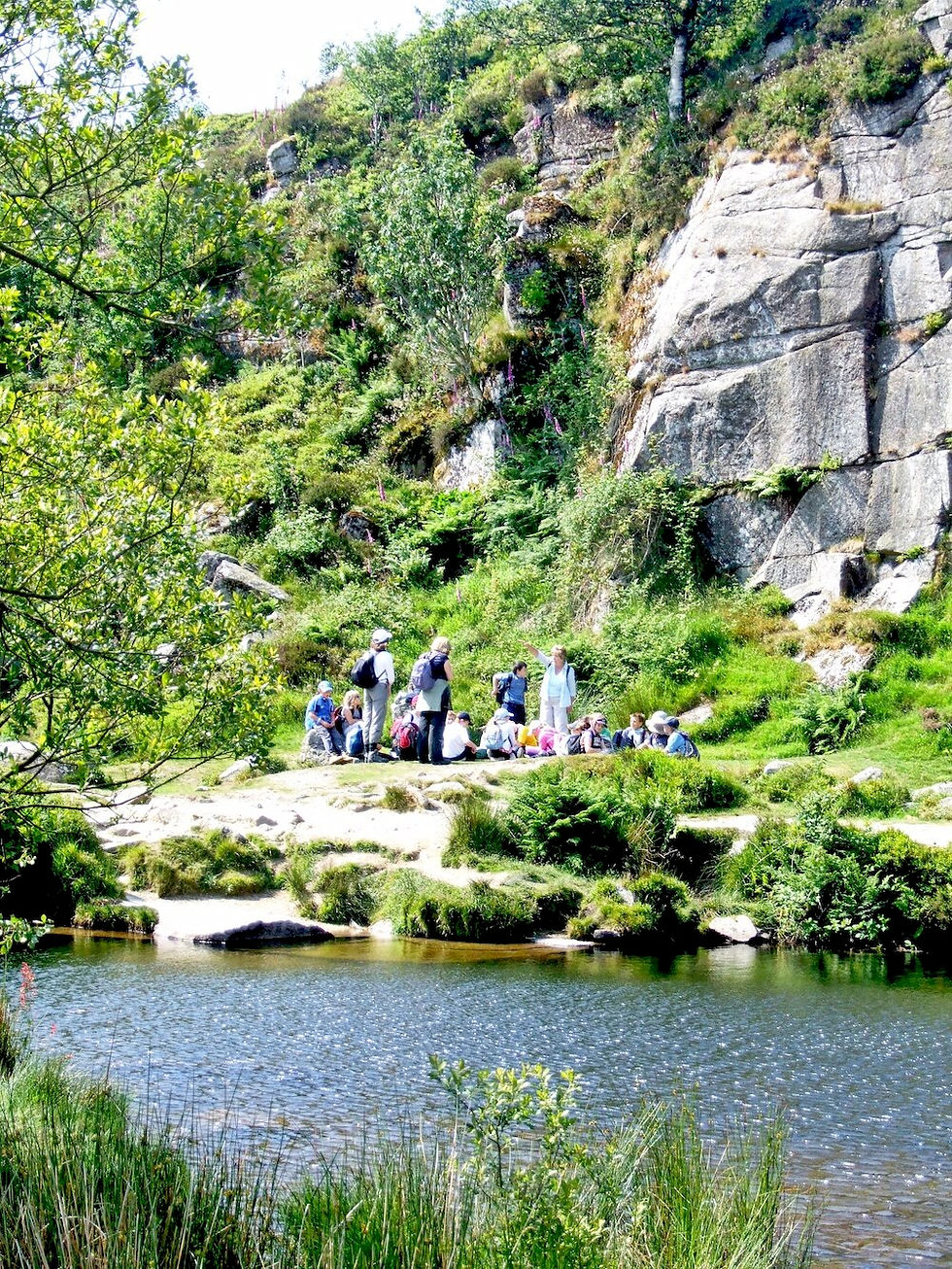
School kids were orienteering, old folk were sipping tea in lay-bys, mountain-bikers were doing wheelies, bird-watchers were hot on the trail of wheatears, and me, along with a thousand or two others of his ilk, was hiking.
Where to Walk on Dartmoor: South and East Moor Options
But where to roam? You are more than spoilt for choice among the hills and dales of south and eastern Dartmoor.
"Ever been to Buckland Beacon?" said a communications officer for the National Park Authority. "It has one of the best views in Devon and there's a great walk to it from Haytor."
He had been showing me detailed maps of the newly re-opened footpaths at the National Park's HQ near Bovey Tracey, so it was just a five minute drive up the hill to the beginning of his proposed hike. However, at Haytor the giant rocks seemed as if they were about to sink under the weight of human-kind, so I drove on to neighbouring Saddle Tor to begin the four mile stroll.
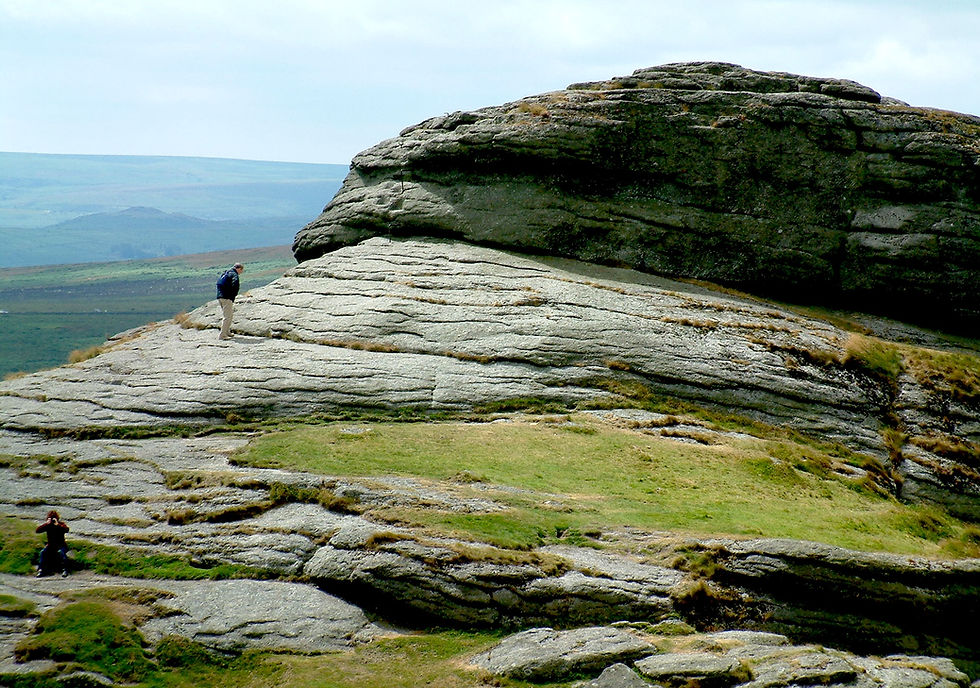
Route Guide: Saddle Tor to Buckland Beacon Walk
Basically the walk takes you west to Top Tor and then south through Foale's Arrishes across Blackslade Down and over Buckland Common until you reach the Beacon and its Ten Commandment Rocks.
More about them later, but first I'll quickly mention that the most desirable return route crosses Rippon Tor; however I cannot recommend you go that way because it traverses non-access land grazed by stock and so the farmer might, understandably at the present time, be unhappy at the sight of troops of Express and Echo readers hauling their way across the hill. There is a path though, and once the threat of foot and mouth is finally laid to rest then Rippon Tor takes you directly back from whence you came and so completes a superb circular walk.
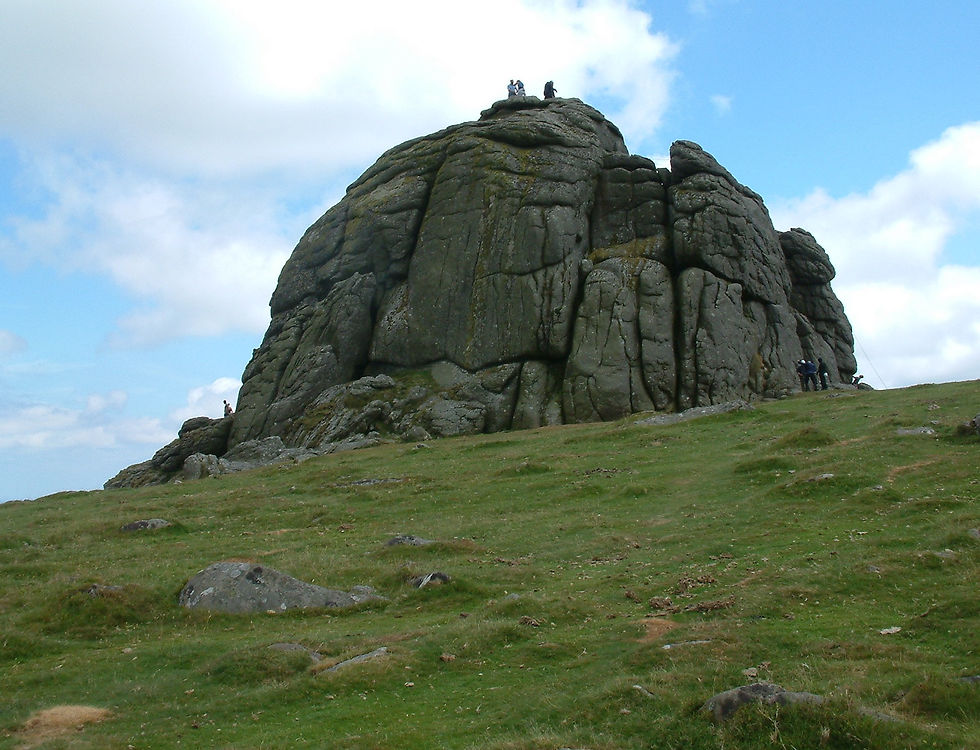
We returned the way we came, which was all right as there is much to see and admire up here on the roof of the world.
Saddle Tor and Top Tor: Dramatic Views and Logan Stones
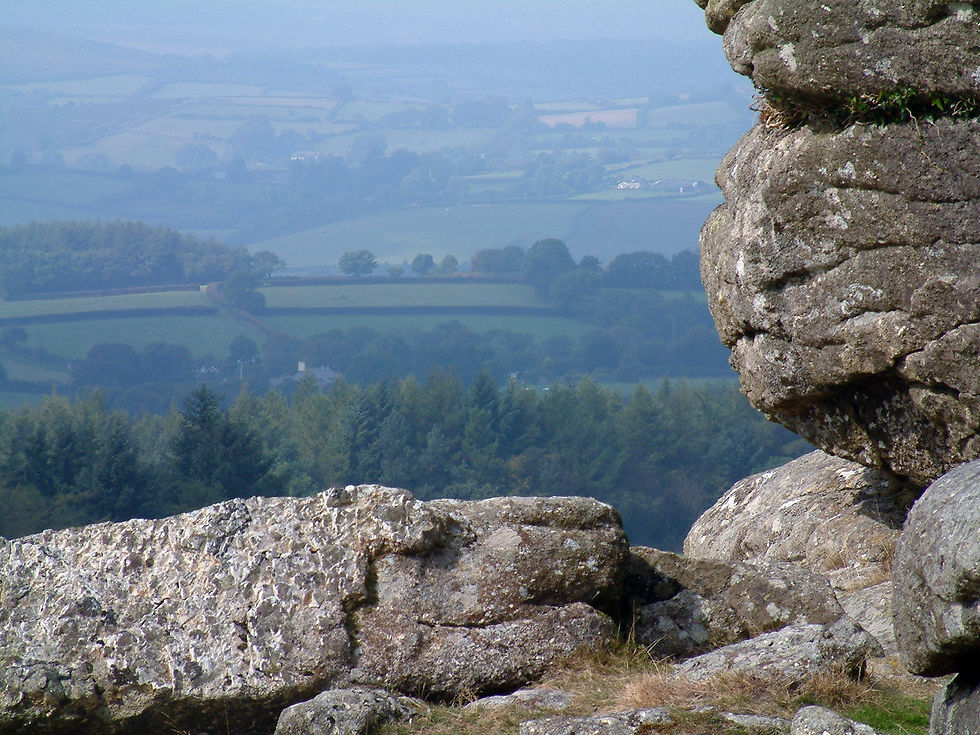
Saddle Tor is an easy pile to climb and doesn't look particularly spectacular as you ascend from the road. But once you're up there you realise that its northern aspect is far more dramatic - its lofty ramparts fall quickly away to reveal a massive sweeping panorama of the central moors.
IF you are enjoying this Dartmoor walk why not check out our Exmoor hikes here
It's an "avenue tor" which means that the rocks are split into two separate stacks. You can walk between these towards what the map calls Seven Lords Lands. Who the seven lords were I have no idea and can find no mention of them in my extensive library of books on Dartmoor.
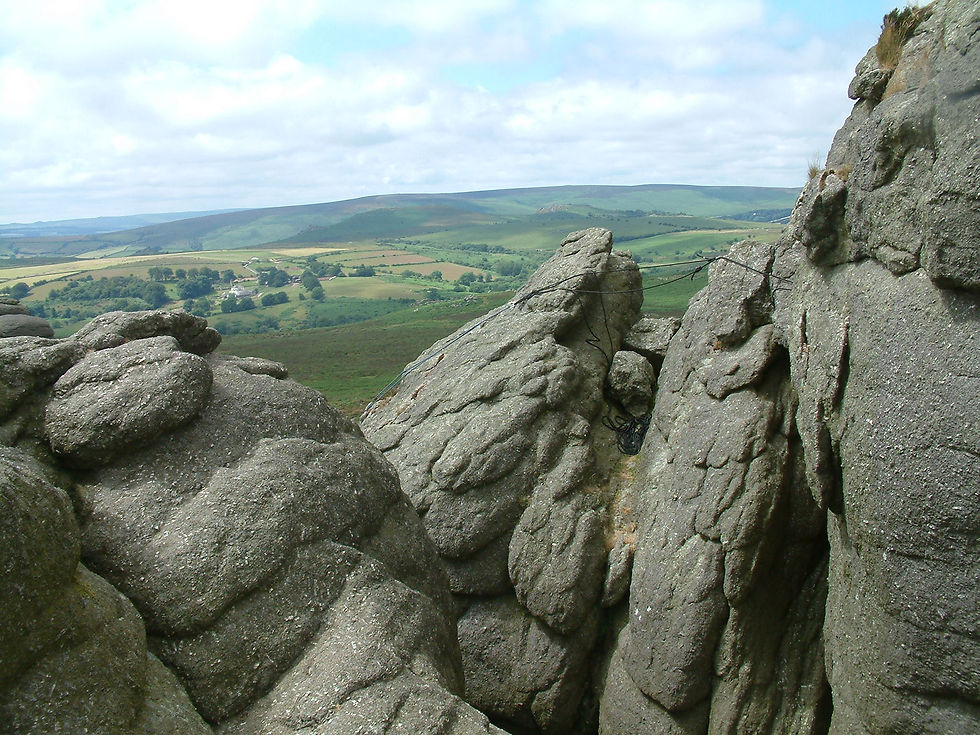
Beyond, across the Widecombe road is Top Tor which sounds as if it should be up there among the big stacks, but is in fact a modest molehill compared with some of its neighbours. It's known locally as 'Tapter' and is a somewhat fragmented pile. Among the rocks is a 'logan-stone' - there are several of these on the moor: great rocks left to stand on just one pivotal point after erosion has taken away the surrounding soil.
Foale’s Arrishes and Dartmoor Legends
A quarter of a mile due south is Pil Tor and directly beyond are Foale's Arrishes. Who was Foale, and what is an arrish? You may ask... I did and could only find that a man called Foale used to empound his animals up here in the walled remains of an ancient Iron Age farmstead.
As usual, good old William Crossing, Dartmoor's premier chronicler, saved me from further ignorance in the matter with a yarn which I, in turn, shall pass on to you:
"It was at Foale's Arrishes that a certain villager once decided to settle," says Crossing in his Guide to Dartmoor. "And though his neighbours tried to persuade him to remain where he was, he set out one day with the avowed intention of erecting a shelter on the spot, and passing his remaining days there.
"But like Cyrus, who, as Persian legends say, having gone into retirement, suddenly disappeared, the labourer was never seen again. Whether he was spirited away by the pixies, or fell prey to the Evil One, who is said to take an airing occasionally on Tor Hill, on the slope of which the Arrishes are situated, nobody could say; all that was certain was that the neighbourhood knew him no more."
Buckland Beacon: Views, History and the Ten Commandments Stones
With a shudder we passed the forlorn looking Arrishes and headed for William's Well which is a small stream that rises just under Wittaburrow. Beyond is the tiny road that leads west towards the great Dart valley complex of combes, and this we crossed to gain Buckland Common.
This is a great south pointing peninsula of hill that cleaves its way into the Dart valley and affords fine views every step of the way. There are plenty of level tracks to follow and they all lead to Buckland Beacon which dominates the southern tip of the common.
"This small group of rocks attains an elevation of 1,282 feet," says Crossing, "and though presenting nothing striking in itself, should by all means be visited on account of the particularly fine views commanded from it."
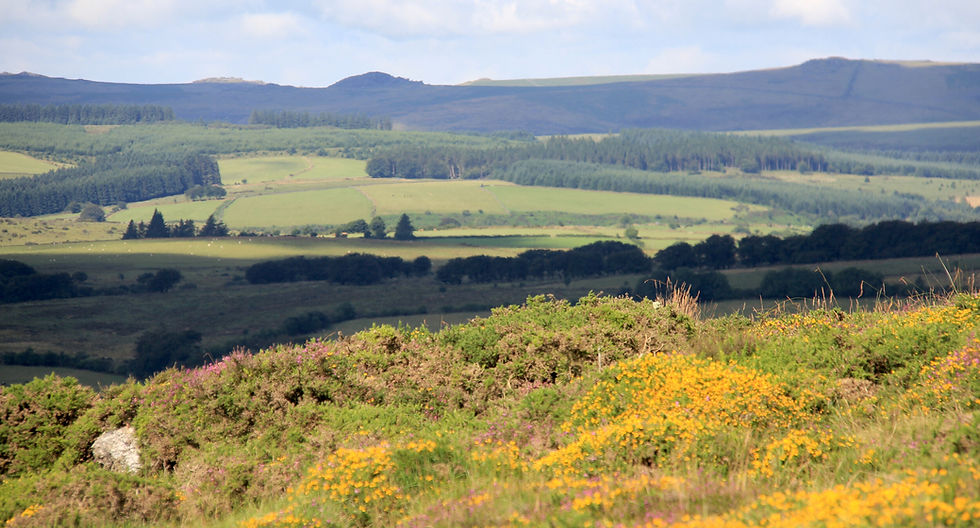
Crossing then goes on at length to detail all the points of the compass that you can survey from this lofty height - but suffice to say that you can see as far east as Beer Head beyond Sidmouth, and as far south as Bolt Head, just south of Salcombe. This is Big Country Devon-style, and the wooded twistings and turnings of the Dart far below only accentuate the vastness of the scene.
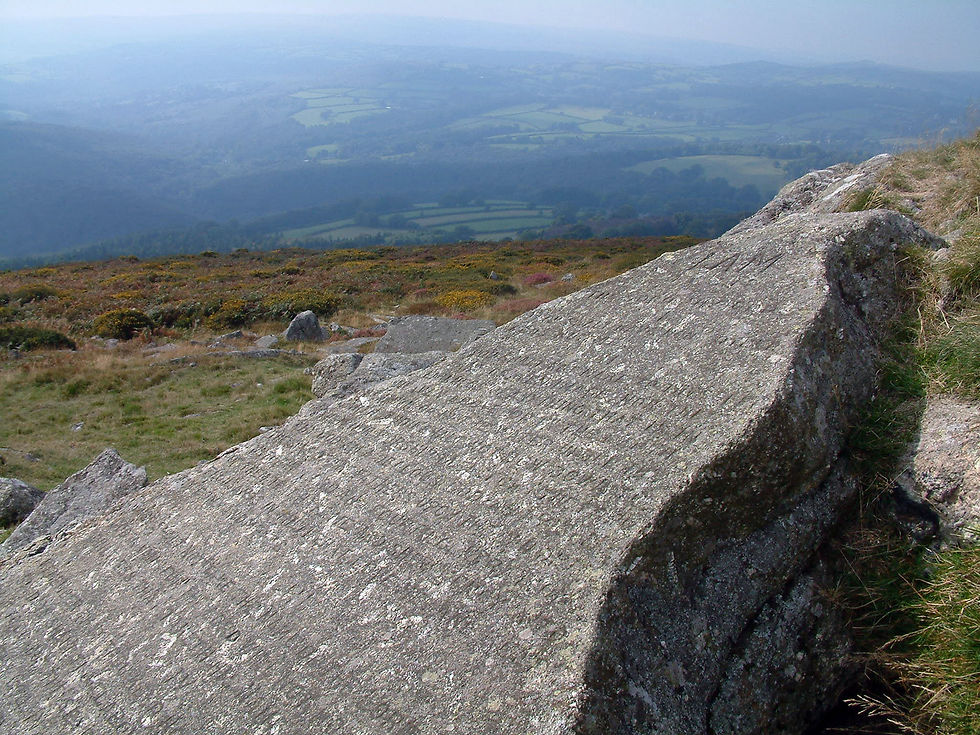
As its name suggests, Buckland Beacon was used as a signal point for centuries and standing on its ramparts it is easy to imagine the somewhat awesome foreboding which would result from lighting a fire up here. A French invasion perhaps or maybe the Spanish fleet...
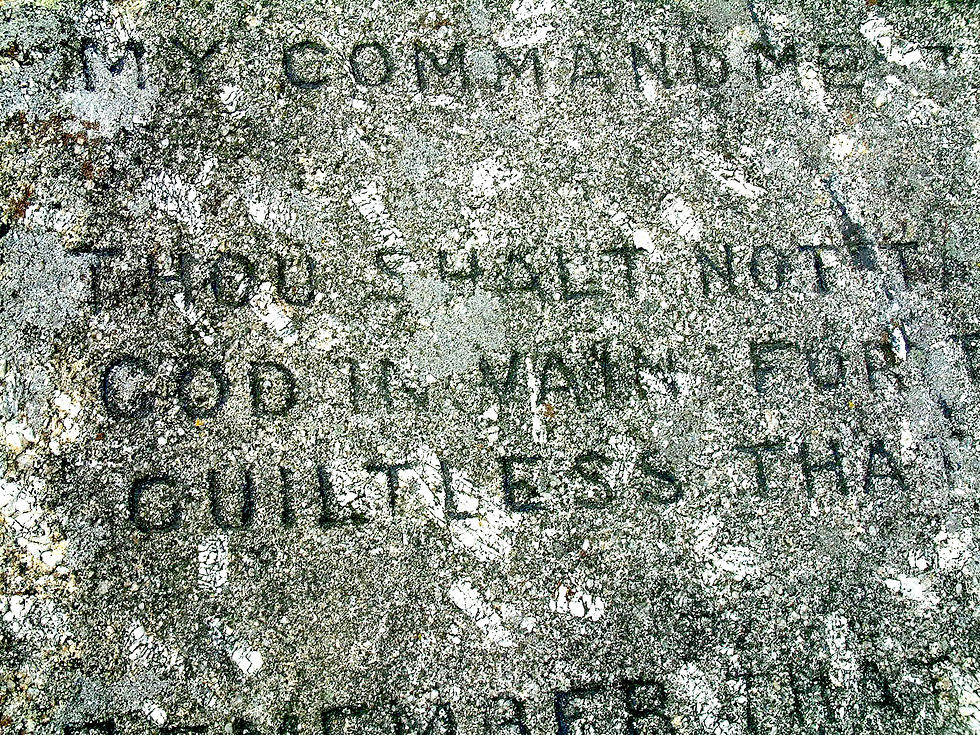
Whatever the threat you might find yourself turning to God - and at Buckland Beacon that is easy to do thanks to the Ten Commandments which have been hewn into two massive stones just below the tor. Why lord of the manor William Whitely paid for these two slabs to be so marked back in 1928 I am not altogether sure - but I am told the stone mason who did the deed had to spend many months in this draughty spot carving out the strictures. He even lived next to the job in a temporary hut, but certainly one can think of far worse places to eke a daily crust.
Whoever he was, he did a fine job and, suitably sobered, we turned north to retrace our steps across the moor with all those Thou Shalt Not's ringing in our ears. It must have been several hours before I broke one, but that's another story...
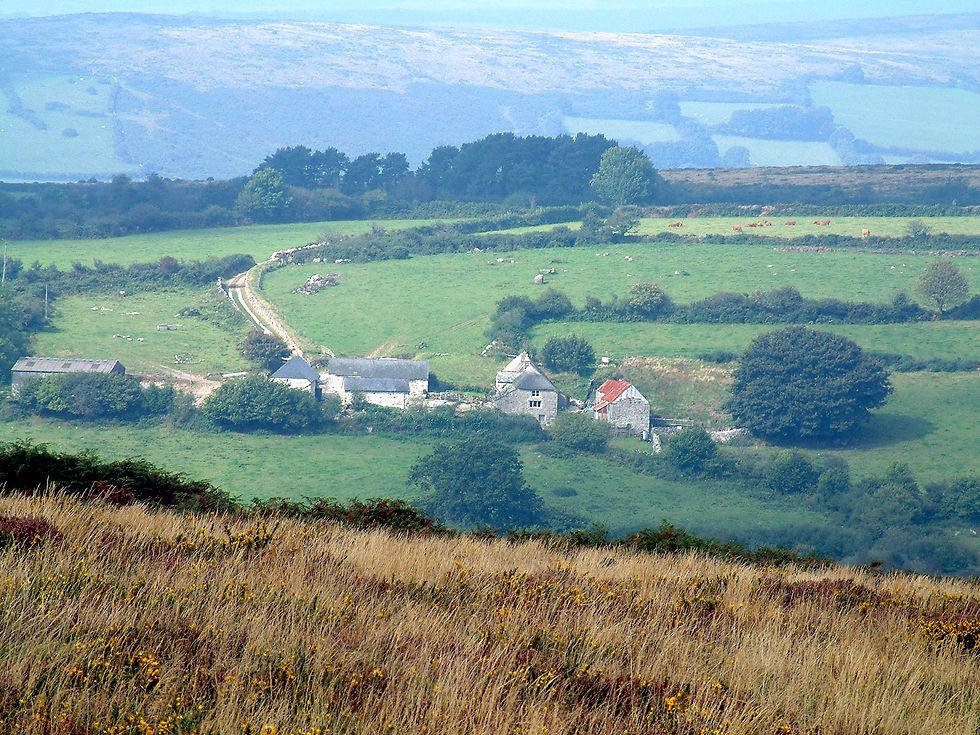
Dartmoor Walk Fact File
Basic Hike: From Saddle Tor to Buckland Beacon via Top Tor and Foale's Arrishes.
Recommended Map: Ordnance Survey Outdoor Leisure 28
Distance and going: four miles easy going, fairly level throughout.
FAQ Content:
Is the Saddle Tor to Buckland Beacon walk easy?
Yes, it’s around four miles and mostly level, suitable for most walkers with basic fitness.
Where do you start the walk?
Most people begin near Saddle Tor, especially when Haytor is busy.
Can you walk a circular route?
Yes, via Rippon Tor, but only when access restrictions allow.
What are the Ten Commandments stones?
Large carved stones near Buckland Beacon, commissioned in 1928 and engraved with biblical commandments.
When is the best time to visit Dartmoor?
Spring and autumn offer the best balance of weather, light, and fewer crowds.