Haytor to Widecombe Walk – A Classic Dartmoor Route via Hound Tor

Updated: Jul 5
Looking for one of the best walks on Dartmoor? This classic Haytor to Widecombe walk combines dramatic granite tors, sweeping moorland views, prehistoric landscapes and one of Devon's prettiest villages. Starting beneath famous Haytor Rocks and finishing in Widecombe-in-the-Moor, it's a memorable hike that captures everything people love about Dartmoor National Park.
This seven mile walk from Haytor to Widdecombe is designed to showcase Dartmoor’s seasonal weekend bus service, The Hoppa - which is good for the environment as visitors can leave their cars off the hills, and good for local businesses.

“The Haytor Hoppa frees walkers up to do linear walks – people could leave their car in Bovey Tracey, jump on the bus, visit our information centre at Haytor, do a walk, call in at Widdecombe… It’s a way they can enjoy the moor and contribute - perhaps having meal when they reach Widdecombe,” said a man from Dartmoor National Park Authority.
We alighted from the bus at the new Haytor Visitor Centre. From here it’s always tempting to walk directly up to Haytor Rocks which is one of the most amazing tors on Dartmoor, but we aimed slightly to the north of the famous rock-stacks so we could reach the equally famous Haytor Quarries.
The great holes in the granite were full of schoolchildren enjoying an educational day out when we walked by – and presumably they were learning something of the history of the quarries.

Basically the story is linked to the remarkable Templer family who lived down at Stover far below - in 1820 George Templer built the extraordinary granite tramway from Haytor to link with the Stover Canal in order to export the granite being extracted from his Dartmoor quarries. The Duke of Somerset then bought the tramway, which eventually fell out of use when the quarries became uneconomic during the 1850s.
You’ll see the old granite tracks of the tramway still residing where they were placed all those years ago. I can never look at them without thinking what a terrific grinding clanking noise the trolleys must have made when being pulled along them.


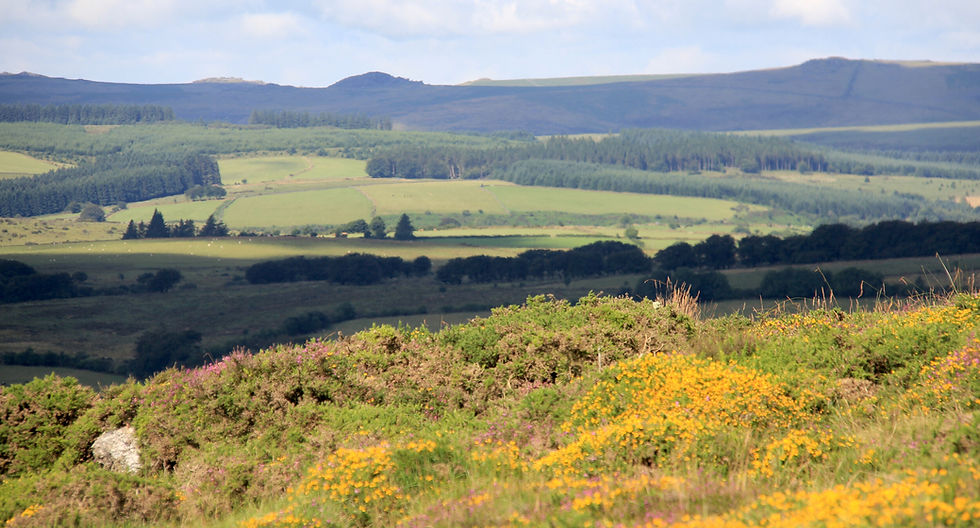
We head northwest of Haytor Quarries, across the main tramway which is now part of the Templar Way, and continue across the downs to Smallacombe Rocks. From this ragged low tor you are treated to vast views of that normally hidden immensity of countryside which surrounds the mid Teign Valley area.
Highlights of the walk
Haytor Rocks
Haytor Quarry
Moorland views
Hound Tor
Medieval field systems
Widecombe church
Village pubs
As you are facing north enjoying this view from the rocks, then you will see a deep valley dipping to your left – and on the hills almost directly opposite this green abyss you will spy the magnificent twin-pile of Hound Tor.
This is where we are heading – needless to say, to reach Hound Tor we must descend way down into the warm and windless valley at the bottom of which we will cross the Becka Brook. To do this we enter the upper limits of the extensive valley woodlands which stretch all the way from here to the depths of Lustleigh Cleave.
We’re not among the trees for long, though, because we’re able to cross the brook via a footbridge and climb the steep path that ascends way up past Greator Rocks. Over a century ago William Crossing was claiming these rocks to be one of the most beautiful tors on Dartmoor.
To me the Rocks have an almost biblical air. Shrubs and small trees sprout from crevices high above and somehow you can imagine some old First Testament prophet haunting the place armed with nothing but a staff and a foretaste of the centuries...
As was his way, Crossing wrote something sad and haunting about the place. It was to do with a maiden and her lover whose habit it was to walk here at eventide: “Then a time arrived when she came alone to the tor, for the youth had been called away to the wars. Summer followed summer, and at length the maiden's visits ceased, and the tor knew her no more. She rested in the quiet churchyard at Manaton, while her lover slept in a foreign field...”
Over the eastern shoulder of the rocks we climb, and here a track heads straight back towards Hound Tor. On the way it threads past the site of a mediaeval village where the outlines of the old homesteads are still plain to see, although no-one has lived here for some 650 years.
The antediluvian residents lived in longhouses which they shared with their few animals, they grew crops like oats and rye, and they tended kitchen gardens tucked around the settlement.
Exactly why they left remains a mystery, but the remains of kilns devised to dry corn might provide a clue. Dartmoor became a damp and cold place during mediaeval times and the folk, quite wisely, upped-sticks for lower climes.
We took a shortcut from here, deciding not to visit Hound Tor in the interests of lunch at Widdecombe. So we followed the most direct route by walking southwest over Houndtor Down and turning left along the lane. The moment we saw the fields on our right give way to moorland, we took to the heath crossing Bonehill Down to reach Bonehill Rocks eventually find the smaller lane that drops down to the village.
It was simply a matter of following this quiet byway, past the hamlet of Bonehill, to the road junction which is just two minutes walk from Widdecombe, lunch, and the bus-ride back.
Fact file
Basic Walk: from Haytor Visitor Centre across the moors to Hound Tor, then west via Bonehill Down to Widdecombe.
Recommended map: Ordnance Survey Dartmoor OL 28
Distance and going: seven miles, easy going.
Bus service: The Haytor Hoppa operates on Saturdays from late May until 15 September and is a circular service which starts/finishes from Haytor Visitor Centre. For further information contact the National Park Visitor Centre at Haytor, tel 01364 661520.
Getting there without a car: During the summer months the Haytor Hoppa bus links Newton Abbot, Bovey Tracey, Haytor and Widecombe, making this one of the easiest Dartmoor walks to enjoy by public transport. (Always check current timetables before travelling.)
Frequently Asked Questions
How long is the Haytor to Widecombe walk?
The Haytor to Widecombe walk is around 7–9 miles (11–14 km), depending on the exact route you choose. Allow between four and five hours to enjoy the scenery, explore the tors and stop for refreshments in Widecombe.
Is the Haytor to Widecombe walk difficult?
This is generally considered a moderate walk. There are some steep climbs and uneven rocky sections, but most reasonably fit walkers should be able to complete it. Good walking boots are recommended, especially after wet weather.
Can beginners do the Haytor to Widecombe walk?
Yes, although beginners should allow plenty of time and be prepared for rough moorland terrain. Navigation can become more challenging if low cloud or mist descends, so always carry a map or GPS device.
Where can I park for the Haytor walk?
There is a large National Park car park close to Haytor Rocks, making it one of the easiest starting points for exploring this part of Dartmoor. It can become busy during weekends, school holidays and sunny summer days.
Is there public transport between Haytor and Widecombe?
Yes. During the summer months the Haytor Hoppa bus links Haytor, Widecombe, Bovey Tracey and surrounding villages, making it possible to complete a linear walk without needing two cars. Always check the latest timetable before travelling, as services are seasonal.
Are dogs allowed on the walk?
Dogs are welcome on most of the route, but they should be kept under close control, particularly during the bird nesting season and when livestock or Dartmoor's famous ponies, sheep and cattle are grazing on the open moor.
What is the best time of year to walk from Haytor to Widecombe?
Spring and autumn are often the best seasons, when the moor is quieter and temperatures are ideal for walking. Summer offers long daylight hours and the seasonal Haytor Hoppa bus service, while winter can provide spectacular scenery but requires extra care because of rapidly changing weather conditions.
What wildlife might I see on Dartmoor?
Depending on the season, you may encounter Dartmoor ponies, sheep, Highland cattle, buzzards, ravens and a variety of moorland birds. Wildflowers, heather and gorse provide colourful displays throughout the year.
Is Haytor one of the best walks on Dartmoor?
Many walkers consider the Haytor area to offer some of the finest scenery in Dartmoor National Park. The combination of dramatic granite tors, sweeping moorland views, fascinating history and the picturesque village of Widecombe makes it one of the region's classic walks.
Are there places to eat in Widecombe?
Yes. Widecombe has several welcoming pubs, cafés and tea rooms where walkers can enjoy lunch or refreshments before returning by bus or retracing the route across the moor.