Al Fresco Perfection: The Secret to the Ultimate Westcountry Picnic C

The picnic season began weeks ago, thanks to the weather. In fact, you could argue, there’s never been a better year for picnics. All you need is some shade so you can hide from the sun - which is not something you’ve often been able to say in an average British summer.

Now, as we reach peak holiday season, picnickers across the region will be dusting off hampers, hunting down tartan rugs and planning outdoor repasts. In your mind you see images of hot beaches, cool riversides or lush green meadows where your picnic rug is laden with wonderful things to eat. But the sheer logistics of preparing a minor banquet at home and carting it over hill and dale does tend to put most of us off, most of the time.
A past study carried out by the National Trust uncovered all manner of negative perceptions. More than half the respondents questioned admitted they were deterred by the threat of wasps and insects - a bit of feeble excuse given the grand scale of the great outdoors. More bafflingly, a third of those surveyed claimed they felt restricted about where they were legally permitted to eat outdoors.

Which surprised me. I feel mystified when I see people picnicking in lay-bys on the side of busy roads. Surely they could find somewhere more pleasant and peaceful?
Historically the pique-nique, as the original spelling indicates, was a French invention - and you could argue that the folk across the Channel are better at executing them. They have the portable meal down to a fine art, whereas the National Trust research discovered that two-thirds of English folk thought it was too difficult and too much fuss to create meals to eat outside. The result has all too often been a national fallback on industrially manufactured pork pies, soggy sandwiches, unripe tomatoes, and perhaps an overheated apple.

Now we’re experiencing the warmest summers on record, perhaps we ought to rid ourselves of this negative thinking. Humans have been around for more than 100,000 years, and we have only been dining indoors for a fraction of that time. A good picnic can be a reward for hard work or for enduring months of wintry weather. It is the antithesis of hard slog, the opposite of humdrum, and the enemy of everyday uniformity.
The Anatomy of the Perfect Picnic Spot
To understand what elevates a standard outdoor lunch into something memorable, you need to look at the structural requirements of the location itself. When Exmoor’s famous medieval clapper bridge at Tarr Steps was named the UK’s best picnic venue by the Sunday Times a few years ago, it was because the wooded section of the River Barle contains all the essential ingredients required for al-fresco perfection.
First: superb scenery. Who wants to suffer the physical discomfort of sitting on the ground just to be confronted by something ugly or mundane?
Secondly, a premier spot requires natural shelter. I’d normally say the outdoor diner needs a topography that keeps out the prevailing wind and rain but, as I say, this year we need shade.
Thirdly, a comfortable bit of nature to sit on - all too often overlooked by those who mistakenly choose pebble beaches or jagged Dartmoor tors. Hard surfaces will suffice provided they are smooth, but a grassy sward is the gold standard.
Fourthly, there must be something to stare at. Ideally, as well as a good view, the human eye requires a focal point - a rushing river, a historic ruin, or the entertainment of watching tourists teeter perilously across stepping stones.
Finally, a truly great location requires space for children to burn off energy, combined with the possible need for a Plan B - a nearby alternative location of equal merit should the primary spot be entirely overrun by mid-afternoon.
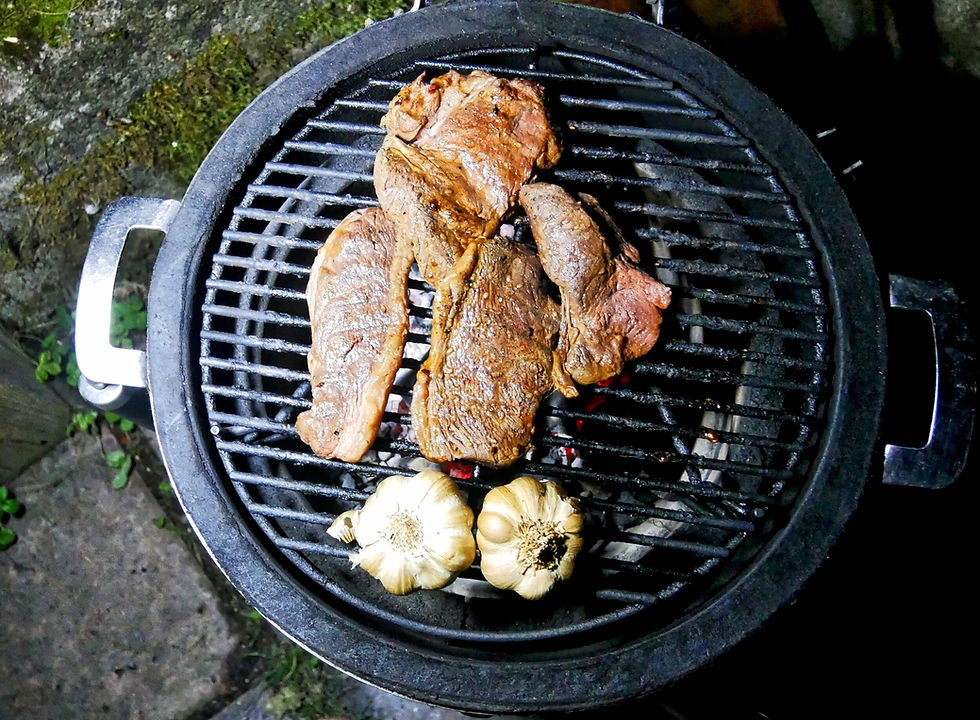
Oh, and while we’re on about locations… please please do not use one of those horrible portable barbecues. Not at any time, but particularly not this summer when everything is tinder dry.

Six of the Best West Country Locations
If we leave out the much-vaunted Tarr Steps, I can, off the top of my head, think of half a dozen locations that fulfil the criteria:
1. Porthgwarra, West Penwith
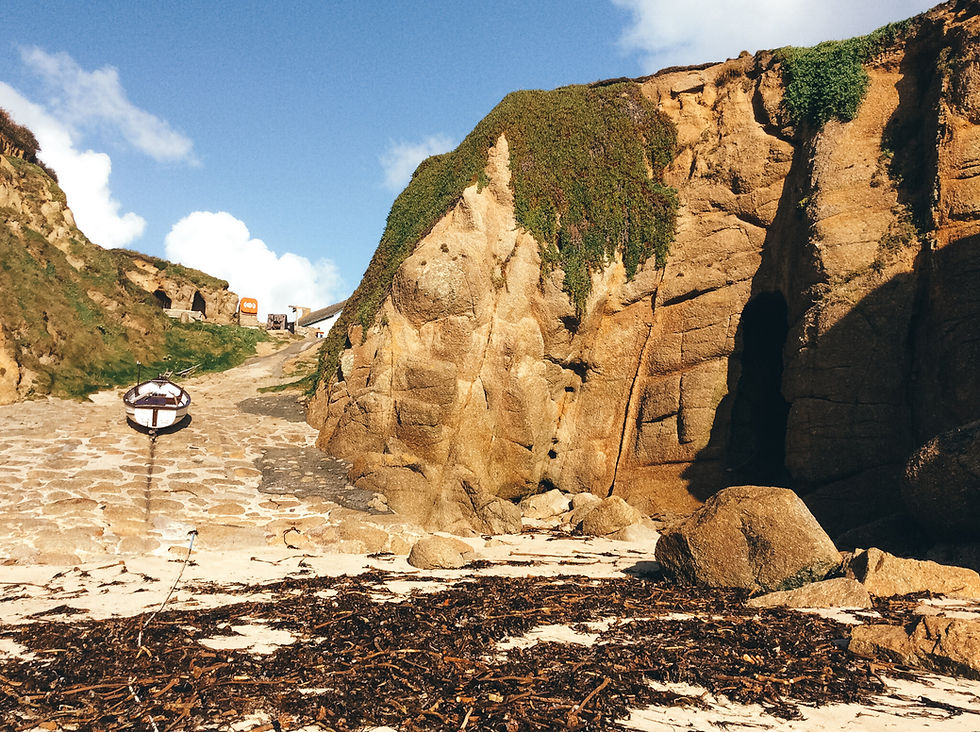
An idyllic hidden cove with the feel of a classic coastal adventure story. Fabulous oceanic scenery sheltered by the massive bulk of Gwennap Head. A cosy cove where children can explore hand-carved tunnels.
Plan B: The grand sandy expanse of neighbouring Porthcurno.
2. Fernworthy Reservoir, Dartmoor

A combination of wilderness, woodland and water, thanks to Forestry England and South West Lakes Trust. Located in the heart of the moor, yet extensive forest provide shelter and shade from the elements, alongside purpose-built picnic facilities.
Plan B: Bellever Forest, with many similar attributes, just down the road.
3. Staple Plain, The Quantocks

Moorland mixed with managed forest and expansive views. The ready-made picnic tables installed at the edge of the plantation are well-protected from hot sun and prevailing.
Plan B: Holford Glen, which offers even deeper shade and a distinctly poetic atmosphere.
4. Cromwell’s Castle, Tresco

One of the most dramatic spots in the Isles of Scilly. The neighbouring island of Bryher protects the fjord-like sound from the worst of the wind.
Plan B: The white sandy sweep of Old Grimsby on the opposite side of the island - or the amazing Low-Tide Pop-Up Picnic which is held between the islands each year.
5. Golden Cap, West Dorset

For those occasions when only the grandest will suffice. Dining on the South Coast’s highest hill offers vast panoramas of the Devon and Dorset coastlines. Because it is so steep-sided, one flank or the other will always provide shelter from the wind.
Plan B: Heading to the beach at Charmouth to search for fossils.
6. Valley of Rocks, Lynton
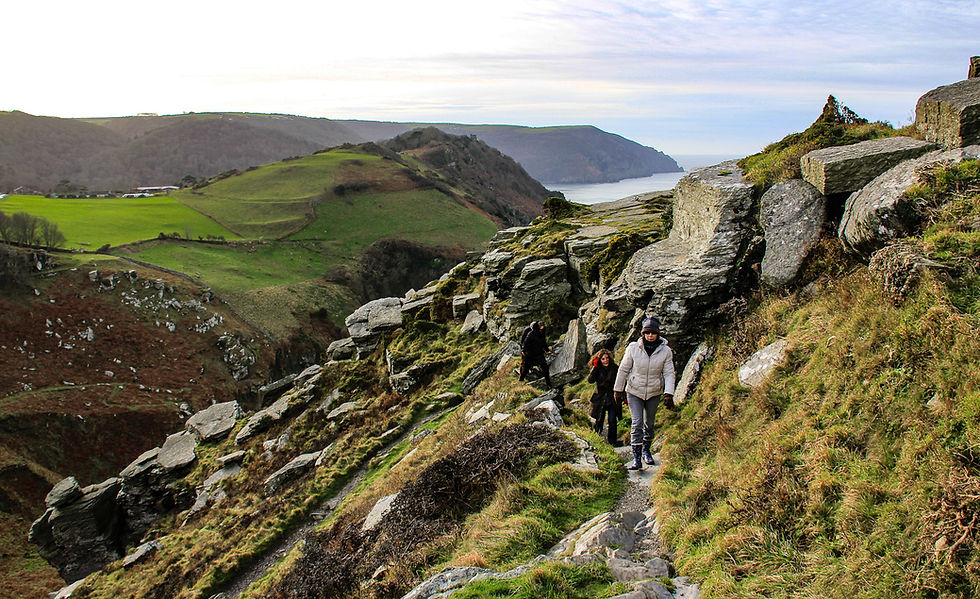
As reported in last week’s feature, the natural drama of the Exmoor coast offers some flat, grassy swards right alongside dramatic jagged rocky knolls, with the bulk of Castle Rock serving as a windbreak.
Plan B: The cosy, sheltered beach at nearby Lee Bay.
The South West Coast Path is a perfect trail along which to find fabulous picnic spots - to read more take a look at our Coast Path page here
Gastronomy of the Hamper
If the geography requires careful consideration, the contents of the basket must take absolute precedence. For decades, the default British portable meal has relied heavily on the ready-made items such as a lacklustre shop-bought sausage roll.
Good picnic food should be a challenge rather than an afterthought. The alternative to cheap and ready-made is not necessarily to go overly ornate with quail eggs and homemade asparagus tarts but to focus on simple, robust dishes that travel well and even improve when allowed to rest for a few hours. Why not follow a Mediterranean theme? After all, they’ve spent centuries evolving outdoor food for hot weather.

The first rule of a classic British sandwich, for example, is to avoid fillings that introduce sogginess to the bread during transit (the solution: pack fillings in a sealed container and assemble sandwiches on-site) - alternatively, you can lean into the continental tradition where moisture is viewed as an attribute.
In Provence, the classic pan bagnat relies on allowing flavours to infuse a rustic crust. A large baguette or round boule is split, rubbed with garlic, and drizzled with high-quality, cold-pressed virgin olive oil, then packed tightly with ripe sliced tomatoes, anchovies or tuna, black olives, capers, and sliced peppers. The top crust is replaced, the entire loaf is wrapped securely and placed under a heavy weight for several hours before departure. The result is sublime, structured and mess-free.
Italian Al Fresco Salads
Salad Type | Primary Ingredients | Dressing & Herbs | Chef's Tip |
Bollito Misto di Verdure | Seasonal vegetables (peas, new potatoes, asparagus, fine beans) steamed separately until al dente. | Extra virgin olive oil or rich mayonnaise mixed with capers and chopped flat-leaf parsley. | Allow the vegetables to cool completely before dressing to prevent from wilting. |
Insalata di Riso | Long-grain rice, flaked tuna, pitted olives, diced red peppers, peeled tomatoes, artichoke hearts… | A sharp, lemony vinaigrette to cut through the richness of the fish. | Pack in a wide shallow container to keep the rice from becoming compressed and heavy. |
Paste all'Ammiraglio | Penne pasta, blanched and seeded tomatoes, torn fresh mozzarella, and whole capers. | Extra virgin olive oil, sea salt, cracked black pepper, and torn basil leaves. | Rinse the cooked pasta in cold water immediately after boiling to stop the cooking process and preserve the texture. |
As for drink… well, I’m biased being a West Country boy - I like just a slurp of chilled cider. Sandford Orchards has relaunched its English sparkling cider, Katja, in a convenient new 500ml format. A home-grown alternative to English sparkling wine, Katja (6.8% ABV) is crafted from Katy dessert apples at Britain's oldest working cider mill in Devon. By cold-fermenting with white wine yeast, the team has created a sophisticated cider, “ with notes of strawberry, pear and melon”.

Radical Picnicking
The finest outdoor dining experiences are those that live long in the memory. I was once invited to a picnic in the Isles of Scilly where the schoolchildren of the archipelago gathered for their annual end-of-term outing on the deserted island of Samson. For a day, the ruined crofts echoed with laughter and beach games before the children and teachers departed, leaving the island to its gulls and oystercatchers.
But you don’t need a deserted Atlantic island. The most satisfying al-fresco meal of the year can take place in the depths of winter. The secret is a vacuum flask - not for some lukewarm, uninspiring beverage, but filled instead with a steaming leftover curry or a stew reheated from the previous evening.
Wherever, whenever you do it, there’s an unexplained chemical or psychological truth that says that food eaten under an open sky tastes superior in some way. Fresh air, the acoustic backdrop of the landscape and the physical effort of actually getting there, somehow combine to create a perfect seasoning.
Leave industrially produced pies and grey sausage rolls behind. With a little geographical foresight and a little tie spent in preparation, the West Country picnic can become exactly what it was always intended to be - a small civilised triumph over the wild randomness of nature.

Frequently Asked Questions
Q: Where is the best place to picnic in the West Country?
A: While Exmoor's Tarr Steps is widely celebrated, premier alternatives include Porthgwarra in West Penwith for coastal scenery, Fernworthy Reservoir on Dartmoor for woodland shade, and the dramatic Valley of Rocks near Lynton.
Q: How do you prevent sandwiches from getting soggy on a picnic?
A: You can either pack your fillings separately in airtight containers and assemble them on-site, or pivot to continental styles like the French pan bagnat, which uses olive oil and juices to intentionally infuse a rustic loaf under a heavy weight before traveling.
Q: Can you have a picnic in the winter?
A: Absolutely. "Radical picnicking" in the colder months relies on utilizing a high-quality vacuum flask to bring along hot, robust meals like leftover curries or stews, proving that outdoor dining isn't just for warm summer days.