
Beady Pool, St Agnes: The Sinister History of Scilly's Hidden Treasure 🌊💎

Updated: Jul 27
The Arrival of Slavery in North America and Its Strange West Country Echo
It was 400 years ago that the first African slaves arrived in what was then colonial North America. This grim anniversary resonates in an unexpected and uncomfortable way in one of the most remote bays in all of the West Country: Beady Pool, on the southern shores of St Agnes in the Isles of Scilly. In all my UK travels, this beach - remote in the extreme - is one of the most haunting places I have ever visited.

Quick Guide to Beady Pool
Highlight | What to Expect | Top Tip for Visitors |
Location & Access | A remote, gravel-strewn bay on the southern tip of St Agnes, below Wingletang Downs. | Accessible on foot via the circular coastal path from St Agnes quay. |
The Historic Beads | Earthenware beads washed ashore from a 17th-century Dutch shipwreck linked to the slave trade. | Search the high-tide gravel line after strong south-easterly storms for the best chance of spotting one. |
Scenery & Geology | Weather-sculpted granite tors, wild heathland, and views across the Atlantic. | Combine with a walk to Troy Town Maze, Castella Down, and St Warna’s Well. |
Museum Exhibits | Historical context and original bead collections held on nearby St Mary's. | Visit the Isles of Scilly Museum on St Mary's to see rare preserved examples. |
The Beads of Beady Pool, St Agnes, and Their Dark History
The beads that gave Beady Pool its name were on their way to be used as bartering collateral in the Slave Trade when a Dutch ship went down just off Wingletang Downs. These tiny, colourful beads were meant to be exchanged for human lives. The first Africans to be taken to British North America arrived in Virginia in 1619, transported by a Dutch ship that had captured them from the Spanish. Before that, over half-a-million African captives had already been enslaved in Brazil.
If you like this post visit our Cornwall & Isles of Scilly page to see more

Slavery, Bristol, and the Debate Over Recompense 🏛️
Today, the legacy of the Slave Trade is visible throughout the UK. In Bristol, for example, debates over place names like Whiteladies Road and Blackboy Hill highlight the city’s historical connection to the trade—a port that profited significantly from human suffering. Recently, Bristol has removed some place names linked to notorious traders like Edward Colston, whose name had adorned public spaces for centuries.
Elsewhere, the conversation continues: Should there be belated apologies? Should there be recompense?

A Remote Bay With a Powerful Message
But, as I say, no place in Southern Britain echoes the tragic history of the Slave Trade quite like Beady Pool. The beads found here are more than mere trinkets—they are potent symbols of a brutal chapter in human history.
These diminutive baubles never fulfilled their heinous purpose. They went to the bottom of the sea before they could be used to barter for human lives. Today, visitors search for these beads, hoping to find a tiny memento from this tragic era. After a good south-easterly storm, the beads are sometimes washed ashore, offering a poignant reminder of the past.

The Sinister Theory of the Bead Trade 🤔
The curator of the Isles of Scilly Museum once told me a disturbing theory about the bead trade. Some believe that slave traders were even more deceitful than originally thought. The museum holds beads of various types, some far more attractive than others, leading to speculation that barrels of cheap beads may have been topped with a shallow layer of valuable ones to deceive other traders.
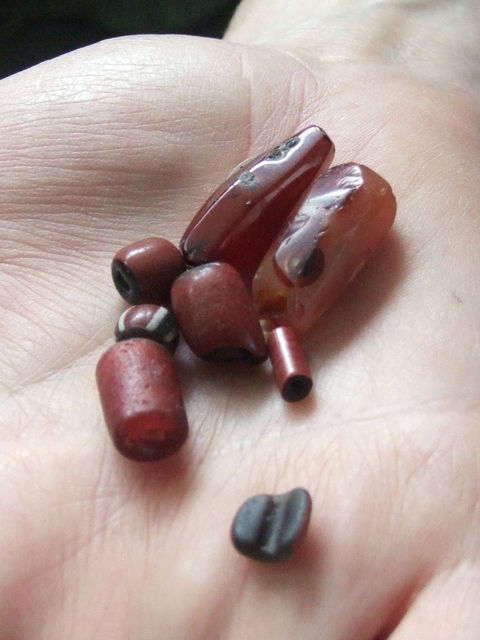
Historians face challenges identifying which ship carried these beads or their precise destination. Staff at the Isles of Scilly Museum have pored over the Shipwreck Index of the British Isles, finding only two possible wrecks near Wingletang—both unnamed and from the 18th century. Most of the beads are brown earthenware of 17th-century Rhineland provenance, and some were sent to the Rijksmuseum in Amsterdam for identification.

The Hunt for Beady Pool's Treasures 🏝️
Finding a local on St Agnes who will show you a necklace made of these "slave" beads isn’t easy—most examples are kept at the museum. However, John Peacock, the island’s boatman, recalls collecting them as a child. "They’re harder to find now," he once told me. "You really need a good south-easterly storm."
Visitors to the island still search for beads on their hands and knees, scanning the gravel-strewn beach for the tell-tale glint of history. One visitor from Tresco, after 11 years of trying, finally found a bead—a tiny token of a terrible trade.
A Sombre Reminder
These beads may be small, but they carry the weight of an immense historical tragedy. They serve as a reminder of the world’s most heinous trade - a chapter in history that should never be forgotten.
Fact File 📜
You can see Beady Pool beads at the Isles of Scilly Museum, St Mary’s.

Frequently Asked Questions About Visiting Beady Pool, St Agnes
Where is Beady Pool located?
Beady Pool is a secluded bay situated on the southern coast of St Agnes in the Isles of Scilly, located directly beneath the granite tors of Wingletang Downs.
Why is it called Beady Pool?
The beach earned its name because small, colourful earthenware beads frequently washed ashore following the 17th-century wreck of a Dutch vessel off Wingletang Downs. The beads were originally intended as bartering cargo in the slave trade.
Can you still find beads at Beady Pool today?
Yes, visitors still occasionally find beads by scanning the gravel shoreline on their hands and knees, particularly after heavy south-easterly storms disturb the seabed. Many original examples are preserved at the Isles of Scilly Museum on St Mary's.


