
Simonsbath Walk: Exploring the Historic Heart of Central Exmoor

Updated: Jun 30

For centuries, we despised bogs, doing everything in our power to avoid or drain them. But increasingly, people are beginning to appreciate the value of these squelchy wet places – an idea I once witnessed at an event called Past in the Peat, part of the Festival of British Archaeology. This exhibition aimed to show not only the environmental importance of healthy peat bogs but also the rich history such landscapes contain and protect.

The Secrets Within the Peat 🌍
Peat is anaerobic, meaning it seals anything within it from oxygen, preventing normal decay. Over time, exciting finds have been discovered in peat bogs, including ancient wooden trackways built across the Somerset Levels by early farmers in the 4th millennium BC. Experts now believe that Exmoor’s peat bogs, which were well-populated in Bronze Age times, may hold treasures of their own.

This exhibition set the scene for a beautiful day’s walk around Simonsbath, a small settlement that might lack modern services but makes up for it with rich hiking opportunities. Go there on a sunlit summer day, and you’ll see this area of peat bogs at its very best.
The Route: Walking the River Barle Valley from Simonsbath
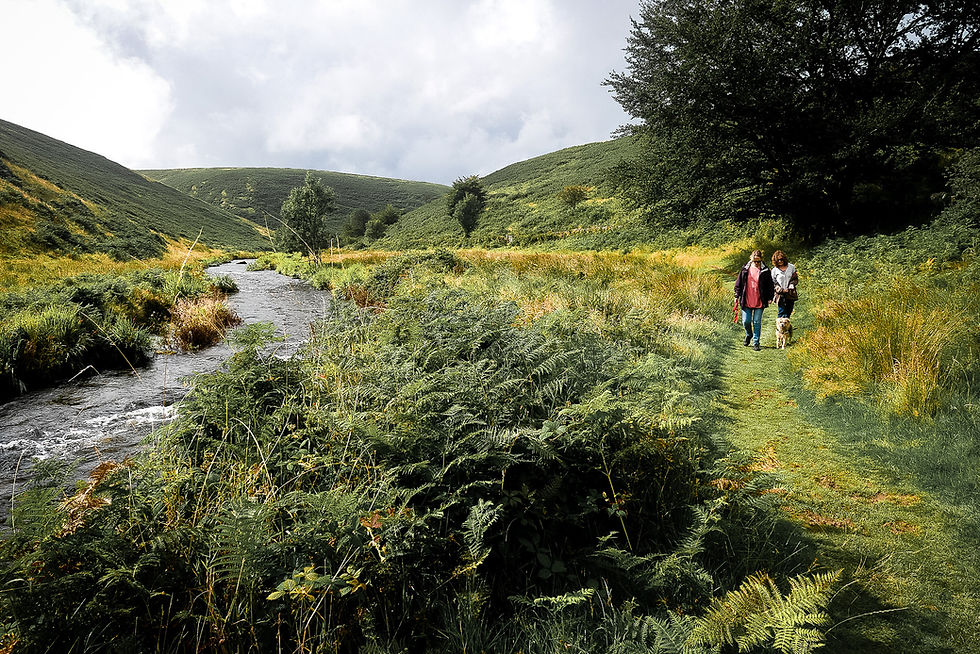
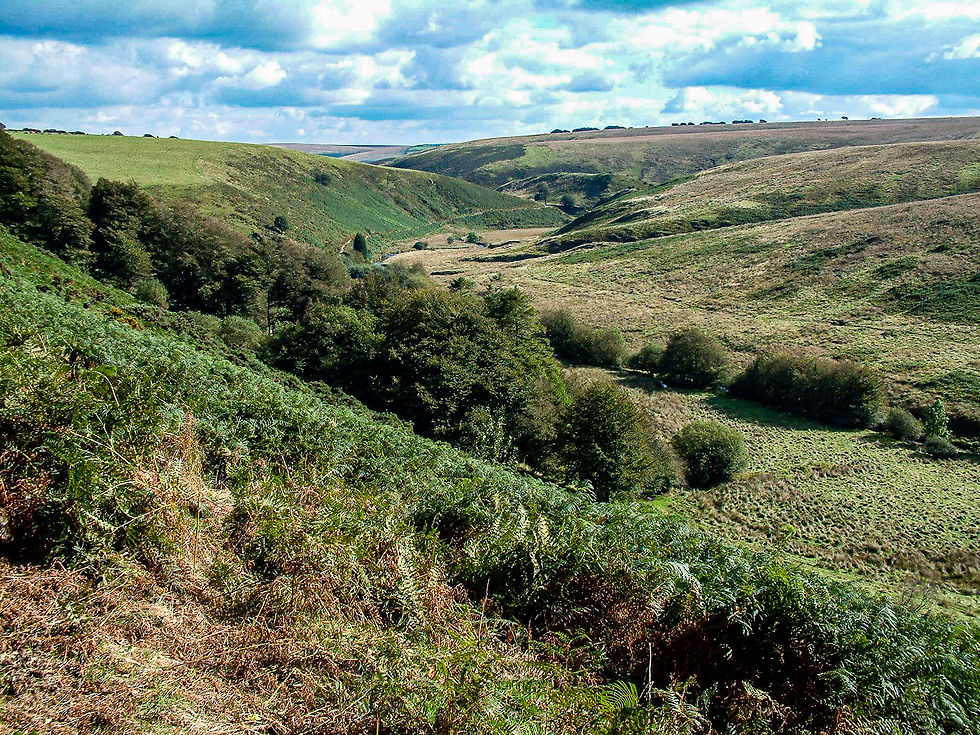
The River Barle flows down from the high, stark moorlands of The Chains, forming a lush, tree-lined valley as it heads toward its meeting point with the Exe River south of Dulverton. Simonsbath is situated along this river, and the surrounding landscape features a striking mix of forest and open moorland.

Fact File 📍
Route: Simonsbath to Cow Castle via ridge paths north of the Barle, returning along the riverside.
Recommended Map: Ordnance Survey Explorer OL9.
Distance and Difficulty: Four miles, fairly easy terrain.
Heading out from Simonsbath, the hike begins with a path through Birchcleave, a beautiful grove of beech trees directly to the east of the village. Instead of following the main river path, take the signposted trail to Pickedstones. This path climbs out of the woods and into open fields to the north of the Barle. From here, you proceed southeast, following the river valley from a ridge and passing the farm at Winstitchen to ascend a shoulder of land dividing the Barle from its tributary, the small and hidden White Water.
(To see more Exmoor walks click here)
The History: Tracing the Royal Forest and the Knight Estate
As the ridge descends, leading to the meeting of these two waterways, the path approaches Cow Castle, one of Exmoor’s most picturesque and intriguing hill-forts. Its strategic position atop a steep knoll gives it an air of impregnability, explaining why early inhabitants chose it as a defensive site. While some ramparts are still visible, it’s the site’s natural steepness that adds to its sense of mystery and beauty.
Turning to follow the riverside path back to Simonsbath, you’ll pass more historical sites, including the haunting ruins of Wheal Eliza.

The Industrial Past and Tragic History of Wheal Eliza ⚒️
Just before reaching Flexbarrow, you’ll see the stark remains of Wheal Eliza, a 19th-century mine where copper, manganese, and iron were once extracted. In its heyday, this lonely corner was a hive of industry, with miners sinking a 300-foot shaft and installing a large water wheel to power the pumps. For a while, it seemed the area might become an Exmoor Klondike, as 60% metallic ore was found.
Encouraged by early successes, local landowner Frederic Knight even began construction on an ambitious trans-moorland railway to transport the minerals to Porlock Weir. But the venture was doomed to failure, and Wheal Eliza became a silent testament to a broken dream.
Adding to its tragic allure, Wheal Eliza is also associated with the murder of young Anna Maria Burgess, whose father, William Burgess, killed her nearby and hid her body in one of the shafts. The case was recorded by Simonsbath’s first curate, Rev. William Thornton, who also acted as a detective in this remote area, where the nearest police officer was 35 miles away in Taunton. Without Thornton’s persistence, Burgess may never have been brought to justice. His chilling confession still resonates: “The child was in the way, sir – in my way and in everybody else’s way – and I thought she’d be better out of the way.”

A Hike Through History
This journey through Simonsbath’s peatlands offers both natural beauty and haunting stories. As you return along the river valley to Simonsbath, take a moment to reflect on the lives and dreams that played out here – some ending in glory, others in tragedy. Today, these ancient landscapes continue to hold secrets, preserved in the peat and waiting for those who venture to explore.
Simonsbath & Central Exmoor Walk FAQs
Where does the Simonsbath walk start? The most convenient starting point is the main Exmoor National Park car park in Simonsbath village, located just off the B3223. The walking trails are easily accessed directly from the parking area.
How difficult is walking around Simonsbath? Central Exmoor offers beautiful but rugged terrain. While riverside paths along the Barle can be gentle, heading out onto the open moorland involves exposed paths, steady climbs, and terrain that can become incredibly boggy after rain. Good navigational skills and sturdy footwear are essential.
What historical sights can you see on a Simonsbath walk? Simonsbath is steeped in industrial and agricultural history. Walks in the area often pass the historic Simonsbath House, remnants of the Knight family's 19th-century estate reclamation projects, and the haunting ruins of Wheal Eliza, an old iron mine in the Barle valley.
Are there refreshments available in Simonsbath? Yes, the village offers options for walkers, including the traditional Exmoor Forest Inn and local tea rooms, making it an excellent base for a circular walk.

