
Authentic Food Markets: From Exmoor to Sarawak & Beyond

Updated: Jul 20
Say the word "market" today and most people picture sterile, fluorescent-lit supermarket aisles where food is vacuum-sealed in plastic and human interaction is entirely optional. But around the world—and right here in our own rural valleys—a very different, ancient tradition survives: the real food market, populated by the hands-on rearers, growers, fishermen, and vendors who actually produce what we eat.

Over forty years of journalism and travel across six continents, I have made it my mission to explore these vibrant trading hubs. I have watched flapping seafood auctioned on Scandinavian docks, smelled the fragrant peach-laden air of Provencal village marchés, haggled over mystery skewers in the rainforests of Borneo, and stood in the freezing mists of Cutcombe Market on Exmoor surrounded by ruddy-faced local farmers.
Here is my reflection on why real food markets remain the beating heart of human culture, food heritage, and true culinary adventure...
Let’s think about markets - I’m not talking about those things with the word “super” attached, but about places where people go to sell things they’ve grown, or produced, or reared. Real markets for real people, full of real food.
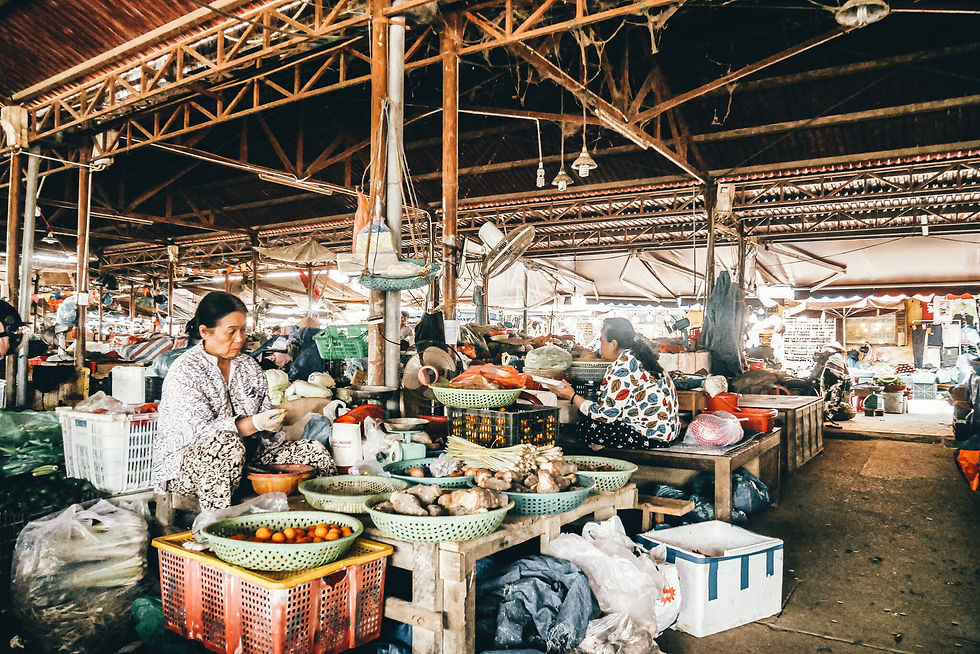
The Government says that we can now shop in “open markets” - which I take to mean the kind of old fashioned street markets they have all over Europe but we’ve done our best to forget here in the UK. Unless you count the newer manifestation of the ‘farmers’ market’; that is - and what fine places they are…
What’s not to like? The entire experience of attending a traditional market populated by stallholders is completely different to turning up at a massive supermarket and wandering around the well-lit, but bland and uniformed aisles.
Supermarkets are all well and good in their own way, but they do not afford the kind of human interaction offered in the kind of places where producers or specialist vendors meet and speak with customers.


As a consumer, meeting the expert who produces, or specialises in selling, the food you wish to buy makes purchasing goods an altogether different experience, richer in every way imaginable. You can talk to the rearer of pigs about the meat he or she is selling, discuss the merits of this cut or that, learn more about the herbs, vegetables and other things that will be flavouring or enhancing your meals in the immediate future.
Global Market Highlights Overview Box
Featured Locations:
West Country: Cutcombe Stock Market (high on Exmoor) & regional British farmers' markets.
Borneo (Sarawak): Serian Market & Dayak trading posts (featuring local street food, woks, and charcoal grills).
The Caribbean: Bridgetown Fish Market (Barbados) & Martinique village markets.
Europe: Provencal village marchés (France), Dutch cheese markets, and coastal Spanish fish auctions.
South East Asia: The famous regulated street-food and hawker markets of Singapore.
Core Theme: Celebrating direct human connection with food producers, real regional ingredients, and local food culture over corporate supermarkets.

I shall never forget my dubious success in bidding for the biggest bird at Cutcombe market a few Christmases ago, but also I shan’t forget the ruddy, craggy, faces of the farmers and their wives up there on the roof of Exmoor. The collective smiles and nods seemed to me to represent the human visage of agriculture or food production.
And that day out - up there in my own native hills - reminded me of other markets I have visited around the world over the last 30 or 40 years. Because I have made it my business, during all the travels I’ve been lucky enough to enjoy and survive in far-flung corners of the planet, to visit food markets of all shapes, sizes, themes and flavours.

I’ve been to hundreds of such places - whether it’s been on some rocky Spanish coast in a little fishing village where the fresh caught seafood has been has been sold, still flapping, in a nerve-wracking Dutch-style auction, or an equally fascinating fish-market in a Scandinavian city, so sparkling and clean that you could have eaten raw sushi straight off the floor.
I’ve seen ‘em all… From the dairy-scented depths of Dutch cheese-markets to the fragrant village marche of Provence where the air is filled with heady whiffs of peach and cherry.
My favourites include the kind of markets you find tucked deep in a rainforest miles from anywhere, where the items on sale are as unknown and mysterious to a European as the outlandish alien creatures in Star Trek.


I have reached such markets by boat - travelling miles up long winding jungle rivers - then walking into the hills along red-earth roads leading deep into the forests and suddenly coming across a clearing where a weekly market has burgeoned with humanity. There, in the almost impossible heat and humidity, I have watched men and women dressed in naught but hemp thongs buying the most gaudy sweets imaginable while smoking endless home-rolled, home-grown, cigarettes of dubious content.
They have been able to purchase their sugar-filled tooth destroyers thanks to the fact that local townsfolk have been haggling over tiny pieces of rainforest meat that the indigenous tribes people have hunted. I didn’t say traditional markets were always joyous places, but they are real. They do represent that most basic of capitalist edicts - that of supply and demand.


They can also be dangerous places. I was once chased by a baying mob from a market on the Caribbean isle of Martinique for taking a photograph. I was fully aware that many people in the more Third World corners of the Windward Islands do not like having cameras shoved in their faces (and who can blame them?) but I did not realise that their fear of voodoo extended to a close-up snap of a pile of vegetables.
Not far away, on Barbados, the market traders did not share such sensitivity. I once helped cut up a massive tuna and later photographed a friend who’s a local chef enjoying his morning out shopping amid the smiling faces of Bridgetown’s main fish-market.
The basic rule about photographing is to ask. Not that long ago I was in a market in a strict Muslim country feeling most apprehensive about the fact I had a large semi-professional camera dangling around my neck - when some young men invited me to photograph them and their impressive haul of fish.


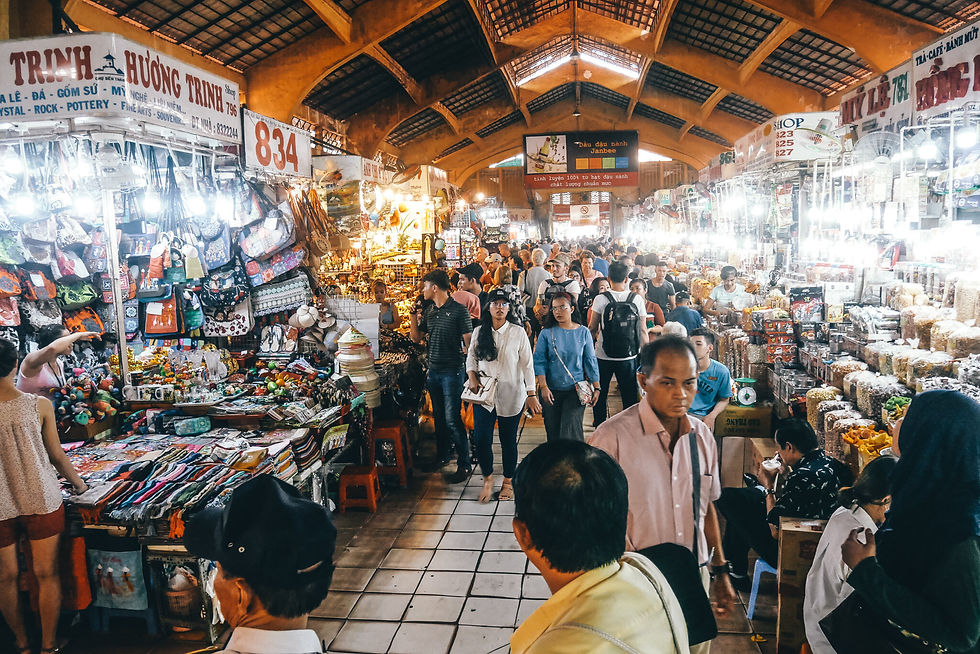
One market which stands out in my memory is the one at Serian, in Sarawak, on the island of Borneo. A friend and I happened to stop in the Dayak Indian trading town on market day, which turned our brief halt into a four hour photographic opportunity filled with brilliant colours. I have never seen so many weird and wonderful foods, even though I’ve spent decades photographing market scenes all around the world.
We tasted all manner of delicacies from various stalls bristling with bubbling woks and charcoal grills. Goodness knows what we swallowed - later I saw python and cobra steaks for sale and wondered if some of those morsels I bought for a few pence may once have slithered rather than walked.


In my opinion, some of the best markets in the world can be found in Singapore and the great thing there is that you can get to taste the things you want to buy, instantly, before you make a purchase, thanks to the hundreds of street-food stalls that are a feature of this great city. And you needn’t worry about hygiene and the danger of getting ill - which might well be the case in some parts of the world when eating street food – the stalls of Singapore are all colour-coded by government inspectors and so you can tell which which are the cleanest and most hygienic.
The markets most like our own - by which I’m talking about the centuries-old markets which used to be a feature of all mediaeval towns up and down the length of Britain – are the busy examples to be found in the rural areas of our nearest neighbours. The village markets in France, Spain, Portugal and Italy are an absolute treat for any West Country man or woman who loves food.
Which, finally, brings us closer to home. We still do have some fabulous markets, despite the fact that the giant chains have taken over in so many of our towns.
When the lockdown really is finally over, I would love to call on some of our West Country markets and meet producers and vendors who sell what really must be among the best food produce on sale in the region. We’ll take some photographs, and learn about local recipes or be inspired to create some of our own - and the results of these culinary adventures will feature on this website every now and again.
Frequently Asked Questions: Traditional & Global Food Markets
What makes traditional food markets different from modern supermarkets?
Traditional food markets connect buyers directly with small-scale producers, farmers, and specialist vendors. They offer freshness, seasonal variety, and invaluable knowledge about local cuts of meat, produce, and traditional preparation techniques that you simply cannot find in a supermarket aisle.
Where is Cutcombe Market on Exmoor?
Cutcombe Market is an iconic livestock and rural market located at Wheddon Cross, high on Exmoor in Somerset. It has long served as a vital agricultural gathering point for hill farmers across the West Country moors.
What are the rules for photographing people in traditional global markets?
Always ask permission before taking close-up portraits of market vendors or locals, especially in rural or traditional communities. In some Caribbean islands and indigenous areas, cultural or religious beliefs (such as fears surrounding voodoo or spirit capturing) make unsolicited photography deeply unwelcome.
What are the best countries in Europe for traditional village markets?
France, Spain, Italy, and Portugal lead the way in Europe for preserving traditional street markets. French marchés and Spanish mercados remain central to daily life, offering locally cured meats, artisan cheeses, fresh seafood, and seasonal fruit.
"Love authentic food culture and global culinary travel? Read my feature on the street food and music of Sarawak in Borneo, or explore my complete archive of West Country food and drink stories."


