
Ness Cove, Shaldon: Discover Devon's Hidden Beach Through the Famous Smugglers' Tunnel

Updated: Aug 5
The Enchanting Appeal of Ness Cove, Shaldon
Discover One of Devon’s Best-Kept Beach Secrets
A great many secret seasides are difficult if not dangerous to reach - which is probably why they remain unknown and out of the way - but here we visit a beach that is often visited and which has, for a century or more, been celebrated among local folk and holiday-makers alike.
Having said that, the Ness Cove, near Shaldon, has all the hallmarks necessary to make it a secret seaside...

📍 Find the Perfect Place to Stay Near Ness Cove
Planning more than just a day trip? Explore hotels, cosy B&Bs, seaside cottages and holiday apartments around Shaldon, Teignmouth and the beautiful South Devon coast using my interactive accommodation map.
Reached Only by Tunnel: The Magic of the Smugglers’ Way
For a start, if you haven’t got a boat you can only reach it by a genuine smugglers’ tunnel - which, to me, puts any beach well inside the romantic hush-hush zone.
When you are a child there is a world of difference between, say, being introduced to a beach that lies under a resort’s promenade or beyond a car park, and a small exciting bit of littoral that you must enter the bowels of the earth in order to reach.
As far as I can make out, no one really knows who had the lengthy tunnel dug through the soft red sandstone of Shaldon’s enigmatic Ness headland. All the tourist literature I’ve seen claims it was burrowed by local smugglers, which seems reasonable as half the coves in these parts seem to have some kind of connection to the art of illegal importing.

Smugglers’ Lore and Coastal Dangers: A Word of Warning
Indeed, the next cove south is actually called Smuggler’s Cove – and you can reach if you don’t mind risking the dangerous rocks of Bundle Head. I heartily recommend that you do not.
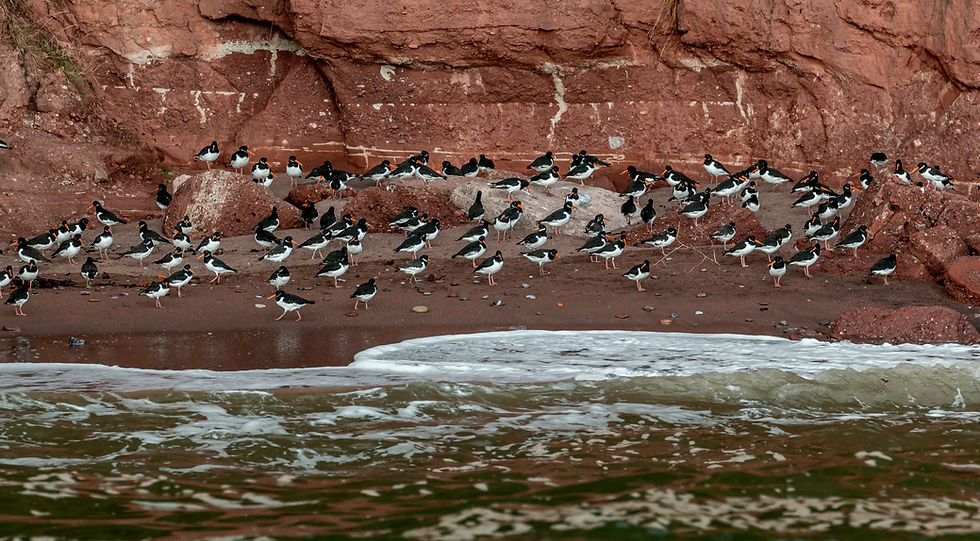
I walked the length of Ness Cove to see if it was worth rounding the boulder-strewn headland on the one fine day this week and realised it was a hazardous thing to do. I’ll tell you why… The cliffs around here – as you will see from my photographs – are made of soft red-sandstone. And that is basically compacted sand.
Would you be happy to stand directly underneath the vertical wall of a giant sandcastle?
I ask the question – and perhaps labour the point – because you will find similar cliffs along the coastal length of East Devon and West Dorset. You will also see warning signs in many places telling you not to lurk directly under the cliffs.
So what did I see in Ness Cove? Several couples sunbathing with their backs actually resting on the base of the 120 foot cliffs. Each was surrounded by large boulders, any one of which could have squashed a Sherman tank.
There have been tragedies along this sandstone coast. I’m not saying the people who were hurt or killed were crazy not to have taken heed of the signs - but I do wonder why people, like the sunbathers I saw, ignore such an obvious peril.
WHY NOT CHECK OUT SOME DEVON PUB WALKS HERE

IF YOU ENJOY THIS POST CHECK OUT OTHER DEVON LOCATIONS HERE
A Beach You Can’t See – Unless You’re at Sea
Anyway, the other thing that gives Ness Cove its sense of clandestine privacy is that you can’t see it from anywhere but the sea. Stand on busy neighbouring Teignmouth strand or even on its jutting pier - just across the estuary - and you will see the mighty headland all right (it dominates everything along this shoreline), but it completely hides the magical beach that lies beyond.
To reach Ness Cove from Teignmouth you must catch the foot-ferry across the Teign, which in itself is a romantic thing to do because the open boat has an old-world charm all of its own. And when I say old world charm, I mean it is billed as “England’s Oldest Passenger Ferry”.
Here’s what the service’s own website states: “The ferry crossing can be traced back to 1296, but is probably much older with origins in Saxon times. It has always been an important link and (in those days) saved a 14 mile journey to Shaldon and beyond, via Newton Abbot.”
Exploring Shaldon and Finding the Tunnel
Once you are across the mouth of the river and have landed at classy little Shaldon, turn left and simply walk along the shore-side lane for a few hundred metres – and just after the elegant looking restaurant on the left you will see a sign to the Ness Tunnel.
Just above it, by the way, there is a small and remarkable zoo run by the Shaldon Wildlife Trust, which “prides itself on the number of rare and critically endangered species which have bred on the site over the years”…

These animals include golden lion tamarins; yellow-breasted capuchins; ruffed, ring-tailed and fat-tailed dwarf lemurs; Madagascan giant jumping rats; pied tamarins; azara’s agoutis and others.
I wanted to get that list in – because in no way, when I devised a series on the Westcountry’s secret beaches, did I ever imagine writing the names of any such creatures.
Into the Tunnel – and Out to Sea Air
Under the exotic beasts we go, down the tunnel – which is lit and at first appears to be rough hewn. But after about 70 metres you come to a steel door which blocks off the route straight in front and forces you to veer right and descend down a more modern looking section of the tunnel instead.
A companion who came with me commented: “You could almost be walking down to a London tube line.”
And you could, with one big difference. There’s no stale air here or roaring and jangling of trains – only fresh ozone smells that are wafted up the tunnel by the waves you can hear crashing at the far end.
Down some steps we go - and suddenly, here we are… Out into the dazzling daylight of a well known cove that is actually one of the most easily accessible secret seasides in the region.
A Beach You Can Book for Barbecues
If you are looking for more superlatives, how about this? Ness Cove is the only beach I know that can be booked hook, line and sinker for private barbecues.
Teignbridge Council have an online booking form that decrees: “Portable barbecues are permitted. No fires to be lit. No bands, discos or loud music. No more than 50 people. Rubbish/debris must be removed from the beach and taken away immediately following the authorised use. Barbecues/parties must finish no later than midnight.”
How civilised is that? At all the other secret seasides which have appeared in this series, no one would know if you partied on until dawn or not.
But Ness Cove is a special place, and it deserves some respect and tender loving care. Just don’t sit too close to its soft and crumbling cliffs.
In an age when almost every corner of Britain's coastline has been photographed, reviewed and geo-tagged, Ness Cove still retains the thrill of discovery. Perhaps it is the walk through the tunnel, perhaps it is the red cliffs closing protectively around the beach, or perhaps it is simply the sense that you have stumbled upon a place that keeps one foot in the past. Whatever the reason, this little cove remains one of Devon's most memorable seaside escapes—and one that deserves to be explored with curiosity, respect and just a touch of the old smuggler's spirit.
Staying in Shaldon?
Whether you're looking for a harbour-view hotel, a family holiday cottage or a cosy bed and breakfast, this interactive map makes it easy to compare accommodation close to Ness Cove.

Frequently Asked Questions
Where is Ness Cove?
Ness Cove is a secluded beach in the village of Shaldon on the South Devon coast, close to Teignmouth and the mouth of the River Teign. It is one of Devon's best-hidden coastal gems and is easily reached from Exeter, Torbay and the English Riviera.
How do you get to Ness Cove?
Visitors reach Ness Cove by walking through the famous Smugglers' Tunnel from Shaldon. After passing through the tunnel, a flight of steps leads down to the sheltered beach below.
Is there parking near Ness Cove?
Yes. There are public car parks in Shaldon village, from where it is a pleasant walk to the entrance of the Smugglers' Tunnel. During the summer months it is worth arriving early, as parking can fill up quickly.
Why is the tunnel called the Smugglers' Tunnel?
The atmospheric tunnel has long been associated with local smuggling legends. While its exact origins remain uncertain, it has become one of Shaldon's most famous landmarks and adds a real sense of mystery to the walk down to Ness Cove.
Can you swim at Ness Cove?
Yes, swimming is popular during calm weather, but there are no lifeguards on duty. As with any natural beach, visitors should be aware of changing tides, sea conditions and the possibility of strong currents after storms.
Is Ness Cove suitable for families?
Yes. Families enjoy exploring the tunnel, paddling in the sea, searching for rock pools and picnicking on the beach. Parents should take care on the steep steps leading down to the cove and keep children away from the cliff base.
Are dogs allowed on Ness Cove?
Dogs are generally welcome, although seasonal restrictions may apply at certain times of the year. It is always best to check local notices before visiting.
Can you walk from Ness Cove onto the South West Coast Path?
Yes. Ness Cove provides easy access to the South West Coast Path, with wonderful walks towards Labrador Bay, Maidencombe and Teignmouth, offering spectacular views across the South Devon coastline.
When is the best time to visit Ness Cove?
Late spring, early summer and early autumn are ideal, with pleasant temperatures and fewer visitors than the height of the summer holidays. Early mornings and evenings are especially rewarding for photographers.
What else is there to do in Shaldon?
Shaldon is a delightful estuary village with charming streets, independent cafés, riverside walks, a small wildlife trust, nearby beaches and a seasonal passenger ferry linking the village with Teignmouth. Together they make an excellent day out on the South Devon coast.


