
Tunø Island, Denmark: Discover the Car-Free Island Time Forgot

Updated: Aug 24
Looking for a quieter side of Denmark? Just an hour by ferry from the Jutland coast lies Tunø, a tiny island where cars have never been allowed, children still play safely in the streets and life moves at an altogether gentler pace. Recently named Denmark's Island of the Year, Tunø offers dramatic coastal cliffs, peaceful beaches, charming cottages and one of the most relaxing day trips in Scandinavia. During my visit I discovered an island that feels wonderfully untouched by modern life.

Why Visit Tunø?
Tuno is one of those peaceful, unspoiled islands which promises an immersive experience. Often overshadowed by its more renowned neighbours, Tuno offers visitors a chance to break away from the bustling tourist spots and find serenity amidst its natural beauty. And one of the recommended ways to explore this island is by taking a walk around its perimeter, an experience that offers an unparalleled view of both the land and the sea. Which is exactly what we did on a day which began stormy and wet and ended stormy and wet - which meant we were very fortunate indeed to enjoy a weather window which brought us sunshine and a warm breeze.
This article is part of my wider series on Scandinavian summer escapes. You can find the full collection in my Denmark Coolcation Hub.


Starting the Journey: The Tuno Harbour
Begin your journey at Tuno's port a small but picturesque location where you can see local fishermen at work and the occasional sailboat anchored in the bay. The harbour, with its quintessential Scandinavian architecture, offers the perfect preamble to what lies ahead.

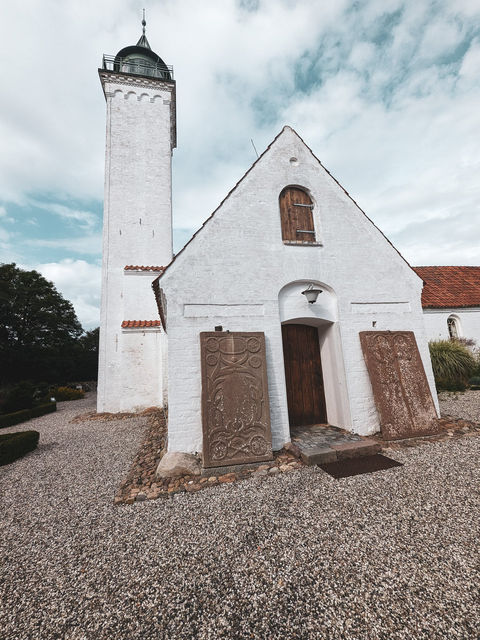
Lush Green FieldsAs you start walking north from the harbour, you begin to see evidence of what look to be highly productive fields. The landscape further inland is dotted with traditional Danish farmhouses, and you can see the church tower of Tuno By, the island’s central village.
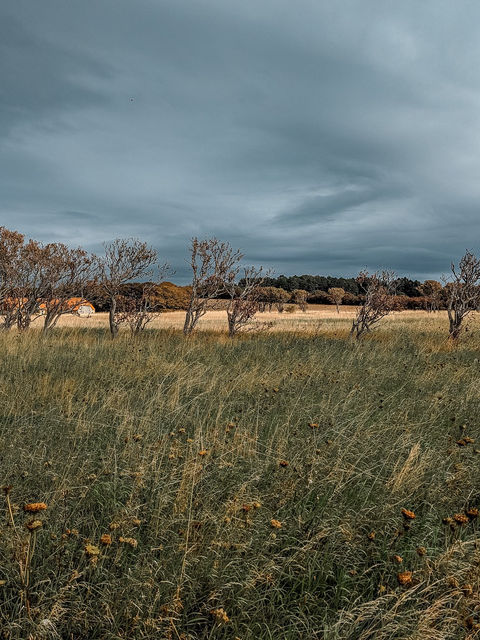


The Northern Shores: Rocky Outcrops and Bird-watchingSoon you come to the point which marks the north-eastern corner of the island - and this introduces you to the northern edge of Tuno. The shoreline here is more rugged, with its rocky outcrops providing an interesting contrast to the smooth sands you'd find elsewhere on the island. The cliffs here are home to a variety of seabirds, making this stretch a paradise for bird-watchers.


The Forest The northern part of Tuno is where you'll encounter a dense growth of trees, presenting a forest-like ambiance. The walking trail here is shaded, and the temperature noticeably cooler. If you're lucky, you might spot some of the island's native wildlife, such as deer or rabbits.


Eastern Delight: Beaches and Dunes
As you continue your journey east, the terrain gradually changes to soft sandy beaches. These beaches are mostly desolate, save for the occasional visitor soaking in the sun or children building sandcastles. The low dunes are covered here or there with tufts of marram grass, making for some beautiful photographic opportunities.

Southern Shore
Now it’s a long but very pleasant and easy two-and-a-half mile stroll back along the undulating hills which make up the southern shoreline,


Back to Civilisation
Ending at the HarbourYour perimeter walk culminates back at the harbour, bringing the journey full circle. The entire walk can be completed in a few hours, but it’s advisable to take it slow, allowing yourself to immerse in the myriad experiences Tuno offers. We enjoyed a truly fabulous seafood lunch at the harbourside restaurant which specialises in freshly smoked fish.


Tuno might not be the first name that pops up when you think of visiting Denmark, but it's certainly a destination that deserves a spot on the Scandinavian traveller's bucket list. A walk around its shores provides a comprehensive glimpse into the natural beauty and tranquil lifestyle of this Scandinavian gem. Whether you’re an avid nature lover, a photographer, or someone just looking to escape the hustle and bustle, Tuno promises an experience you won't soon forget.
For more dispatches from Jutland, island-hopping in Kystlandet, and Danish food culture, explore my comprehensive Denmark Coolcation & Travel Guide.



Frequently Asked Questions
Where is Tunø Island?
Tunø is a small Danish island in the Kattegat Sea, off the east coast of Jutland. It can be reached by ferry from the port of Hou, south of Aarhus, with the crossing taking around an hour.
Why is Tunø famous?
Tunø is famous for being one of the few inhabited Danish islands where private cars have never been allowed. Visitors come for its peaceful atmosphere, dramatic cliffs, sandy beaches and charming traditional village. It was also named Denmark's Island of the Year for 2024–2025.
Can you drive on Tunø?
No. Private cars are not permitted on the island. Visitors explore on foot or by bicycle, while tractors are used to transport luggage and supplies. The lack of traffic is one of Tunø's biggest attractions.
How long does it take to walk around Tunø?
A complete walk around the island is about 8 kilometres (5 miles) and can usually be completed in around three hours, although many visitors allow longer to enjoy the beaches, cliffs and wildlife.
Is Tunø suitable for families?
Yes. With no traffic, safe village streets, gentle beaches and family-friendly walking trails, Tunø is an excellent destination for visitors with children.
What is there to see on Tunø?
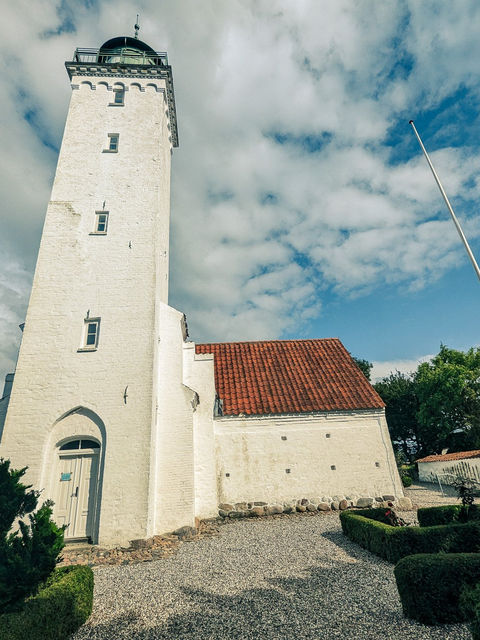
Highlights include the scenic coastal cliffs, quiet beaches, picturesque harbour, traditional village, the unusual church whose tower also serves as a lighthouse, and the island's peaceful walking routes.
Can you stay overnight on Tunø?
Yes. The island offers accommodation including guesthouses, campsites and the seaside hotel, making it easy to enjoy a longer, slower-paced visit.
When is the best time to visit Tunø?
Late spring through early autumn is ideal, when ferries operate regularly, cafés and accommodation are open, and the weather is perfect for walking, cycling and enjoying the island's beaches.


