
Wassailing in Somerset and Devon: The West Country's Oldest Orchard Tradition – and Where to Go in January 2027

I have a confession to make. For a man who has lived most of his life in cider country – and who lives just a few miles up the road from one of the most famous wassails in England – I can't claim to be much of a seasoned wassailer. But I have been fretting about the orchards themselves for a very long time. Because no orchard means no wassail.

A quarter of a century ago I went to Stogumber, tucked under the Brendon Hills, where the normally peaceful villagers were up in arms. A Taunton developer wanted to build nine luxury homes – "des-reses with two garages", as one campaigner put it – on a small old cider orchard known locally as Butt's. Only half a dozen gnarled trees were left, but the place had never seen a modern chemical, and every spring it was a sea of meadow flowers, buttercups and native English bluebells.
An old farmer who had lived in the village all his life told me that when he was a boy there were orchards everywhere. Now he couldn't think of another one in Stogumber. "It would be sad to see it go," he said – and you could tell he meant it.
He was right to worry. The application dragged on for years, but in September 2006 the council granted outline permission, and in the spring of 2007 the nine houses at The Butts, on Station Road, were given the final go-ahead. The bluebells, it seems, lost.
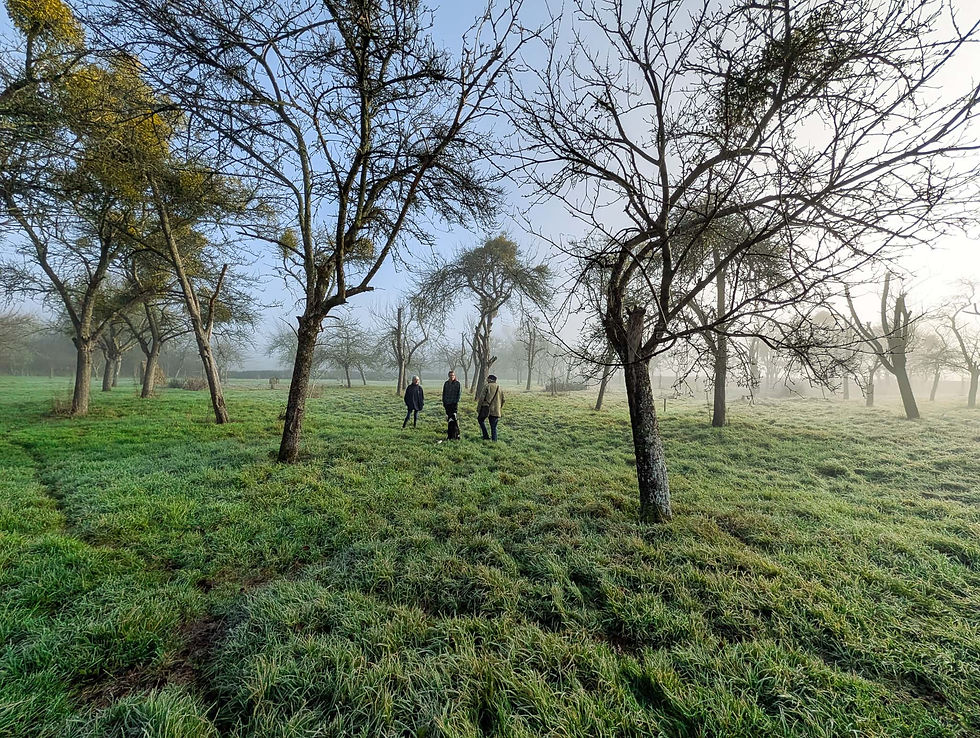
Over on the Levels at Bawdrip, Donald Rayner was fighting appeal after appeal to save an orchard first documented in 1575 – seeing off plans for 16 houses, then 12, then seven, then eight. Old maps, he said, showed the village had once been entirely surrounded by orchards. The campaigners at Common Ground told me Devon alone had lost 90 per cent of its orchards since 1965.
Bawdrip's story seems to have ended much the same way. In 2012 a developer applied to build seven houses on land at Shaw's Orchard in the village – and the archaeologists who dug there before the builders moved in found evidence of people living and working on the spot since at least the 10th century. Donald, with his talk of Romans, Saxons and Normans, was not so far off the mark.
It was Common Ground's director, Sue Clifford, who summed it up best. Old orchards, she said, might be the last open spaces left in their localities, "where wassailing is a punctuation of winter, just as blossom heralds spring." Lose the trees and you lose the whole glorious, muddy, cider-soaked ritual that goes with them – which is why I find it so cheering that, every January, the old custom is not just surviving but thriving.
Of all the strange and wonderful things we West Country folk get up to, there is nothing quite like wassailing. Picture it: a freezing January night, a crowd in wellies and woolly hats gathered round the biggest apple tree in the orchard, a bowl of hot cider doing the rounds, slices of toast hung in the branches – and then, just as everyone is beginning to wonder whether their toes will ever thaw, a volley of shotguns fired into the dark to frighten away the evil spirits.
It sounds mad. It is a bit mad. But it is also one of the oldest and most cheering things you can do in the dead of winter, and in cider country it is very much alive and well.
What is wassailing?
The word comes from the old Anglo-Saxon greeting "wæs hæl" – "be in good health". Over the centuries it came to mean the drink, the toast and the whole merry business that went with it. There were two kinds: the house-visiting wassail, when singers went door to door with a wassail bowl, and the orchard wassail, which is the one that has survived so strongly in Somerset, Devon and Herefordshire.
The ritual varies from parish to parish, but the main ingredients rarely change. A wassail king and queen lead the crowd to the oldest or biggest tree. Cider is poured on its roots. Toast soaked in cider is placed in the branches for the robins, who stand in for the good spirits. Then pots and pans are banged, horns blown and guns fired to drive away the bad ones – and everybody sings to the tree in the hope of a good crop in the autumn.

Why 17 January? Old Twelfth Night
Wassailing belongs to Twelfth Night, the end of the Christmas season. When Britain switched from the Julian to the Gregorian calendar in 1752, eleven days simply vanished – and plenty of country people, being country people, carried on keeping their old dates regardless. So "Old Twelvey Night" fell on 17 January, and that is when the most traditional wassails are still held. Many of the newer ones take place on the nearest weekend, anywhere from early January into February.
The Carhampton Wassail
Carhampton, on the A39 between Minehead and Watchet, is just along the road from me, and its wassail is one of the best known in England. The custom had all but died out in the West Country as the old orchards were grubbed up, but it was revived at the Butchers Arms between the wars and has been held in the village's community orchard, next to the pub, since 1992. The West Somerset Morris Men often lead the procession, there is mulled cider and hot food, and everybody joins in the traditional Carhampton wassail song:
Old apple tree, we wassail thee,
And hoping thou wilt bear
Hatfuls, capfuls, three bushel bagfuls
And a little heap under the stairs.
The Carhampton wassail is traditionally held on 17 January, starting in the orchard at about 6.30pm before moving on to the pub. In 2027 the 17th falls on a Sunday, when the date has usually moved, so check locally before you set off.

Where to go wassailing in January 2027
These are the bigger West Country wassails with dates already announced. Most are ticketed and the popular ones sell out, so book early.
Sheppy's Cider, Bradford-on-Tone, near Taunton – Friday 15 January 2027. Doors open 5.30pm and the ceremony starts at 6.45pm, with fires, food and plenty of cider. Sheppy's wassail details
Rich's Cider Farm, near Highbridge – Saturday 16 January 2027, 7.30pm until midnight. The farm's annual charity wassail; tickets from £21.45, over-18s only.
Carhampton Community Orchard, West Somerset – Old Twelfth Night; check the 2027 date locally (see above).
Mid-Somerset Showground, Shepton Mallet – Friday 22 January 2027, £15, in the showground's own orchard. Mid-Somerset Show wassail
Whimple, East Devon – another of the old Twelfth Night wassails, traditionally held on 17 January.
Plenty of smaller wassails are still word of mouth – village orchards, community farms and country pubs – so keep an eye on parish noticeboards and the Somerset CAMRA website through December and January.
Tips for your first wassail
Wrap up properly and wear wellies – a Somerset orchard in January is a muddy place.
Take a torch, and a saucepan and wooden spoon if you want to join in the din.
Guns are fired, so think twice about bringing a nervous dog, and warn small children.
Carry some cash for food and drink stalls.
There will be cider. Plenty of it. Arrange a lift or a taxi home.
More cider stories from the West Country
Wassailing FAQ
When is wassailing?
Traditionally on Twelfth Night (5 or 6 January) or on Old Twelfth Night, 17 January. Today most West Country wassails take place between early January and early February, often on a Friday or Saturday evening.
What happens at a wassail?
The crowd gathers round an apple tree, cider is poured on its roots, cider-soaked toast is hung in the branches, noise is made to scare off evil spirits, and songs are sung to the tree to bless the coming harvest. Then there is usually more cider, hot food, music and Morris dancing.
Why do people put toast in the apple trees?
The toast is an offering for the robins, which in wassail lore represent the good spirits of the orchard.
Can anyone go to a wassail?
Yes – most are open to all, although the bigger cider-farm wassails are ticketed and some are for over-18s only. Community orchard wassails are usually the most informal and family-friendly.


