The West Country Cider Renaissance

Cider is one of the great products of our region. Not everyone has a taste for it, but many of us do. And most enthusiasts will agree there’s been a renaissance, with a great many excellent fermented apple drinks coming straight from West Country orchards.

(Photos in this post: Nick Hook)
A central theme of this article is that there will be more to come in future years - thanks both to our rich traditional cider-making history and the very latest in modern technology.
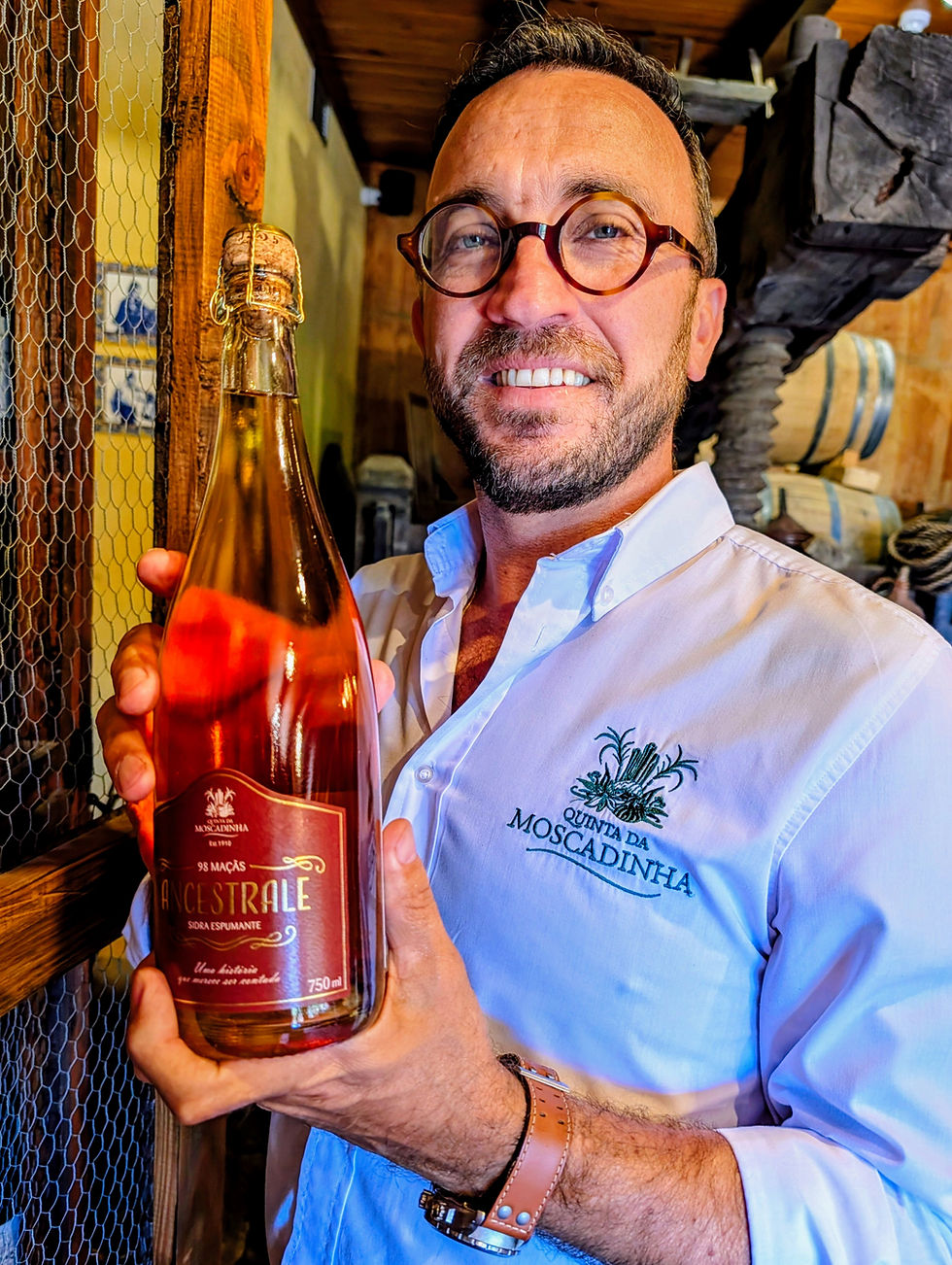
This was the main topic at a special Apple Day staged in Devon last week at Sandford Orchards – a family-run company which I’d argue makes some of the best cider in the world. I happen to be a fully signed-up fan of their signature Devon Red - a matter of taste, of course, but the product suits my palate and fits the company motto: Cider Done Right…
Anyway, it was talk of the potential for a whole new raft of ciders that excited me.
20,000 Cider Makers: Devon's Forgotten Liquid Gold
To understand where this new dawn is coming from, you have to look into the past. We tend to think of farm diversification as a recent phenomenon, but the rural economy of our peninsula once revolved around fermented apple juice to an extent that beggars belief today.
If you enjoy this post see our special page on Cider & Perry here

At the gathering, founder Barny Butterfield reminded me of astonishing research unearthed by cider historian James Crowden.
“In 1763 there were 20,000 registered cider makers in Devon,” Barny told me, leaning over a table laden with strange, knobbly apples. “The estimated population of Devon at the time was around a quarter of a million, so you had a registered cider-maker for every dozen people. We were, and remain, the world’s best apple-growing region. Back then cider-makers were sending an awful lot of great booze out on boats and later up the railways.”
He added: “The bottom line was: it was our drink. Everyone drank it, and everyone in every corner of the county was involved in its production. That’s why there are so many different apples. If cider was so woven into the fabric of everyday life of the ordinary Devonian in the past, that’s why we’ve got thousands of apples. It’s these apples that we’re celebrating.”
Those old orchard owners weren’t just tossing random seedlings into the hedge. They were craftsmen.
“Every apple tree is a clone,” Barny explained. “You can only keep the same apple if you take a twig off a mother tree and you graft it onto a rootstock. When varieties persist, it’s because people loved them for a reason. They might have loved them because they were bright red, or cooked a lovely pie. In Devon, we loved them because they made the most fantastic drink available to humanity.

“The diversity and the difference, I believe, is because people were proud of their recipe. In the same way if you stopped at all the households in Devon this Sunday, there’d be a secret sauce, a particular way of doing the roast potatoes, a plum pie, things that only Mother knows and only Grandpa knows. I am certain that was the truth of our orchards and our cider, and we’re getting the benefit of tasting that.”
Red Sandstone Terroir of the Creedy Valley
The agrarians of yore planted deliberate orchard blends – often 50 or 60 distinct varieties in a single area. If a late frost or dry spring ruined one variety of bitter-sharp, another tree three rows down would thrive. They weren’t growing bulk fruit for tonnage; they were growing a balanced, vintage drink in a glass.
And they were doing it in a very particular landscape. Crediton sits tucked into the Creedy Valley, surrounded by rich red soil.
“The type of soil we’re on here is Crediton Measures – Triassic Permian red sandstone,” Barny pointed out. “That same Crediton Measures bedrock pops up just outside Taunton, pops up again near Ilminster, and pops up again in Herefordshire. Show me the great cider-growing areas, and there it is.”
He looked towards the surrounding hills. “We’re in the rain shadow of two high moors, actually. If you go up a hill around here you can look over half of Devon. You’d see the mass of Exmoor, the mass of Dartmoor – and then this beautiful, red, benign valley running down to the Sidmouth Gap. You’d think: crikey, if you can’t farm there, where can you farm? We’ve got these really forgiving, free-draining soils and loads of warmth. We’re located where an apple tree would pray to be planted.”
Yet, over decades, so much of that heritage has been sidelined. The mechanisation of post-war agriculture meant standard, tall-trunked orchards were grubbed out to make way for tractor-friendly bush trees. It was necessary to save the commercial industry from collapse, but in the rush, our living library of varieties was quietly forgotten.
Enter Modern Genetics: Forensic Screening in the Orchard
Enter modern genetics.
Among those at Apple Day were world-class scientists from the University of Bristol, including Dr Amanda Burridge, a research associate who previously specialised in wheat genetics before turning her attention to the cider orchard.
Check out our special article on Vintage Cider here

Dr Burridge explained how she and Professor Keith Edwards realised genetic screening tools used in cereal crops could solve a great historical mystery.
“Our method isn’t full-genome sequencing,” Dr Burridge told me. “Instead, we use a method a lot more similar to paternity testing or human forensic screening. We look for specific genetic markers. To make markers work, you need a reference database: the more powerful the database, the more powerful the tool. We screened through 10,000 trees, mostly across the West Country. Using those 10,000 trees, we built a database against which we can compare any newly discovered tree.”
When I asked how many forgotten treasures they’d found, she drew an important distinction.
“Unique? Quite a lot. Any apple tree grown from a seed or pip is genetically unique, and we had an awful lot of garden trees that people had grown from pips. They’re unique, but unique does not make you a variety. A true variety has to have some distinct property that makes it worth keeping.
“What we found were genetically identical clones of apple trees with no registered names. Nobody knew what they were. But if you find two genetically identical trees 50 miles apart… Well, they didn’t get there by accident. Trees don’t get up and walk. Somebody took a cutting and grafted them. That means, in someone’s mind in the past, that tree possessed something profoundly desirable.”
So far, Dr Burridge and her team have isolated just under 100 candidate varieties undergoing second-stage screening, hoping to formally confirm dozens of distinct, lost varieties.

Rescuing Lost Devon Varieties and Climate Survivors
Some store remarkably well for months without spoiling, others offer hits of astringent tannin, or aromatic acidity. What’s most exciting is that Barny has already taken cuttings from some of the mystery trees, gathered their fruit, and fermented the juice. The resulting single-variety and small-batch test ciders have already won a clutch of national gold medals.
There is another, more urgent dimension: climate resilience. Dr Burridge told me about trees nicknamed “climate survivors.”
“Several of these trees aren’t in managed orchards at all,” she told me. “They’re in what used to be orchards – sometimes where a road has been cut through, or surviving in a highway verge. We know the site was once a commercial cider orchard, but it hasn’t been looked after for decades. Yet somehow, that lone tree is still thriving despite scorching summers, droughts, and winter flooding, without human intervention or chemical spraying.
“Even if climate resilience wasn’t the original reason a farmer grafted it, that tree holds valuable genetic information we might want to breed into our next generation of orchard stock.”
She added a warning: “The terrifying prospect is that some of these climate survivors could be lost tomorrow to a severe storm or land redevelopment. We’re genuinely racing against the clock.”
See another of our posts based on Sandford Orchards here

Back between his vats, Barny reflected on the responsibility of turning these scientific findings into commercial reality.
“When I see the results coming out of Bristol, I feel a reproach,” he confessed. “A reproach on me, on my compatriots, and my predecessors. Why weren’t we listening to the old boy in the corner of the pub who said, ‘Don’t forget that one tree up in the far corner’? And why didn’t I remember the name he gave me?
“Men and women now lying in churchyards wrote that recipe, and we’re lucky enough to drink it today. My job is simply to maintain what’s there.”
It is a mouth-watering prospect. As genomics continues to untangle the lost secrets of West Country hedges, we aren't just salvaging old names from obscurity. We are rediscovering the complex, time-tested flavours of forgotten Devon – and laying down the roots for what may well be the finest ciders the world has ever tasted.

FEAST OVER FLAMES: CIDER AND THE CERAMIC GRILL
Anyone who knows me will know I need very little persuasion to cook outdoors over proper charcoal. Needless to say, I am a devotee of the iconic red Kamado Joe ovens, combining thick, heat-retaining ceramic walls with pinpoint airflow control. These heavy-lidded beasts effortlessly switch between low-and-slow smoking and intense, high-heat searing. In fact, enthusiasm for live-fire cooking has reached such a pitch across Britain that Kamado Joe has become a major player in our thriving outdoor food scene – partnering with live-fire publications and championing new barbecue writing and chef competitions nationwide.
At the Sandford Orchards Apple Day, the cooking honours were handed to the brilliant James Peck. A former British Army chef who honed his fine-dining discipline in top London kitchens before opening his celebrated live-fire restaurant, Ember, Peck is a master of blending classical technique with primal smoke and flame.

For our harvest feast, he curated a memorable three-course menu cooked entirely live over charcoal, designed to showcase how smoke and cider sing together:
Roasted Yeast, Cauliflower & Miso Croustades: Crisp pastry parcels packed with an intensely savoury filling of roasted yeast, charred cauliflower, and umami-rich miso, finished with local Sharpham Dairy cheese.
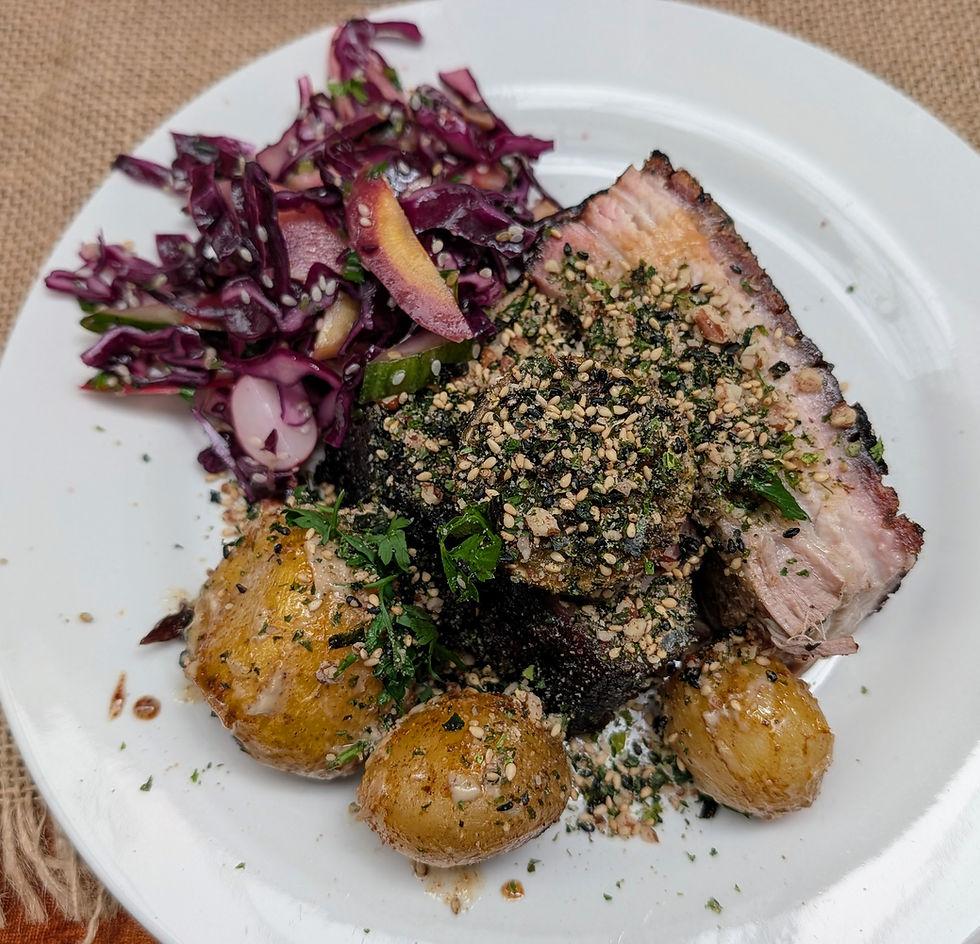
Miso & Apple Cider Glazed Pork Belly: Fire-roasted pork belly basted in a sticky glaze of miso and Sandford Orchards cider, topped with toasted pecan furikake and served with crispy smashed baby potatoes (with smoky glazed aubergine for vegetarians).
Asian Crunch Salad: A refreshing, palate-cleansing slaw of crisp orchard apples and cucumber, tossed in a zingy ginger, soy, and sweet ketjap manis dressing.