
Madeira's Cider Revolution: How Ancient Mountain Orchards Are Producing Award-Winning Sparkling Cider

Updated: Jul 22
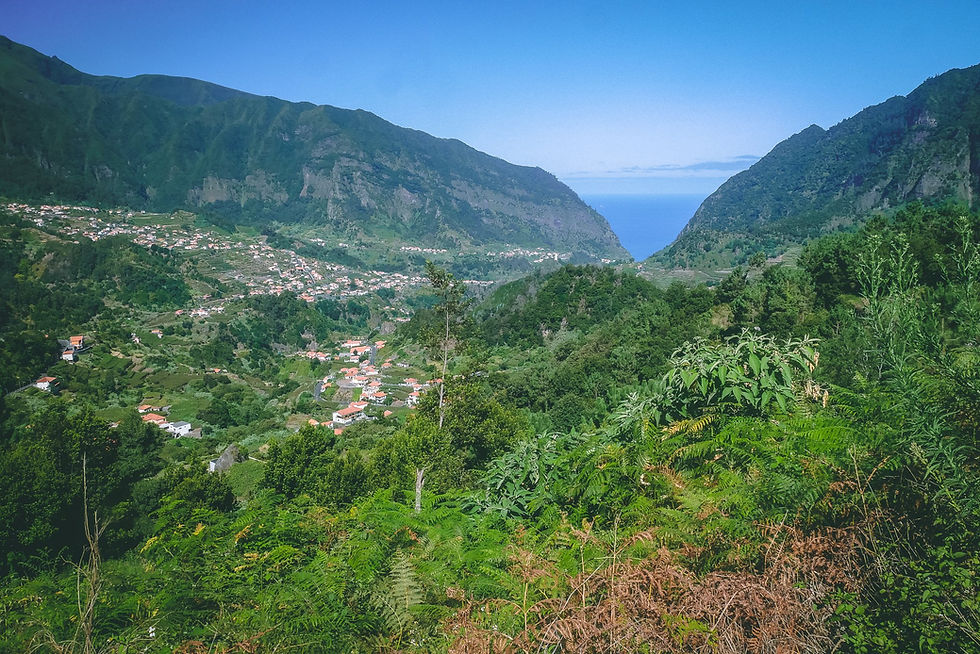
Discovering Madeira's Hidden Mountain Orchards
When you travel far afield it is sometimes comforting and reaffirming to discover that your new location has a link with your homeland. It’s a discovery which hit me one day last week when I was standing in an apple orchard nearly 2000 feet directly above the mid-Atlantic waves.
Regular readers of these pages will know that we love to support this region’s orchard-based endeavours - but here I was on the island of Madeira learning how there’s an exciting new cider-making revolution going on 1400 miles to the southwest. And it’s one that may well have Devon, Somerset and Cornish sailors to thank for its early evolution.
The official line is that fruit trees, including apples, pears, and cherries, were introduced by early Portuguese settlers in the 15th and 16th centuries - but there’s no doubt that apple-growing was also supported by British navigators who used Madeira as a stopping off point for their journeys across the Atlantic.
Cider holds a legendary and scientifically proven place in the history of maritime medicine as a defence against scurvy. While citrus fruits eventually became the gold standard, cider from places like Devon, the Basque Country, and potentially Madeira’s high-altitude orchards played a vital role on long Atlantic voyages. In the age of sail, fresh apples would rot within weeks in a damp ship’s hold, but fermenting the juice into cider preserved the liquid, allowing the Vitamin C to survive in a stable, drinkable form for months.

However, apples will not grow just anywhere… While the low-lying, coastal regions of Madeira are famous for tropical crops like bananas and sugar cane, the island’s dramatic, jagged topography creates distinct vertical climate zones. As you climb away from the coast and ascend into the deeper, cooler valleys and mist-shrouded high terraces (between 1000 and almost 3000 feet above sea level), the climate mimics northern Europe - and that is where the apple and pear trees grow.
I wonder how many of the estimated 2.5 million tourists visiting the island each year realise there are orchards hidden away high among those mountains? Probably not many, because a lot of the orchards have become overgrown and disused. The cider which is still made in backyards in the old traditional way is almost entirely consumed by locals.
So, until very recently, there’s been no reason why a tourist would know about the island’s fascinating relationship with orchards and apples. Now that is changing fast. Thanks very much to one man.

How Márcio Nóbrega Sparked Madeira's Cider Revolution
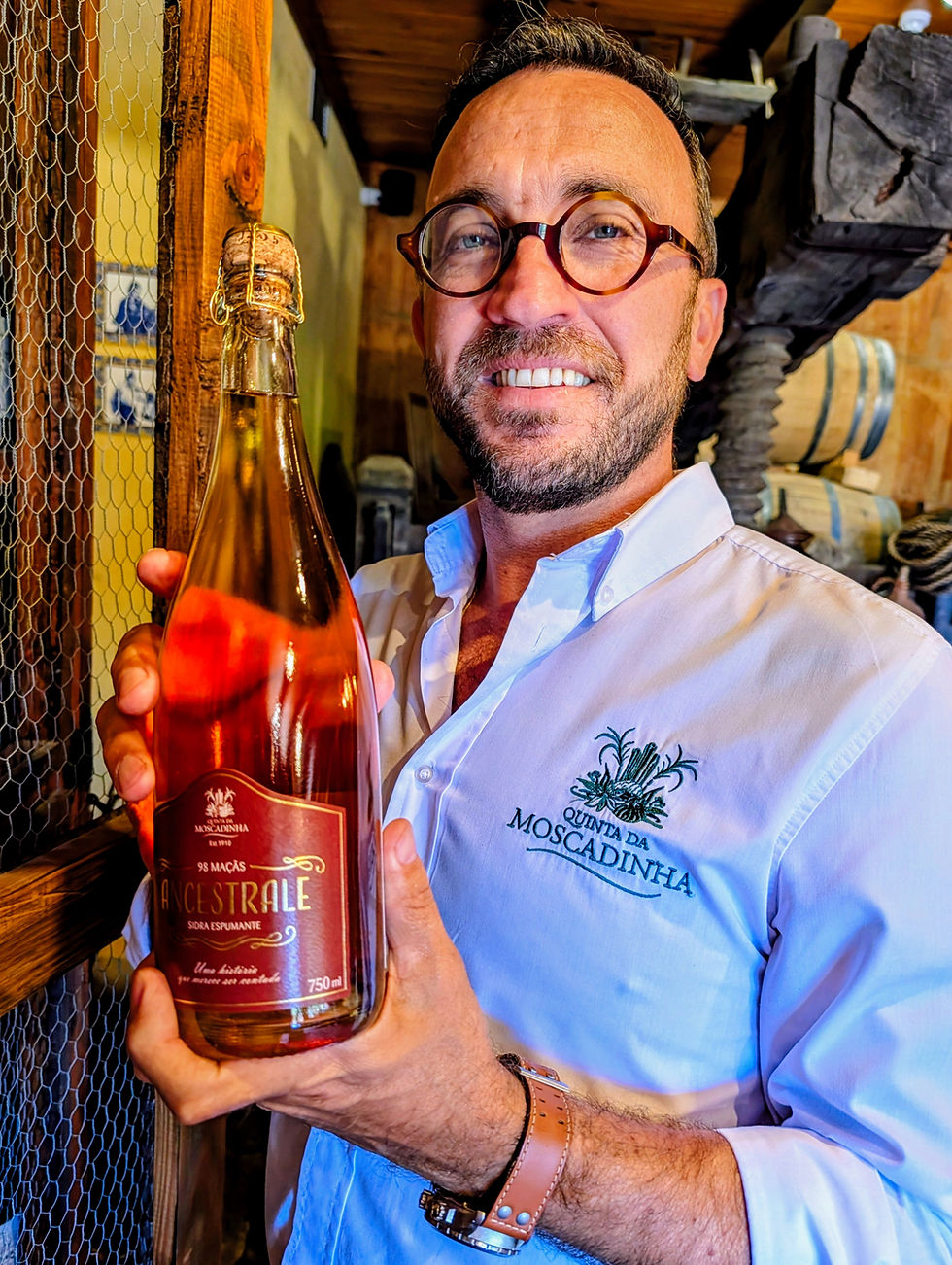
To understand how Madeira’s rustic, historic cider (known as vinho dos pobres ‘the poor man’s drink’) has been transformed into an ultra-premium, internationally acclaimed craft product, you must meet charming and dynamic Márcio Nóbrega. For he is at the centre of a fascinating story that now sees Madeira cider, being made in the same way as champagne, winning gold medals around the globe.
I spent one of the most interesting days I’ve had in years on the island with Márcio last week so that I could learn about how an industry - related to our own artisan-led cider-making in so many ways - has gone from zero to hero in just five years.
Zero: because, as I say, there was, and is, cider-making going on in the island - but the still, slightly sour, drink is very much reminiscent of what we used to know as scrumpy (so not to everyone’s taste). Hero: because Márcio Nóbrega’s methode-champenoise cider is now richly deserving of the international acclaim it is gaining, and is being sought after by Michelin starred chefs around the world.

Rescuing Thousands of Heritage Apple Trees
Here’s the basic story: Márcio, a well known entrepreneur and restaurant-owner in Madeira, became involved with cider almost by accident when he purchased the historic Quinta da Moscadinha (a lovely old villa, now boutique hotel) in Camacha - a cool, misty highland village, historically nicknamed the “orchard of Madeira”.
His initial plan was to establish a rural tourism retreat - however, during renovations, workers began clearing away some old, gnarled apple trees. That was when Mr Nóbrega realised he wasn’t just clearing a disused bit of land, but bulldozing five centuries of community heritage.

Motivated by a genuinely felt emotional connection to his island and its history, he instantly shifted gear. Instead of tearing down the past, he began to learn about cider and cider-making - and soon found himself in talks with farmers and landowners who had abandoned old, steep terraces (poios), some of which contained trees over 100 years old. By agreeing to buy their fruit at fair prices, Márcio single-handedly incentivised the rescue and regeneration of more than 3,000 heritage apple trees across the island.
Not a man to do things by halves, he also brought modern, rigorous winemaking practices to the cider-making process. For example, he treats the apple juice like fine white wine, crushing the freshly picked fruit in vertical hydraulic presses and cold-settling the ‘must’ for 24 hours at exactly 8 degrees C to lock in fresh, delicate aromas. And rather than using neutral stainless steel, he ages his premium ciders in old wooden casks, sourced directly from the island’s famous fortified wine houses. The porous wood imparts complex, oxidised notes of walnuts, dried fruit, and warming spices that balance the searing natural acidity of the volcanic soil.

Visiting the Orchards Above São Vicente
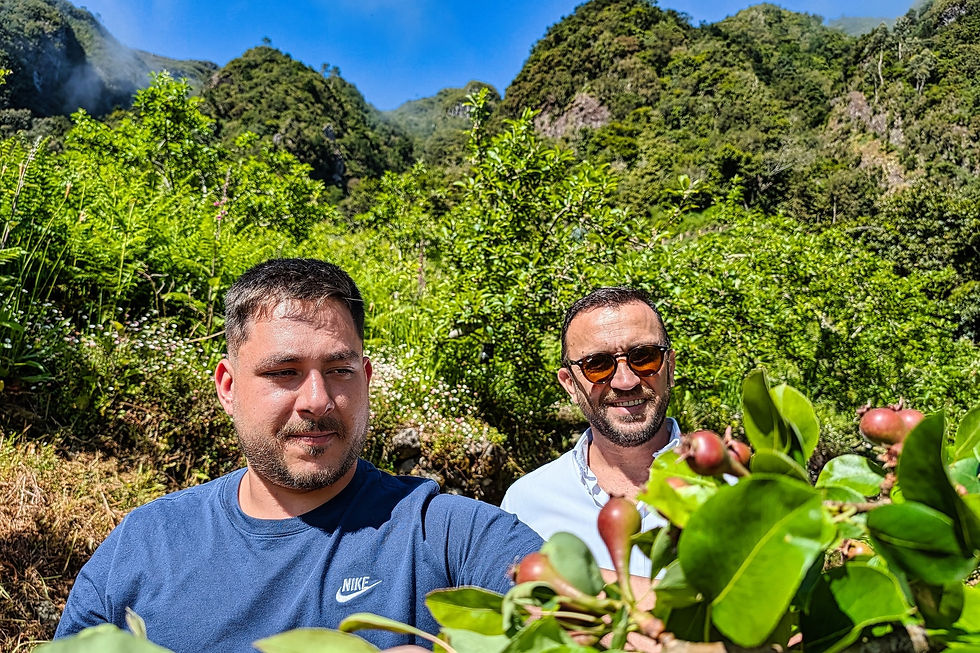
We began our day out by crossing to the island’s wild, misty, and mountainous north coast where we climbed to a newly revitalised orchard high in the natural laurel forests above the village of São Vicente. Here one of Márcio’s apple producers, Helder Cardoso, showed us how the trees grow on near vertical slopes - and some are over 100 years old. The orchard used to be run by his father, but now Helder is clearing and planting more trees to help cater for the increasing requirement from Quinta da Moscadinha.
Tucked high in a valley, this steep plantation of apple and pear trees was like none I’d ever seen before. Thick mists came and went between periods of warm sunshine when we could see the blue Atlantic almost 2000 feet below.
Márcio told me: “When I discovered these guys four years ago, the orchard was just a little bit abandoned... I say, 'Listen, take care of the orchard, I'll pay you back.' ... Instead of being 'Oh, that's a useless piece of land on the side of the mountain and just let the weeds take over,' they come back saying, 'Hey, we've got some value here.’ I value the apples and I start to work with local farmers to bring the best fruit, and I increased the value of the apples 500% since I started. I now pay five times more than we used to pay three years ago. Amazing! Everybody is earning money.”
Quinta da Moscadinha and the Art of Sparkling Cider
Next we took the hour-long drive to Quinta da Moscadinha, high in the eastern uplands of the island, where Márcio has his centre of cider-making operations - alongside the small but handsome hotel and a hugely popular restaurant. As we toured the impressive new cellar buildings, he told me more about his five-year journey into the world of cider…
“My goal was not to produce cider when I bought this place - it was to recover the old mountain house and construct a restaurant where an orchard used to be. But I noticed that, during the days after we cut down the apple trees, the neighbours - local people - they were really fed up with me. I tried to understand why... and I discovered that this area was regarded as the orchard of the island.

“To calm down the people and to appear to be a reasonable new neighbour, I produced some cider - 2,000 bottles - with the apples that I cut. That is how I started. Then I began to ask about our cider-making tradition… How is it possible to produce cider that’s not very good if you have the best apples in the world? You don’t produce wine with bad grapes.
“I began looking into the history and I discovered that in the old days only poor people drank cider - the noble people drank wine. I happened to have a barrel of Madeira wine from 1940, and so I take out the wine from the barrel and I put the cider inside for one year to age and gain some flavours. And that is the first big thing - it gave a real novelty to the cider.
“So I started taking cider-making seriously. I applied all the techniques of the oenology, but instead of using grapes, I used apples. We take care of the apples, and we take enormous care during the cider-making process, and at the end we have a good product. To drink a bottle of my cider, you need to wait three years since the beginning of the press until the opening of the bottle... We do it the wine way. Because truly, quality cider is a wine.

“I want to grow a business with this, and so I need to serve quality... And there are other reasons why I am optimistic about our new wave of cider-making in Madeira,” says Márcio. “The new generation likes drinks with a lower alcohol content (than wine), and cider fits with that. The next generation is also very eco-aware - they worry about things like air-miles - so our cider fits that bill when people come here.

“And cider can be compared to a wine,” he insists. “For one thing it is possible to pair it with the food. That was another of my big discoveries.”
Why Madeira Cider Is Winning Global Recognition
It was a discovery we put to the test during out lunch at the Quinta da Moscadinha restaurant. It was a truly memorable meal of fabulous local cheeses (some from the neighbouring Azores) with the lovely local Madeira breads, warm salads and absolutely delicious barbecued skewers of local beef.

Needless to say, Márcio’s wonderful sparkling ciders accompanied each and every mouthful perfectly. The same applies to some of the really good artisan ciders being made in our own region nowadays. The tale of fermented apple juice - a story which had no new chapters for centuries - is rapidly evolving. And it was a real joy to driver part of the evolution is happening 1300 miles southwest across the waves.

Fact File
For more information on what to see and do in Madeira and its neighbouring island, Porto Santo, visit: visitmadeira.com
Madeira is easily accessible from across the UK, with direct flights from Bristol, Birmingham and Bournemouth among others, as well as London Gatwick and Stansted.
Martin uses Holiday Extras, the market leader in UK airport parking, hotels, lounges, and transfers – in 2025 its customers saved an average of £200 per trip by booking their airport parking in advance. Booking airport parking means you can enjoy more holiday with less hassle. Plus with Flextras, if you need to cancel or amend you can without charge. Six days’ Meet & Greet Valet Parking at Bristol Airport is available for £204.50 based on arrival on 01/07/2026. For more information and to book, HolidayExtras.com or call 0800 316 5678.


