
5 Of The World's Best Beaches To Add To Your Bucket List
Not all beaches are about lying on the sand and soaking up the sun. Some have colourful coral reefs waiting to be explored, while others are known for unusual rock formations, dramatic black sand or planes flying surprisingly low overhead. And then there are those picture-perfect stretches of white sand and clear water that make you want to stay all day.
With so many beautiful beaches around the world, choosing where to go often comes down to the kind of experience you're after. It's also worth considering the best time to visit and how easy each destination is to reach. Here are five beaches that stand out for different reasons, along with a few practical tips to help you plan your visit.

Exploring White-Sand Beaches and Coral Reefs in Raja Ampat, Indonesia
Raja Ampat is home to some of Indonesia's most beautiful beaches, with soft white sand, clear turquoise water and coral reefs full of marine life. Located within the Coral Triangle, this remote archipelago is home to more than 75% of the world's known coral species. Around Kri and Gam islands, visitors can snorkel among colourful fish and coral gardens, while boat trips offer opportunities to spot manta rays and explore lagoons surrounded by towering limestone formations.
Reaching Raja Ampat takes some planning, particularly if you're travelling from the UK. Most visitors fly to Sorong via an Indonesian city such as Jakarta or Makassar, then catch a ferry to Waisai on Waigeo Island. From there, local boats provide access to smaller islands, including Kri and Gam, where beachfront homestays and eco-resorts make convenient bases for exploring the reefs. Some accommodation offers snorkelling straight from the shore, while more remote beaches require longer boat journeys.
October to April generally brings calmer seas, making it a good time for snorkelling, diving and island-hopping. For those dreaming of a Raja Ampat yacht charter, it's important to check which islands and reefs are included in the itinerary, as distances between destinations can be considerable. Sea conditions and visibility can vary throughout the year, so leave some flexibility in your plans and arrange transfers in advance.
Wandering Sandstone Arches and Caves at Praia da Marinha, Portugal
Praia da Marinha is one of the Algarve's most striking beaches, with golden limestone cliffs, natural rock arches and clear blue-green water. Before heading down to the sand, stop at the clifftop viewpoint to admire the famous double arches and surrounding coastline. A long staircase leads to the beach below, where you can enjoy a swim when conditions are suitable or relax on the sand beneath the towering cliffs. The beach can get busy in summer, particularly when high tide leaves less room along the shore.

There's plenty to explore beyond the beach itself. Praia da Marinha marks one end of the Seven Hanging Valleys Trail, a coastal walking route stretching around 5.7 km to Praia de Vale Centeanes. Along the way, you'll encounter rocky headlands, hidden coves and viewpoints overlooking the Atlantic. You can walk a shorter section if you're not up for the full route. Guided boat and kayak excursions from nearby Benagil also offer a chance to admire the coastline's arches and sea caves from the water, depending on sea conditions.
May, June and September are good months to visit, with pleasant weather and generally fewer crowds than in July and August. Praia da Marinha is around an hour's drive from Faro Airport, with parking available above the cliffs. Arrive early during the summer months, bring water and comfortable footwear, and check the tide times before exploring along the shore. Keep a safe distance from the base of the cliffs, too, as falling rocks can be a hazard.
Watching Jets Land Overhead at Maho Beach in Sint Maarten
Maho Beach offers a rather unusual experience for beachgoers, with passenger jets flying remarkably low overhead as they approach Princess Juliana International Airport. Located on the Dutch side of the Caribbean island of Sint Maarten, this narrow stretch of white sand sits directly beside the airport runway. Watching the planes descend over the turquoise water is quite a spectacle, especially when larger aircraft approach. The nearby beach bars are popular viewing spots, and some display flight arrival times to help visitors plan their visit.
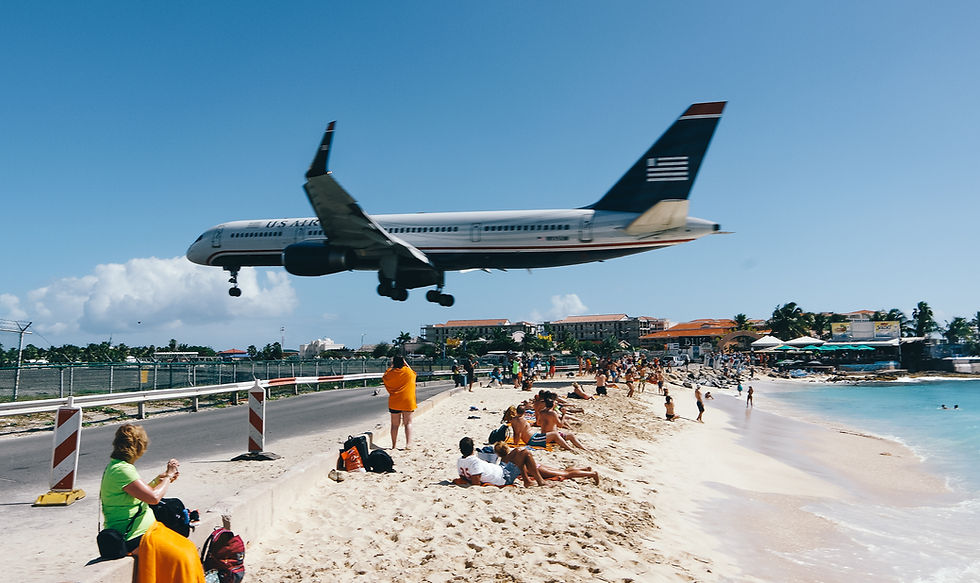
Between flights, you can enjoy a swim when the sea is calm or grab a bite to eat at one of the beachfront restaurants. Larger international aircraft often arrive around midday and early afternoon, although schedules vary. It's important to follow the posted safety warnings and keep away from the airport fence, as jet blast from departing planes can be dangerous. If you fancy somewhere quieter afterwards, nearby Mullet Bay offers a more relaxed setting for swimming and sunbathing.
December to April generally brings drier weather, although it's also one of the island's busiest periods. Maho Beach is around 20 to 30 minutes' drive from Philipsburg, depending on traffic, with taxis and local minibuses providing transport options. Location is worth considering when searching for St Martin villas, as properties on the French side may offer quieter surroundings but involve a longer drive to Maho. Renting a car makes it easier to explore both sides of the island and visit other beaches during your stay.
Walking Black Sand Beneath Basalt Columns at Reynisfjara, Iceland
Near the village of Vík on Iceland's southern coast, Reynisfjara's black volcanic sand and pebbles contrast sharply with the white Atlantic surf. Along the cliffs, the enormous hexagonal basalt columns of Garðar resemble the pipes of a giant organ. Offshore, the Reynisdrangar sea stacks rise from the water, with local folklore describing them as trolls turned to stone by the morning sun.
Reynisfjara is particularly popular with photographers, but visitors need to be cautious. Powerful waves can surge unexpectedly far up the shore, even when the sea appears calm. Parts of the beach, including access to the basalt columns, may also be restricted because of erosion and dangerous conditions. Stay within permitted viewing areas, keep well back from the water and follow all safety warnings. Summer brings exceptionally long daylight hours, making late afternoon or evening a good time to enjoy the coastal scenery.
Reaching Reynisfjara takes around two and a half to three hours by car from Reykjavík, following Route 1 before turning onto Route 215. You can also stop at Seljalandsfoss and Skógafoss waterfalls along the way. Parking and a café are available near the beach, while nearby Vík has restaurants, guesthouses and other accommodation options. If visiting in winter, check road conditions before setting off, as snow, ice and strong winds can affect travel along the southern coast.

Strolling Soft White Silica Sand Along Whitehaven Beach, Australia
Whitehaven Beach stretches for seven kilometres along Whitsunday Island, with some of the whitest sand you'll find anywhere in Australia. Made up of around 98% silica, the sand is exceptionally fine and soft underfoot, creating a striking contrast with the turquoise water. At the northern end of the beach, Hill Inlet is particularly beautiful, with changing tides creating swirling patterns of white sand and blue-green water. For the best views, take the short uphill walk to Hill Inlet Lookout, where you can see the colourful sandbars stretching across the inlet.
There's plenty to enjoy beyond admiring the scenery. Spend some time walking along the beach, relaxing on the sand or taking a dip when conditions are suitable. Many boat tours also include guided walks or snorkelling stops around the surrounding Whitsunday Islands. For a different perspective, scenic flights offer aerial views of Whitehaven Beach and Hill Inlet. If you'd like to stay overnight, there's a designated national park campsite at the southern end of the beach, although you'll need to arrange a camping permit in advance.
Airlie Beach is the main gateway to Whitehaven, with boat tours also departing from nearby island resorts, including Hamilton Island. April to October generally brings milder temperatures and lower humidity, making it a pleasant time to visit. Be sure to check whether your chosen tour includes Hill Inlet Lookout, as itineraries vary. Bring plenty of drinking water, sunscreen and a hat, and follow local swimming advice. Marine stingers can be present throughout the year, with a higher risk from November to May, so wearing a protective stinger suit is recommended when entering the water.
Which beach is first on your list?
Would you head straight for the colourful reefs of Raja Ampat, explore the limestone arches of Praia da Marinha or watch planes fly overhead at Maho Beach? Perhaps Iceland's black volcanic shores or Whitehaven's brilliant white sand has caught your attention. Each beach offers something different, and choosing which one to visit first is part of the fun.
Once you've picked your favourite, check the best time to visit, how to get there and any local safety advice. Some beaches require boat transfers or longer journeys, while others are easier to reach on a day trip. Give yourself plenty of time to explore, enjoy the surroundings and make the most of your visit.


