
Cornwall Coastal Foraging: Wild Food, Seaweed and Cooking with Top Chefs 🌿🥘

Updated: Jun 26
Discovering the Wild Delights of Cornwall
Whatever floats your boat… There are folk who prefer spending a November day in a crowded shopping mall, but I am not one of them. Give me a clean, remote, rocky, Cornish beach and a couple of top chefs to go foraging with, and I am one happy old newspaper hack - one who happens to love the idea of cooking with wild ingredients. 🐚
Cornwall is one of Britain's finest places for coastal foraging. From edible seaweeds and samphire to shellfish and wild coastal herbs, its beaches and rocky shores have inspired generations of chefs. During this unique day out I joined some of Cornwall's leading cooks to discover how they gather ingredients from the shoreline before turning them into restaurant-quality dishes


The Joy of Cooking with Wild Ingredients
One of the joys about being a keen home-cook is that there’s always plenty of new and exciting stuff to explore. Of course, even top professional chefs never stop learning but, for us amateurs, the field is very wide and diverse indeed. We tend to be jacks-of-all-trades and masters-of-none - which is why cookery schools and courses run by experienced chefs are hugely popular. You’re likely to come away with a kitchen drawer full of new tips, shortcuts, and skills. 🍳

A Day with Jude Kereama: Foraging and Cooking
Imagine my excitement then, when well-known Cornish chef and restaurant proprietor Jude Kereama invited me to spend a day foraging for wild coastal ingredients, which we’d then use in his kitchens. How good does life get? I’d spend some time out on a particularly wild (and therefore unpolluted) part of the Cornish coast and also get to see how experts use things like rock-samphire, seaweed, and even hottentot-fig.

Porthleven: Cornwall's Culinary Haven
Regular readers might recall that we have featured the culinary wonders of Porthleven before. The Cornish harbour village punches way above its weight when it comes to food and drink. I promised I’d return one day after my new chef pals, Jude and his colleague Ross Sloan, invited me back for a cookery masterclass after the busy summer season was over. 🌊

The Culinary Magic of Kota Restaurants
In April, I was writing about the reasons why Porthleven had become such a foodie destination and, in doing so, I highlighted an extraordinary multi-course tasting menu prepared by Ross at Porthleven’s Kota Restaurant, where he’s head chef. The article also mentioned the neighbouring Kota Kai restaurant - both establishments are owned by the charming and highly talented Jude, who helped set up Porthleven’s hugely successful annual food festival. He has played a large part in why this small coastal town has become such a food Mecca. 🍽️

Jude Kereama's Culinary Journey
New Zealand born Jude honed his kitchen skills with one of NZ’s top chefs before coming to the UK, where he met his late wife, Jane. Searching for a restaurant, they settled in Porthleven and opened Kota in 2006, before launching Kota Kai in 2011. Kota (meaning ‘shellfish’ in Maori - Jude is half Maori, half Chinese-Malay) and Kota Kai have since become stalwarts of the Cornish food scene. Jude was also a favourite on the Great British Menu 2021 and was named ‘Chef of the Year’ in the 2019 Trencherman’s Guide Awards.
"The Rockpool": A Coastal Inspiration
No wonder I was looking forward to spending time with Jude in a kitchen - and my excitement hit enthusiastic schoolboy levels when Jude announced that his plan was to… “Put the beach on a plate.”
“The inspiration for my dish 'The Rockpool' came while I was on Great British Menu,” he explained. “It’s a tribute to time I’ve spent with my son. We would often go rock pooling together, sampling seafood right there by the shore. This kind of family experience inspired me to create a dish that captures the essence of a rock-pool on a plate, celebrating the diversity and richness of the sea.” 🦀

Cooking Techniques with the Jasper Grill

Jude also wanted to show me how chefs at Kota Kai, perched above Porthleven’s inner harbour, take food to another level by using the kitchen’s charcoal-fuelled Jasper Grill. “It imparts an incredible smoky flavour that really enhances every ingredient. For instance, as part of the base for this dish, I charred some carrots in the Jasper until they were blackened, then peeled them to reveal a sweet, concentrated flavour inside.”
Sustainability and Respect for Ingredients
Jude’s approach is all about maximising the potential of each ingredient. “I also utilised components that might otherwise be discarded, like red mullet bones and a monkfish tail. Roasting these brings out their gelatine and flavour, adding complexity to the broth. I love this kind of cooking because it respects every part of the ingredient. The bones, the scraps - they’re rich in flavour, and when treated properly, they can transform a simple broth into something deeply satisfying and complex.” 🌱

Foraging on the Cornish Coast
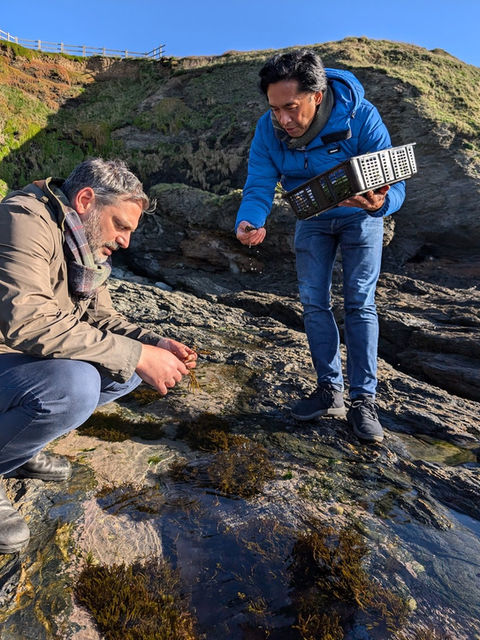
With Ross Sloan, we set off to clamber down to remote rocky beaches along the coast, not far from Porthleven. None were easily accessible, and we had to watch our step, so I was glad to be in the company of two local chefs who come out along this stretch on an almost daily basis.
Harvesting Seaweed and Hottentot-Fig
“We’ve got some sea lettuce, which is one of my favourites - and some purple dulce,” said Ross after a few minutes. “Seaweed is as seasonal as everything else. In autumn, it starts to come off the rocks and float away - just like you see leaves falling from trees - so we are doing well with this little haul.” 🌿
A Unique Culinary Experience
A few carefully placed fingers of pickled hottentot-fig - alongside some sea-purslane and strands of edible seaweed - certainly helped to give Jude’s Rockpool on a Plate the genuine look, feel, and taste of the local seashore. I loved the dish. Indeed, it is such an authentic representation of the Atlantic coastline I think it should be declared Cornwall’s “national dish”.

Jude Kereama’s Rockpool on a Plate Recipe
This recipe is for the bisque sauce served on the Rockpool dish. You could make the seafood element with any fish or shellfish you have to hand - adding some sea-vegetables or seaweeds as a garnish. Rock or marsh samphire, sea purslane, or indeed pickled hottentot-fig all go very well, not only adding to the appearance but giving a sharp, acidic, almost sweet kick, to the salty seafood. 🍲
Ingredients for the Bisque
Cold pressed rapeseed oil for frying
600 gms red mullet bones, heads, eyes removed and gills cleaned
2 banana shallots diced
½ fennel bulb diced
1 carrot peeled and diced
1 stick celery diced
2 cloves garlic crushed
½ thyme ginger grated
2 sticks lemongrass chopped
3 leaves Kaffir Lime leaf
1 shot of Pernod
100 gms chopped tomatoes
1 tablespoon of red miso paste
Pinch of cayenne pepper 2 pinches saffron strands
1 ½ litre fish stock
Salt and pepper to taste
Method
Fry off the fish bones in the oil in a pan until golden. Add all the vegetables, garlic, ginger, lemongrass, kaffir lime leaf, and cook until softened. Deglaze with the Pernod and flame. Add all the other ingredients and cook for ½ hour. Blitz in a high-speed blender and pass through a fine sieve. Bring back to the heat and reduce until you have a nice consistency and season with salt and pepper.
Frequently Asked Questions About Coastal Foraging in Cornwall
Is coastal foraging legal in Cornwall?
Yes, coastal foraging is generally legal in Cornwall, provided you collect responsibly and avoid protected areas or species. Always check local regulations and never remove more than you need, leaving plenty for wildlife and other foragers.
What can you forage on the Cornish coast?
Depending on the season, you may find edible seaweeds, samphire, rock samphire, mussels, winkles, limpets and a variety of wild coastal herbs. Identification is essential, as some species should not be eaten.
Is seaweed safe to eat?
Many species of seaweed are highly nutritious and have been eaten for centuries. However, only harvest seaweed that you can positively identify, and avoid collecting from polluted waters or busy harbours.
Do I need experience to go coastal foraging?
Beginners are always best advised to join a guided foraging walk. Learning from an experienced forager helps you identify edible plants safely while understanding local wildlife and conservation.
What equipment should I take?
A small knife, a basket or cloth bag, sturdy footwear and a field guide are useful. It's also wise to carry gloves, check tide times before setting out and avoid slippery rocks.
When is the best time of year for coastal foraging in Cornwall?
Every season offers something different. Spring brings fresh coastal greens, summer is ideal for samphire and many seaweeds, while autumn can provide shellfish and fungi in nearby woodlands.
Can I eat shellfish that I collect?
Shellfish can carry harmful bacteria or toxins, particularly after heavy rain or during algal blooms. Only collect from approved waters and make sure you know how to prepare and cook them safely.
How can I forage responsibly?
Only take what you need, never uproot entire plants, avoid disturbing wildlife and leave plenty behind for nature to thrive. Responsible foraging helps protect Cornwall's remarkable coastal habitats for future generations.


