
Cool Thoughts in a Heatwave: Remembering Iceland’s Ice and Fire

Updated: Jul 24

When the West Country swelters under a summer heatwave, my mind inevitably wanders toward the frozen edges of the world. There are times when the sticky heat becomes so heavy that the only mental antidote is to summon the memory of howling sub-zero winds, vast fields of volcanic black ash, and the intense, electric-blue heart of an Icelandic glacier.
Iceland is an island that strips travel down to its rawest elements. It is a landscape where earth and sky exist in a constant, dramatic tussle—where subterranean fire boils under thick sheets of ancient ice, and where you can stand on a sea-cliff with the Atlantic gale roaring in your ears, feeling utterly, delightfully small.

Escaping the Heat: The Call of the Far North
I spent time exploring this formidable country, venturing out across its rugged southern coast, standing at the foot of creeping glaciers, and watching icebergs drift silently across glacial lagoons toward the open ocean.
When the mercury rises back home, those icy vistas remain crystal clear in my memory...

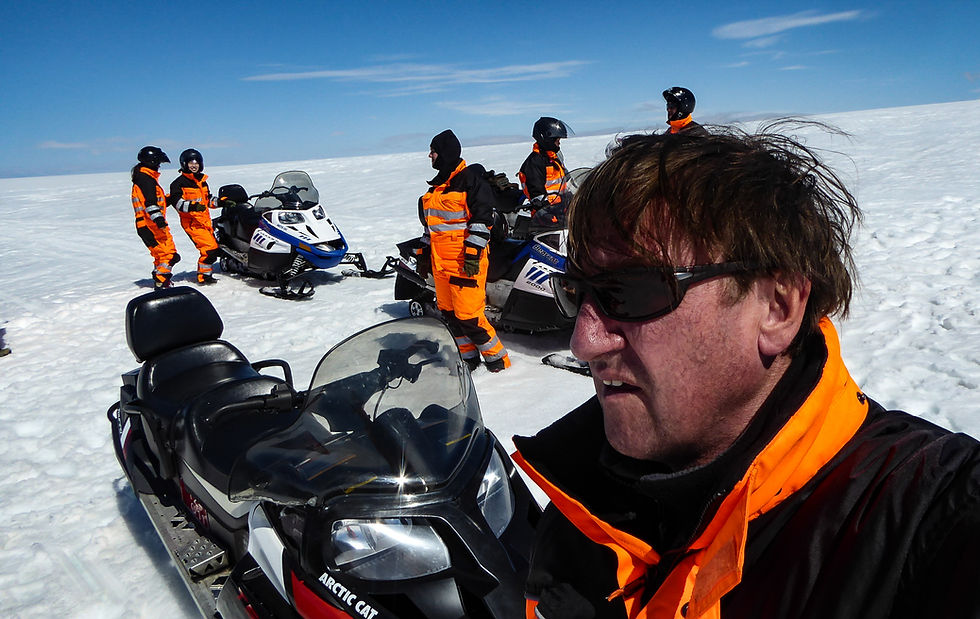
One thing the now defunct airline WOW Air had arranged for me was a snowmobiling adventure that took me to the top of the spectacular Mýrdalsjökull glacier, where you can - if you are lucky - enjoy breathtaking views.
Snowmobiles are easy to drive but I was glad I had a guide because there are deep crevasses everywhere and much of the vast ice-cap is amazingly featureless so it would be easy to get lost.

Like every Icelander I met, the guide was a wonderful and friendly chap who spoke perfect English - though I began to wish he didn’t when, at the very top of the glacier, he told us the whole thing was sitting on a live volcano that was more than 50 years overdue blowing its top.
Creeping Blue Ice and Volcanic Black Ash
He said when it did the 900 feet of solid ice would melt in just two hours and the resulting explosion would be far, far, worse than the 2010 eruptions of Eyjafjallajökull which stopped Atlantic flights.
So to this day I am enjoying the sunshine when I can - you never know when it’s going to be hidden behind a bloody great big cloud for years on end.

Frequently Asked Questions About Visiting Iceland's Glaciers

Where are the best glaciers to visit in Iceland?
Vatnajökull in the southeast is Europe’s largest ice cap by volume and offers incredible glacier-tongues like Svínafellsjökull. Other popular and accessible glaciers include Mýrdalsjökull and Solheimajökull along the southern coast.

Can you walk on a glacier in Iceland without a guide?
No. Glacier walking requires specialist safety gear (crampons, ice axes, and harnesses) and deep local knowledge of hidden crevasses and unstable ice structure. Always join a certified local glacier guide.

What is the best time of year to see Iceland’s glaciers and ice lagoons?
Glaciers and lagoons like Jökulsárlón can be visited year-round. Summer offers long daylight hours, milder weather, and easy road travel along the Ring Road, while winter brings dramatic ice cave tours and chances to see the Northern Lights.


