
Hokkaido Wilderness Guide: Exploring the Wild Mountains and Forests of Japan

Updated: Jul 9

Everything about Japan is fascinating. In some ways it is more British than Britain - in others it is more alien than Mars. And nowadays this most foreign of lands is a great deal more amenable and less daunting than you may think.
In this article we are concentrating on just one corner of the Japanese archipelago, having recently spent the best part of a week in the country’s northern isle, Hokkaido. It is vast, amazingly scenic, and as friendly a place as you can imagine. Indeed, I stayed in what is probably the most visitor-friendly part of the mountainous and forested island - Niseko Village is all about skiing and snow-boarding so is well used to catering for an international clientele.

That is thanks partly to the fact that its slopes are smothered by as much as 50 feet of snowfall each year - and winter-sports fans tell me it is the best powder snow in the world.
But at other times of the year the area offers a hugely scenic refuge for anyone, say, who has spent time in the crazy urban world of Tokyo.
I stayed in a luxurious town house which is part of the YTL Hotel company’s Green Leaf Hotel complex (all part of the larger Niseko Village resort) situated on a shoulder of a mountain some 2000 feet above sea-level. The large, well-appointed three-bedroomed house was all en suite and very comfortable and spacious indeed.

Japan's Untamed Frontier: The Unique Geography of Hokkaido
Niseko is a genuine rural refuge, far from the frenetic intensity of urban Japan. It really does offer the visitor the easiest and most scenic introductions to the country.
Hotel staff were keen for me to try one of their new e-bikes which made cycling around the undulating countryside easy and pleasurable. With a handful of other journalists I spent a couple of days exploring the high plateau between the dormant conical volcanoes, pedalling through forests and visiting hot-springs, lakes and local restaurants to sample local dishes such as udon or soba noodles, which were an inexpensive joy.

Two of the main local delicacies will have any English person feeling at home - cheese and potatoes. And no, I had not heard of Japanese cheeses before, or oriental spuds come to that. But both are a big deal in the fertile farmlands which do so well on the volcanic soils of this beautiful region.
Trekking Through Primeval Forests and Volcanic Peaks
High peaks surround the fields and clear rushing rivers interweave their way through the myriad foothills. At every touch and turn you came across lush crops growing here, harvests occurring there and little farm gate shops everywhere.
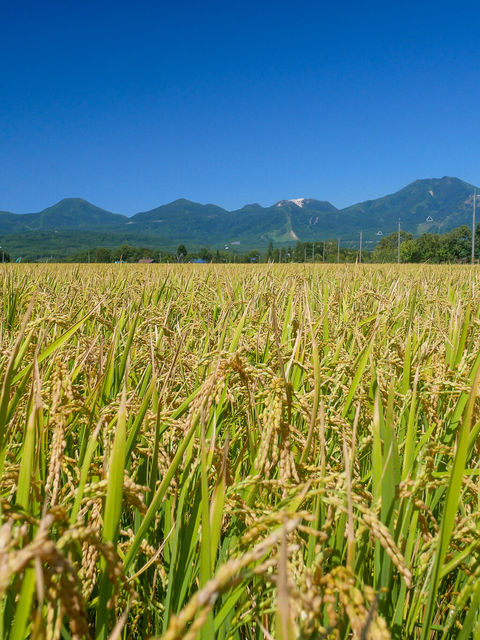
Apart from potatoes and the occasional herd of milking cows you will come across wide yellow rice paddies, impressive stands of asparagus fern, the sweetest tomatoes imaginable, sweetcorn, aubergines and goodness knows what else. One farmer told me: “Hokkaido is like your Kent - it is the garden of Japan.”
As if to prove this, we were invited to the Niseko Village Autumn Food Festival, which was a joy, although I was surprised to see so many stalls run by Europeans and Australians who’d settled in the area to farm organically, presumably as some sort of lifestyle choice given that the area offers first class summer surfing and world class winter-sports.

In early-September it was hard to envisage such snowy scenes. The days I spent cycling were hot, which was not a problem for us as we were helped by the tiny electric motors and also able stop at regular intervals at the freshwater springs which are a feature of the area.
So famous is this the health-giving water that businesses have set up by the side of some springs creating various products. We visited a tofu-making concern which was so popular that even in this sparsely populated area there were queues. The tofu came in all manner of forms and colours, including a charcoal version.
A morsel entitled ‘raindrop-cake’ was another speciality made by a spring-based business. It didn’t taste of anything at all - it was just a clear ball of jelly, or wobbly water. Preserving the Wild Soul of the Northern Wilderness The Japanese seemed to love it. Which is one of the nice things I noticed about Japan - if something is deemed good, then the ever-polite Japanese become very enthusiastic indeed.
Go to a cheese-producer near Niseko Village and it will be the other customers, not the owner, who will tell you that the blue cheese was national champion in 2016. Visit the local ice-cream-maker and it will be a customer who’ll insist on grabbing your camera so that he can snap photos of you licking your cornet.
They will laugh, smile and bow - and you will laugh, smile and bow right back. Because that is what you do in Japan in an endless dance of courteousness, that I found pleasant rather than wearisome. At least those staying at the Green Leaf Hotel or its town houses - or its large neighbouring Hilton - can retire to the mountainside for a relaxing dinner followed by an even more relaxing dip in the onsen. These communal hot-water baths are to be found all over Japan and are THE thing which locals do on a daily basis. The extremely hot baths are separate for men and women - you just strip right off and pretend you are a boiled lobster for 20 minutes, bubbling gently away watching the shooting stars illuminate the distant conical mountainsides.

After 20 minutes of that you wander off to bed feeling more relaxed than you’ve ever felt - certainly a lot more relaxed than those moments when you’ve been watching your rugby team in a hostile ruck.
Only one problem has loomed for me since I made this first visit to Japan - it is the instant desire to return and explore further. I shall asking my new friends at YTL Hotels what else I can explore and do next time I visit Hokkaido.
FACT FILE
Martin was a guest of YTL Hotels. www.skisafari.com
Martin flew to Japan with British Airways which has daily services - visit www.britishairways.com




Frequently Asked Questions About Visiting Hokkaido's Wilderness
What makes Hokkaido different from the rest of Japan?
Hokkaido accounts for roughly one-fifth of Japan's total landmass but holds only a fraction of its population. Unlike the bustling, historic cities of the main island, Hokkaido is celebrated for its raw, untamed wilderness, featuring expansive national parks, active volcanoes, magnificent primeval forests, and dramatic seasonal shifts that attract outdoor enthusiasts year-round.
When is the best time to visit Hokkaido for hiking and nature?
While Hokkaido is globally famous for its winter powder snow, the best time for mountain trekking and exploring the forests is from June to September. During the summer and early autumn, the alpine fields burst into blossom, the weather is beautifully mild, and the hiking trails are completely clear of ice.
Are there wild bears in the forests of Hokkaido?
Yes. Hokkaido is the exclusive home of the Ussuri brown bear (Higuma), which lives deep within the island's mountain ranges and dense forests. When trekking through remote national parks like Shiretoko or Daisetsuzan, hikers are always advised to carry bear bells and follow local safety guidelines to ensure a respectful distance from the wildlife.
Once you've saved these updates in Wix, run the URL straight through Google Search Console to get those 4 views moving upwards!


