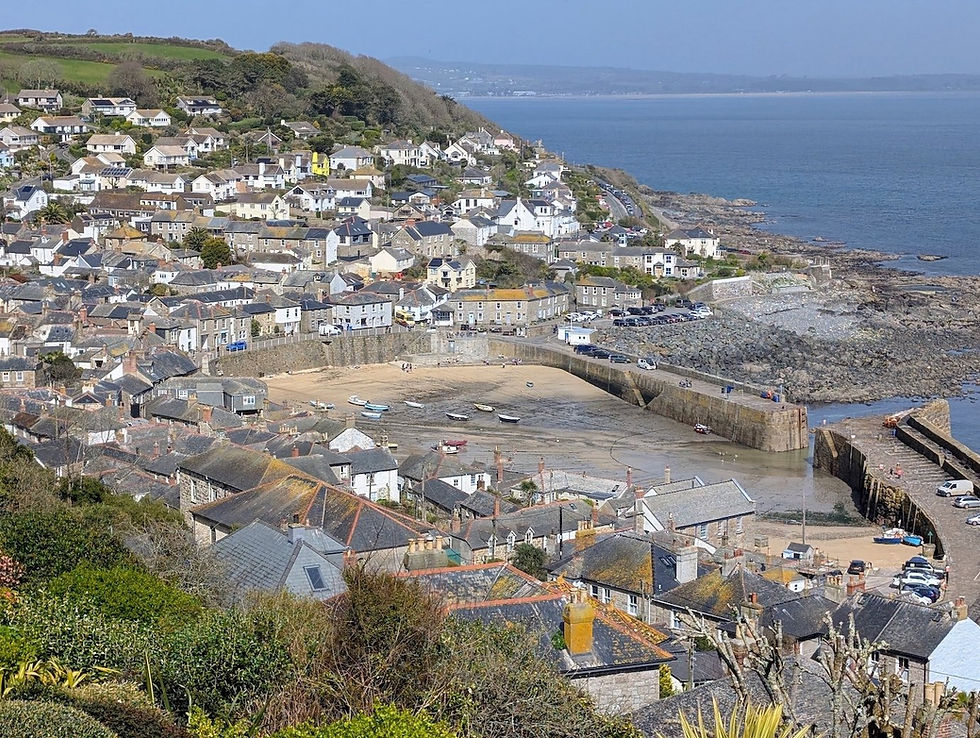
The Ultimate Cornish Seaside Guide: Hidden Coves & Secret Sands

Updated: Aug 10

Cornwall is famous for its vast, bustling stretches of golden sand, but for those willing to venture just a little off the beaten track, the Duchy reveals a far quieter, more magical side. Tucked beneath towering granite cliffs and reached via ancient packhorse trails or secret cliff paths lie dozens of untamed inlets, hidden coves, and pristine sandy bays that remain blissfully peaceful even at the height of summer.
Having explored the West Country littoral for decades, I’ve compiled this guide to highlight the very best secret beaches along the Cornish coast—from the wild, oceanic coves of West Penwith to the quiet, turquoise inlets of the North Coast.
Whether you are looking for crystal-clear waters for wild swimming, quiet rock pools to explore with family, or simply a secluded spot to escape the summer crowds, here is our ultimate guide to finding Cornwall's hidden seaside gems.

1. St Martin’s: The Magical White Sands of Scilly
For an unforgettable seaside escape, travel 28 miles west of Land’s End to the breathtaking shores of St Martin’s in the Isles of Scilly.
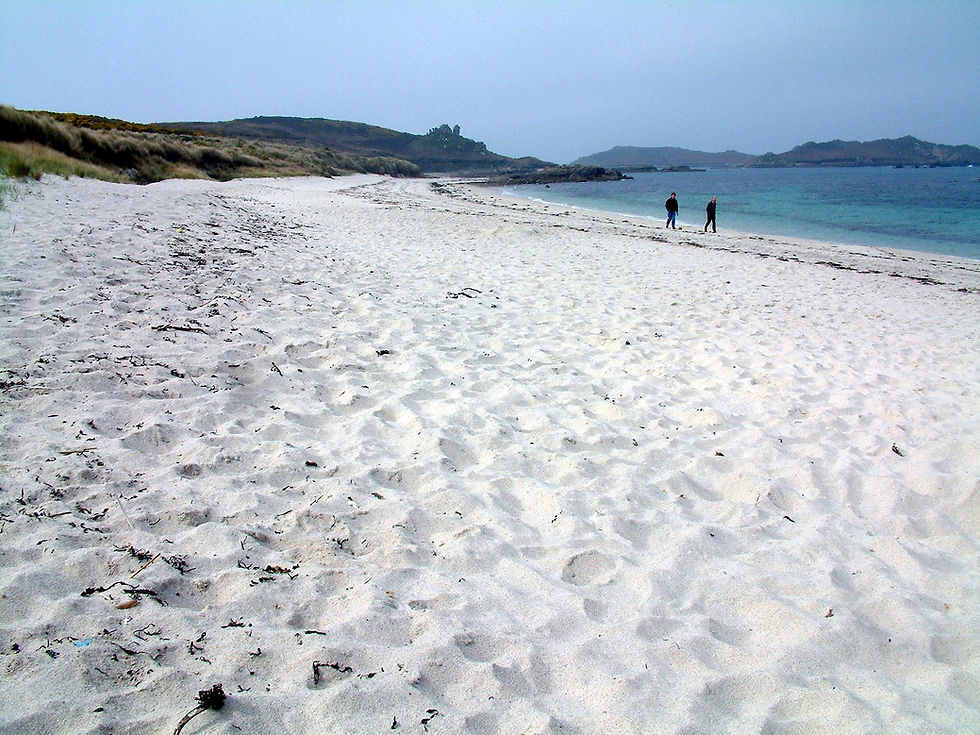
This northern isle features stunning white sand so exceptionally fine that historic writers once exported it to use as ink-blotting dust. The coastal paths trace from Higher Town Quay past the peaceful pastures of Little Arthur Farm, guiding walkers along a beautiful landscape where turquoise waves meet rolling downs. The path eventually reveals the striking, 45-foot red-and-white striped Daymark, erected in the 17th century, offering wide views over the uneasy Santamana Ledges.
READ MORE ABOUT ST MARTINS HERE

While Bread and Cheese Cove and Wine Cove provide lovely introductions, the magnificent sweep of Great Bay claims the crown as one of the finest beaches in the South West. Beneath this peaceful beauty lies an unexpected past: during the Cold War, the back end of the island was a top-secret site for experimental torpedo trials. Local islanders watched fast Wyvern aircraft roar overhead at 100 feet, dropping experimental missiles that bounced like porpoises across the waves. Today, the island has returned to what it does best, offering a perfect sanctuary of quiet solitude and untamed beauty.

2. Tregardock Strand: Geese, Slate Trails, and Wild Mussels
Tregardock Strand is a hidden gem tucked along the wild north Cornish coast, located just a few miles south of Tintagel. High above the beach, the landscape is defined by the rolling fields of Tregardock Farm, where cereal crops have replaced old farming ventures.

This dramatic stretch of coast holds deep historical connections; in 1826, a vessel named the Narrow Escape came to grief here alongside 20 other ships involved in the historic Delabole slate trade. To reach this secret beach, travellers navigate down the narrow coastal lanes from Treligga to the farm, where a public footpath begins beside an old barn. The track snakes downward through a shallow valley, passing historic slate water butts that serve as quiet monuments to the area's industrial past.
IF YOU ENJOY THIS ARTICLE CHECK OUT OUR SOUTH WEST COAST PATH PAGE

The path joins the South West Coast Path before descending directly onto the sand, shadowed by 'The Mountain'—an impressive eminence commanding the cliffs. At the beach's southern end lies the beautifully named Trerubies Cove. On cold winter days, the rock pools here are densely covered in pristine, wild mussels, offering a perfect harvest for adventurous walkers seeking a true taste of Cornwall’s wild shores.
TO READ ABOUT A SPECIAL WALK AROUND TREGARDOCK CLICK HERE

3. Strangles Beach: Hidden Footpaths, Nudists, and Fallen Shoes
Plunging nearly 700 feet down an incredibly steep cliff path, Strangles Beach is a spectacular, one-and-a-half-mile stretch of sand and shingle located between Boscastle and Crackington Haven.

This isolated haven is famous for its eccentric folklore; following the infamous Boscastle Flood of 2004, hundreds of washed-out shoes floated north and washed ashore here, prompting hardy hikers to hang the flotsam along a wire cliff fence.

Managed carefully by the National Trust and Trevigue Farm, the rugged cliffs are grazed by a herd of wild goats brought from Lynton’s Valley of the Rocks to preserve the delicate habitat. This grazing is vital for maintaining the open grassland required by rare Mediterranean ants, which share a complex ecological relationship with the endangered Large Blue butterfly.

The dramatic headland of Cambeak keeps watch over the shore, while rare choughs and swift peregrine falcons soar through the skies. At the beach's edge, past the formidable Samphire Rock, lies Little Strand—a secluded annexe that serves as an unofficial nudist beach. Its challenging access ensures that Strangles remains delightfully empty, even in the height of summer.
READ A FULL DESCRIPTION OF STRANGLES BEACH HERE

4. Church Cove: The Ancient Beachside Temple of the Lizard
Perched on the brooding western edge of the Lizard Peninsula, Church Cove is a wild, windswept horseshoe bay rich in coastal romance and marine history. In the depths of winter, the Atlantic swells transform this intimate cove into a raging cauldron of spume, but in quieter times, it reveals pure, clean sands.
FOR MORE WALKS IN CORNWALL SEE OUR SPECIAL CORNISH PAGE

The absolute heart of the cove is St Winwaloe’s Church, a fascinating medieval chapel dedicated to a Breton saint and famously recognised as the only Christian temple in Cornwall built directly on a beach. At high tide, the sea laps just feet from its ancient door, and its small tower stands completely separate from the main building, nestled tight against the steep inner bank.
CHECK OUT OUR CHURCH COVE HIKE HERE

The surrounding landscape is preserved by the National Trust, which successfully banned vehicles from parking on the sands to restore the fragile dune system with marram grass. The cove’s dramatic past is steeped in legends of lost wealth; the King of Portugal’s treasure ship, the St Anthony, sank here in 1527, and a gold-laden Spanish vessel was wrecked nearby in the 1780s, leaving a timeless aura of mystery.

5. Lansallos Cove: Smugglers' Trails and Double Coves
Tucked quietly away from the busy summer crowds of nearby Polperro and Fowey, Lansallos Cove is a textbook example of a secret South Cornish sanctuary. The approach to the beach is spectacular, following a deep, ancient pathway that winds from a lonely hamlet down through a lush valley where the Reed Water tumbles onto the shore.
READ ABOUT A WALK AROUND LANSALLOS HERE

This valley was once home to a historic watermill, now remembered through local ghost stories of a cold-hearted miller and his wife. The beach features a distinctive cutting carved directly into the solid shale rock; though often mistaken for a dedicated smuggler's route, it was originally built by local farmers to haul wagons of sand and seaweed up to their fields.

However, smuggling was a massive part of daily life here, famously highlighted in 1825 when local miners discovered a hidden cache of brandy on the shore and sneaked it underground into the Wheal Howell Mine. The surrounding 1,500 acres of unploughed cliff grassland are protected as an SSSI, providing a rich haven for rare Dartford warblers, peregrines, and vibrant butterflies. Walking east along the coast path leads directly to East Coombe, offering a perfect second cove for rock-pooling.

6. Portheras Cove: Aircraft Views, Seals, and Shipwreck Legacies
Portheras Cove is the true hidden treasure of West Penwith, nestled completely out of sight half a mile east of the Pendeen Watch lighthouse. Free of signposts and largely omitted from mainstream tourism guides, this pristine beach remains an undisturbed local secret.

For many years, the cove was entirely closed to the public after the 454-ton coaster Alacrity ran aground on Friday the 13th in September 1963; when Royal Marines blew up the vessel, sharp metal shards littered the sand until an exhaustive environmental clean-up restored the beach in 2004. Today, the cove offers flawless golden sands and exceptionally clear deep water, making it a favourite haunt for resident grey seals. Travellers can park at the lighthouse and follow a scenic coastal track down to Boat Cove, a charming, time-worn outpost where local handline fishermen store their gear in rustic huts with rusting corrugated iron roofs and barnacle-encrusted winches. From there, a narrow path winds over a low cliff, depositing walkers onto the tranquil, isolated sands of Portheras—a perfect coastal frontier where human society ends and the wild sea takes over.

7. Newquay Harbour: The Secret Amphitheatre Behind the Surf
While Newquay is universally celebrated for its world-class surf, bustling streets, and vibrant nightlife, it also harbours a tranquil, traditional soul hidden right in plain sight. Tucked beneath the busy town centre is Newquay Harbour, a beautiful natural amphitheatre that locals consider one of the best-kept secrets on Cornwall's north coast.

This working port remains the domain of craggy, friendly local lobster fishermen who have spent their lives working these coastal waters. A fascinating feature of the harbour is its historic underground tunnel, originally excavated through the rock by St Dennis miners in 1849 to serve the old Newquay Harbour Railway.

Today, the tracks are long gone, and the tunnel is used by the Newquay Gig Rowing Club to protect its historic racing boats. Local folklore fills the harbor area; elders recall mini-concerts where a piano was hauled into a cavern on nearby Porth Island for its perfect acoustics. Just beyond the bustling main streets lie the peaceful Trenance Gardens, a beautiful boating lake built entirely as a community project by locals, and the quiet, lesser-visited tidal waters of The Gannel estuary.
READ ABOUT A WALK JUST THE OTHER SIDE OF THE GANNEL ESTUARY HERE

8. Whitsand Bay: The Great Four-Mile Sweep of the South Coast
While many of the coves in this series are tiny, rocky finger-holds on the edge of the Atlantic, Whitsand Bay offers something completely different: a monumental, dramatic four-mile sweep of sand running along the Rame Peninsula in South East Cornwall.

Getting down to the sand here is an adventure in itself, requiring a steep scramble down cliff paths that wind through a unique, eclectic community of rustic holiday chalets and beach huts clinging precariously to the sheer slopes.

Whitsand is a place of massive horizons, open big-sea views, and powerful surf. It’s a beach that demands respect—the rip-tides here are notorious—but on a clear day when the tide is out, walking across those miles of shining, damp sand makes you feel like you've reached the very edge of the earth.
READ MORE ABOUT WHITSAND BAY HERE
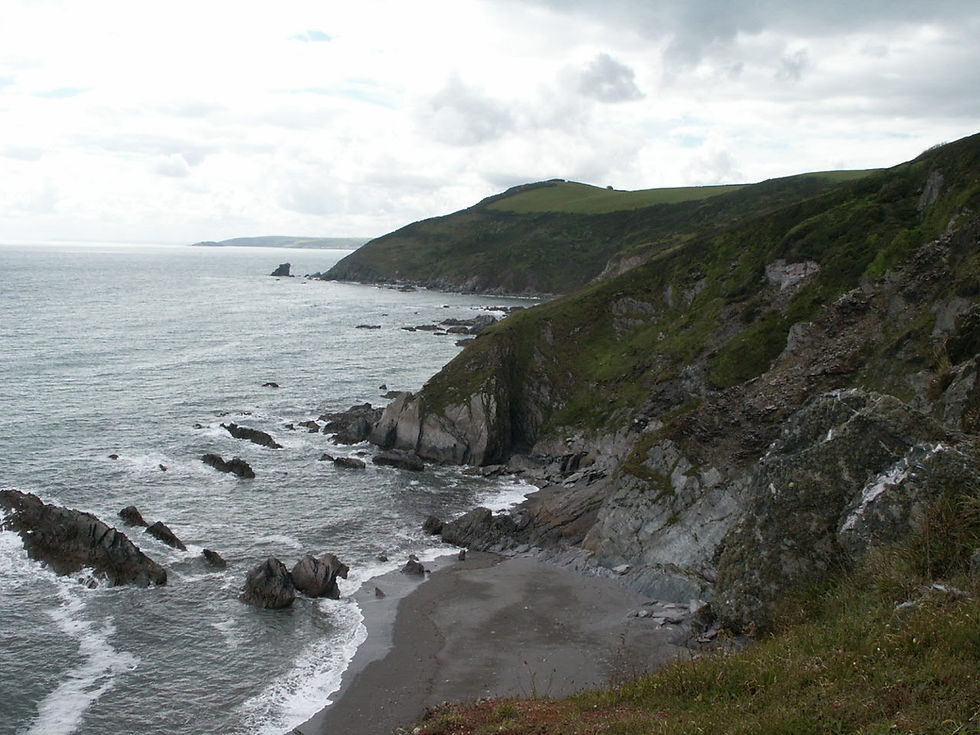
9. The Industrial Serpentine Haven of Kennack Sands
Tucked away on the eastern flank of the Lizard Peninsula, Carleon Cove forms the quieter, deeply historic western half of what most modern tourists simply know as Kennack Sands.
What makes Carleon truly fascinating is its stark post-industrial romance.

Long before it became a spot for sunbathers, it was a buzzing hive of human endeavour. In the 19th century, it was the site of the Carleon Cove Serpentine Works, where local craftsmen used water power from the streaming valley to cut and polish the Lizard's famous, dark-green serpentine rock into decorative pillars and ornaments for grand buildings across Victorian Britain.
READ ABOUT A SPECIAL WALK TO CARLEON COVE HERE

Today, the old mill ruins are quietly melting back into the marshy valley, leaving a peaceful, sheltered beach where the freshwater stream cuts through the dark rocks to meet the tide—a perfect monument to how nature gracefully reclaims our industrial past.

Frequently Asked Questions
1. Which of these secret beaches has the finest sand?
The undisputed crown goes to St Martin’s in the Isles of Scilly. Its pristine white sand is exceptionally fine and light—so much so that historic writers once exported the grains to use as an ink-blotting medium before blotting paper was invented.
2. Are these hidden Cornish coves safe for swimming?
While coves like Portheras offer exceptionally clear, deep water, Cornwall's wild Atlantic coast demands absolute respect. Many of these hidden spots do not have lifeguard cover, and locations like Church Cove on the Lizard can experience ferocious maelstroms, pounding waves, and heavy spume during westerly blows. Always check local tide times and sea conditions before entering the water.
3. Can I harvest wild shellfish on these beaches?
At remote beaches like Tregardock Strand, the intertidal rocks are heavily covered in wild mussels. Because there are no local sewage outfalls, the water is incredibly clean, making them popular for foraging. However, always harvest safely, ensure you are not collecting during a toxic algal bloom, and exercise proper care when purging and preparing wild shellfish.
4. Why are there old structures and cuttings on these "unspoilt" beaches?
Many of Cornwall's secret seasides are beautifully post-industrial. Cuttings in the solid shale at Lansallos, for instance, were carved so Victorian farmers could haul wagons of sand and seaweed up to their fields. Elsewhere, old ruins represent the remains of slate quarrying, lead mining, or the famous 19th-century serpentine stone works at Carleon Bay.
How do I safely reach Cornwall’s hidden coves?
Many secluded coves involve steep cliff paths, uneven granite steps, or tidal awareness. Always check local tide times before setting out, wear sturdy walking footwear, and stick to marked South West Coast Path routes.
What are the best secret beaches in West Cornwall?
Remote gems like Portheras Cove near Pendeen, Nanjizal near Land’s End, and Porth Joke near Crantock offer pristine sands and quiet waters away from main resort crowds.