
5 Best Walks in and Around St Ives, Cornwall

West Penwith has always felt to me like a foreign country, and St Ives cradles the quintessence of that exoticism by the bucket, spade and brush full.
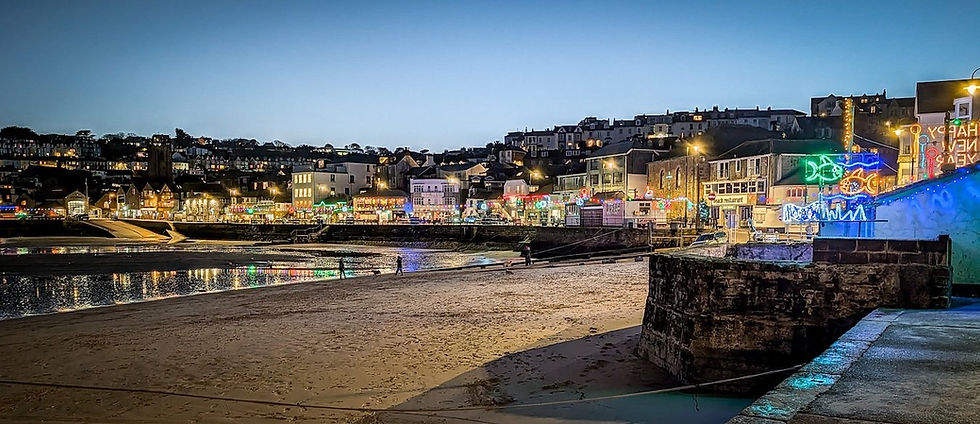
I've believed this ever since I first started travelling "abroad" to West Cornwall as a long-haired youngster in the early 1970s — and I think it just as strongly today.
If you attempt to drive into St Ives at the height of summer, prepare yourself: I'd rather negotiate Naples at rush hour. The civilised way to arrive is by branch line from St Erth. That journey alone prepares you for the sheer brilliance of the place.
You can leave the rest of Britain under weeping, overcast skies, change onto the coastal train, and step out into blinding Mediterranean light. Out on sunglasses-are-compulsory Porthmeor Beach, the Atlantic rollers draw surfers by the hundred, while behind them sits Tate St Ives — an iconic landmark, even if its modern artworks occasionally baffle.
Built across a wedge-shaped peninsula, the town has an extraordinary collection of beaches and headlands. There's wild Porthmeor facing the full force of the Atlantic; sheltered Porthgwidden; the great sweep of Porthminster; the harbour, where at low tide holidaymakers can build sandcastles among resting fishing boats; and The Island, the rocky headland separating the wild Atlantic surf from the calmer waters of St Ives Bay.
See our special Cornwall and Isles of Scilly page for more informative articles

But to really understand this corner of Cornwall, you need to lace up your boots and get out onto the coast paths, beaches and granite hills.
Here are five of my favourite walks starting from, or close to, St Ives.
1. Lelant to St Ives: a coastal walk with a railway return
Distance: 3.5 – 4 miles
Difficulty: Easy to moderate
Start: Lelant Church
Finish: St Ives
This is one of the cleverest ways of walking into St Ives because you can let the train take the strain on the way back.

A railway executive once asked me to stop using that catchphrase because it was "old hat". Well, so am I — and coastal walkers often face the problem of a one-way trek, so an easy rail return is a blessing.
Starting at ancient Lelant Church, the route heads towards the mouth of the Hayle Estuary, passing Lelant Towans and eventually reaching the huge sweep of Porth Kidney Sands.
From here the coast becomes increasingly dramatic. Carrack Gladden is a high, triangular headland offering superb views back across the bay, while the route continues towards Carbis Bay and Porthminster Point.
One of the memorable sights is the old Huer's Hut, where lookouts once shouted and hollered to direct the fishing fleet towards the vast shoals of pilchards that could turn the entire bay red.
Eventually the path drops down to Porthminster Beach, conveniently beside St Ives station.
From here you can simply catch the train back to Lelant.
Why do it? Because you get beaches, cliffs, history, the Hayle Estuary and one of Cornwall's most scenic little railway journeys in a single walk.

2. St Ives to the wild western coast
Distance: 3.5 – 5 miles circular
Difficulty: Moderate
Start and finish: Porthmeor Beach / Tate St Ives
If St Ives itself becomes too busy, there is a remarkably easy way to escape the crowds.
Head west past Tate St Ives and Porthmeor Beach and, almost immediately, the manicured world of the holiday town begins to fall away.

The coast towards Zennor feels completely different — less like standard Britain and more like a lost granite kingdom. DH Lawrence and W.H. Hudson were among those who walked these cliffs, and it isn't difficult to understand why the landscape has attracted writers and artists for generations.
The route passes Clodgy Point, where climbing over the grassy bluff opens huge views towards the Penwith Moors.
There are also some wonderfully eccentric sights along the way, including a famously unusual stone-walled allotment made from salvaged flotsam.
Beyond that, the National Trust headlands lead towards Hor Point, Trowan Cliff and Pen Enys Point, looking down into the wild solitude of Polgassick Cove.
READ ABOUT A CIRCULAR WALK AT ZENNOR HERE

You can turn inland and follow ancient field paths back towards St Ives, passing old mine workings, granite farmsteads and quiet countryside.
Why do it? For the transformation from busy seaside town to wild West Penwith in the space of a few minutes' walking.

3. Godrevy: lighthouse, reefs and shipwrecks
Distance: 2.5 miles circular
Difficulty: Easy
Start and finish: National Trust car park near Gwithian Bridge
Across St Ives Bay from the town stands one of Cornwall's most recognisable landmarks: Godrevy Lighthouse.

It is a beautiful place to walk, but the waters around Godrevy have a much darker history.
The maritime records of Cornwall are full of stories of ships being wrecked along this coast. At Godrevy the offshore reef known as The Stones claimed numerous vessels, most famously the screw steamer Nile in 1854. Of around 60 passengers and crew, only one body was recovered.
The tragedy helped lead to the construction of Godrevy Lighthouse in 1859.
The walk begins near Gwithian Bridge and crosses the dunes of Gwithian Towans before reaching the coast. The Red River runs across the sands here, its name recalling the days when tin mining upstream could turn the water bright crimson.

From Godrevy Point there are superb views across to the lighthouse standing guard over The Stones.
The route continues towards the Knavocks, an area of wild heathland before turning inland across the downs.
Why do it? For one of the great combinations of Cornish scenery: huge sandy beaches, dunes, heathland, cliffs and the iconic Godrevy Lighthouse.
4. Godolphin Hill: one of West Cornwall's great viewpoints
Distance: 3.5 miles circular
Difficulty: Moderate
Start and finish: National Trust car park at Leeds Shaft / Mount Whistle
Scotland can keep its 3,000-foot Munros. We have magnificent, solitary hillocks in the West Country that pack just as much punch.
READ THE FULL DESCRIPTION OF THE HIKE AROUND GODOLPHIN HERE

Godolphin Hill rises to 517 feet above the surrounding landscape and, on a clear day, provides one of the most astonishing panoramic views in West Cornwall.
From the summit you can see across huge swathes of the county: St Michael's Mount and Mount's Bay to the west, Goonhilly Down to the south, and the Penwith Moors, Hayle Towans and Carn Brea to the north.
But this is not simply a walk to a viewpoint.
The route also takes you through some fascinating mining country. Near the start is the Great Work Mine and its 1829 granite engine house and chimney. There are reminders everywhere of the extraordinary industrial history of this part of Cornwall.

John Leland, travelling through Cornwall in 1538, wrote that there were "no greater Tynne works yn al Cornwall" than those belonging to the Godolphin family.
The walk eventually descends towards Godolphin House before looping back through quiet lanes and ancient granite stiles.
Why do it? Because it combines a relatively short hill walk with an enormous view and a fascinating glimpse into Cornwall's mining past.
5. St Michael's Way: walking across West Cornwall
Distance: Around 5 – 6 miles for this section
Difficulty: Moderate
Start: Lelant Church or Carbis Bay
Finish: Trencrom area / Bowl Rock
St Michael's Way is one of Cornwall's most unusual long-distance paths, following an ancient route across the county between Lelant and St Michael's Mount. This is the first section, from the coast near St Ives.
READ ABOUT THE AMAZING AFTERNOON TEA AT ST MICHAEL'S MOUNT HERE

The medieval story behind it is particularly intriguing. Pilgrims travelling towards France and ultimately Santiago de Compostela could arrive on Cornwall's north coast and cross the peninsula overland rather than risk sailing around Land's End.
This section begins around Lelant and heads inland through a very different landscape from the coast.
One of the first landmarks is Knill's Monument, a curious 50-foot granite pyramid erected in 1782 by John Knill, an eccentric customs officer who left money for a remarkable five-yearly ceremony.
The route then follows quiet green lanes and woodland hollows, eventually reaching the granite country around Trencrom Hill.
Here you enter the landscape of Cornish legend. Bowl Rock is a huge granite boulder associated with the story of the giants of Trencrom and St Michael's Mount.
The full St Michael's Way continues across Cornwall towards Marazion, but even this first section makes an excellent walk in its own right.

Why do it? For the combination of ancient pilgrimage, Cornish folklore, granite landscapes and quiet countryside — a completely different experience from walking the St Ives coastline.
Which St Ives walk should you choose?
If you only have time for one, I'd choose Lelant to St Ives. It gives you beaches, the Hayle Estuary, cliffs, history and the wonderful little railway journey back to your starting point.
For something wilder, take the St Ives western coast walk.
For a shorter and easier outing, Godrevy is hard to beat, particularly if you love beaches and dramatic coastal scenery.
If views are your priority, make for Godolphin Hill.
And if you want to discover the older, stranger side of Cornwall, follow part of St Michael's Way across the peninsula.
The great thing about St Ives is that you don't have to travel far to find a completely different landscape. Within a few miles of the town you can walk beside huge Atlantic beaches, climb granite hills, explore ancient pilgrimage routes, discover the remains of Cornwall's mining past and stand beneath one of Britain's most recognisable lighthouses.
That is why, after more than half a century of visiting West Cornwall, I still find myself wanting to put on the walking boots and head out again.


