
St Ives, Cornwall: Why Britain's Most Beautiful Harbour Town Still Captivates Visitors

Updated: Jul 1
Few places in Britain inspire quite the devotion of St Ives. Famed for its golden beaches, bustling harbour, world-class art galleries and winding granite streets, this Cornish town has long been regarded as one of the country's most beautiful seaside destinations. I have put the article up here because, in some ways, it now acts almost as a historic document.
St Ives has changed quite a bit since I went there for my Hesp’s Harbours series, which appeared in the Western Morning News for a whole year.
The Magic of St Ives , Cornwall
The harbour at St Ives must be one of the most celebrated havens to feature on Britain's proud roster of picture-perfect ports and, judging by the crowds that fill its narrow cobbled streets throughout the year, it's certainly one of the most visited—even if it is at the far end of the West Country peninsula.
Perhaps it's the perfect pale golden sand that draws them in. Maybe it's to do with all those artists who've done so much to promote the town's wonderful intensity of light. Or possibly it's the salty, maritime charm which the place exudes with more panache and exotic mystique than a dozen other, more nautical ports.
Why Tourists Love Visiting St Ives
You could almost draw an analogy with one of those big Premiership football clubs that attracts supporters from all over the world. Come rain or shine, the fans pass through the turnstiles in their droves. It's a magic no one can quite explain.
St Ives is like that. On a Tuesday morning in a grey drizzle, it will have more faithful enthusiasts plodding its cobbled streets, munching its pasties, observing its art, hiring its motorboats, drinking its ale, throwing money into its arcades, purchasing its sometimes awful Cornish gifts, riding its waves, castellating its sand and generally soaking up the atmosphere of all things Cornish and shanty-esque than any other port in the West.

Iconic Things to Do in St Ives
To many tourists, a visit to Cornwall's far west that did not include a dawdle along The Digey, a paddle on Porthmeor, a carouse in Carbis Bay, or a saunter on Smeaton's Pier would be like partaking of a very good dinner without a bottle of wine.
The place is quite literally an icon of the seaside. It is a living, working theme park that seems to say: "I've got more salt in me veins than a dozen Polperros or Looes."
The Disappearing Pilchard Industry of St Ives
And it's a clever con trick because the very essence that makes St Ives sing like a mental sea-shanty is no longer there. The massive pilchard industry which shaped the picturesque Downlong area of town has completely disappeared. This was where the poorer fishermen lived among their many curing sheds and net lofts, as opposed to the "Uplong" area where the well-to-do merchants, sea captains, and professionals once based themselves.

A Saint, a Sandbank, and the Origins of St Ives
If you had visited "Downlong" before the Irish martyr St. Ia landed here more than a millennium ago, you'd have found very little but a sand bank stretching across to the Island which is nowadays one of St Ives' best known landmarks.
The sand bank separated Porthmeor Beach from what is now the harbour and it was here that St Ia washed up. She was to give the place its name and in some ways it is typical of the ephemeral and mysterious quality of St Ives that she should arrive riding upon a leaf. Most of those Irish saints crossed the sea on inflated cow's stomachs or hurdles.

St Ia chose a leaf. But she ended up the same way as all her saintly pals. "Off with her head!" roared Theodoric, King of Cornwall. And then all that was left was a name to bestow upon a tiny fishing village and later a parish church.
How St Ives Rose in Prominence
So much for early history. It was Lelant, just two miles along the coast, which played Big Brother in those days, and continued to do so until the restless sands of the Towans blew in and strangled its growth.
Then at last, St Ives could grab the limelight, partly thanks to the wonderfully named Lord Broke, who had acquired the local manor and who, in 1488, managed to get a charter for a weekly market and two annual fairs.
A Dark Moment in Cornish Rebellion History
Lord Broke! I'll bet he wasn't — broke, I mean — and he's sure to have been a good deal more fortunate than wretched John Payne, who was Portreeve (mayor) during the so-called Prayer Book Rebellion.
That was when Cornishmen lay siege to Exeter in protest at the new English liturgy. Not a good idea. They were beaten back and when Sir Anthony Kingston came hot on their heels relieving the county of these trouble-makers, Payne went to great lengths to mollify him by diplomacy.
His efforts cost him dear. He treated Sir Anthony to a huge dinner at the George and Dragon, only to be told to have some gallows erected while they ate…
The Glory Days of Pilchard Fishing in St Ives
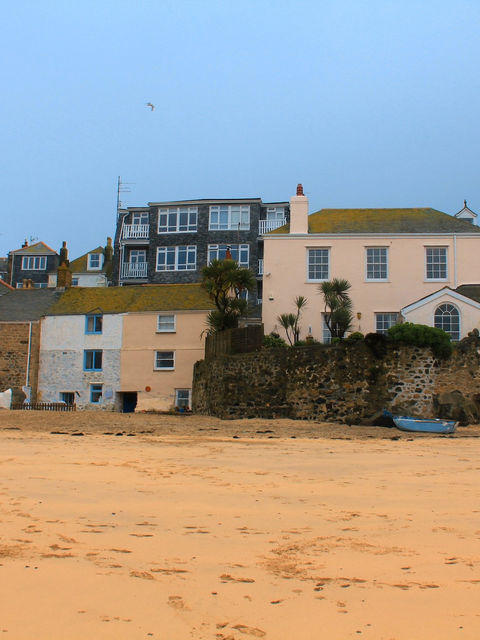
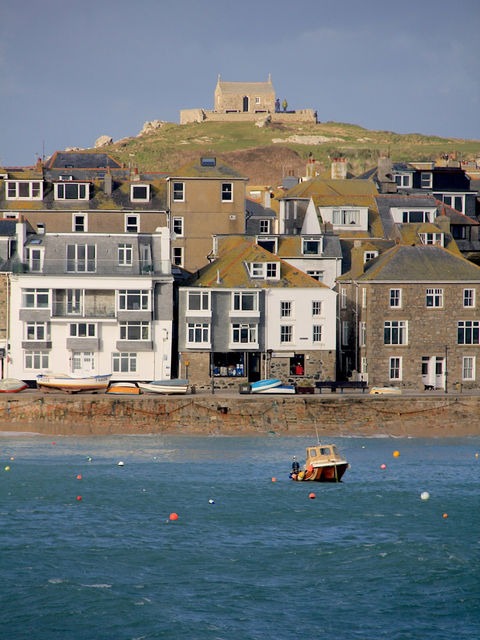
So let's leave politics and religion behind and make our way back through the teeming crowds to the good honest St Ives harbourside. At least here, you might think to yourself, things would have been quieter in days of old.
Not a bit of it. The place was absolutely alive with a million flapping, glinting, silver-sided fish and alive too with the frenzied actions of the men whose job it was to catch them. I'm talking about the seasonal pilchard trade which would see vast shoals entering the bay, the traditional hue and cry from the cliff-tops, and the furious efforts of nearly 1000 men on more than 400 boats.
Pilchard Chaos: A First-Hand Account
Here's an eye-witness description of the scene written in 1890 by a Mr Anthony, part of an exhibition in the town's excellent museum:
"I have seen more than 100,000 hogsheads in St Ives bay at one time. Such a scene can never be forgotten – white bushes waving everywhere, trumpets roaring, a network of 'seans' across the bay and boats spinning about like a regatta."
When you consider that a hogshead was a cask designed to hold 3,000 pilchards, you get some idea of the colossal shoals. The "white bushes" were semaphores used by the huers—men on the cliffs directing the boats.
Further Reading: Explore More of Cornwall
If you enjoyed discovering St Ives, you may also like these Cornwall guides:
👉 The West Country Beaches I Love Mosthttps://www.martinhespfoodandtravel.com/post/the-west-country-beaches-i-love-most
👉 Bude Beach Walk: Crooklets, Northcott Mouth and Summerleaze Downshttps://www.martinhespfoodandtravel.com/post/bude-beach-walk-crooklets-northcott-mouth-and-summerleaze-downs
👉 Cornish Walk: Talland Bay to Polperrohttps://www.martinhespfoodandtravel.com/post/cornish-walks-talland-bay-to-polperro
👉 Classic Afternoon Tea on a Cornish Islandhttps://www.martinhespfoodandtravel.com/post/classic-afternoon-tea-but-on-a-cornish-island
👉 Catch of the Day in the Isles of Scilly: Seafood from Britain's Atlantic Edgehttps://www.martinhespfoodandtravel.com/post/catch-of-the-day-in-the-isles-of-scilly-seafood-from-britain-s-atlantic-edge
👉 Discover Cornwall and the Isles of Scillyhttps://www.martinhespfoodandtravel.com/blog/categories/devon-cornwall--somerset
Visit the St Ives Museum and Relive Fishing History
The huers also blew massive trumpets to alert fishermen. Visitors to St Ives museum, located on Wheal Dream, can see one of these ear-splitting devices. There’s also a wide variety of pilchard industry relics—including wooden shovels, original fish presses, and exquisite sepia photographs by Lander Elvin Comley.
A Modern Harbour with a Historic Soul
"There's not a pilchard left," sighs St Ives harbour master Eric Ward, who now manages the harbour where he once fished. "Not a single pilchard have I seen in this bay for years. The sea around here used to go a sort of reddish colour there were so many of them."
But pilchards are not the only fish to have vanished. "There are about 30 full-time or part-time fishermen working out of St Ives now, and some have to do other jobs like flower-picking to make ends meet," says Eric.
Does he miss it? "No I do not. Not the way it is nowadays. I'm lucky, this is a wonderful harbour and I suppose in a way it's a bit unique. It's got clear water and perfect sand so the visitors use it like a beach. I have a bit of a balancing act to perform – it's still a working harbour and at the same time we like to make sure the holiday makers are happy."
St Ives Harbour Today: A Living Seaside Legacy
Imagine the mayhem if they were still landing three million pilchards at a time among the tourists and sun-bathers…

Nowadays it's more likely to be a couple of buckets of mackerel. But when they've all gone and the last St Ives fisherman hangs up his pots and nets, the place will still exude the atmosphere of a sea-shanty, and it will still be packed with people who've travelled hundreds of miles just to sniff the smell of the ocean and dream of salty days of yore.
Frequently Asked Questions About St Ives, Cornwall
Where is St Ives in Cornwall?
St Ives is situated on Cornwall's spectacular north coast, overlooking St Ives Bay. Around 10 miles west of Hayle and 30 miles from Truro, it is one of the county's most picturesque seaside towns and a popular base for exploring west Cornwall.
Why is St Ives so famous?
St Ives is renowned for its stunning beaches, picturesque harbour, thriving art scene and rich fishing heritage. It has inspired generations of artists and is home to the internationally acclaimed Tate St Ives, while its narrow cobbled streets, independent shops and waterfront cafés make it one of Britain's favourite holiday destinations.
Is St Ives worth visiting?
Absolutely. Whether you're interested in history, art, coastal walks, wildlife, watersports or simply relaxing beside the sea, St Ives offers something for everyone. Its unique blend of natural beauty and Cornish character makes it one of the highlights of any visit to Cornwall.
What are the best beaches in St Ives?
St Ives is blessed with several outstanding beaches, each with its own character. Porthmeor Beach is popular with surfers, Porthminster Beach is ideal for families, Harbour Beach offers traditional seaside charm, while Porthgwidden provides a quieter, sheltered spot for swimming and relaxation.
What are the best things to do in St Ives?
Visitors can explore the historic harbour, browse independent galleries and boutiques, visit Tate St Ives, walk the spectacular South West Coast Path, take a boat trip to spot seals or dolphins, enjoy fresh Cornish seafood or simply relax on one of the town's beautiful beaches.
When is the best time to visit St Ives?
St Ives is beautiful throughout the year. Spring and autumn often provide the best combination of pleasant weather and fewer visitors, while summer brings a lively atmosphere and long days perfect for beach holidays. Winter offers dramatic coastal scenery and a quieter, more peaceful experience.
How do you get to St Ives?
Many visitors drive to St Ives, but the scenic branch railway from St Erth is widely regarded as one of Britain's most beautiful train journeys. During the busy summer months, the St Erth Park and Ride service is often the easiest way to reach the town.
Is parking difficult in St Ives?
Parking can be limited during the summer season, so using one of the Park and Ride facilities at St Erth is highly recommended. It avoids traffic congestion and allows visitors to enjoy the spectacular train journey into the town.
Is St Ives good for walking?
Yes. St Ives is surrounded by some of Cornwall's finest coastal scenery. Walkers can enjoy sections of the South West Coast Path, including routes towards Zennor, Carbis Bay and Lelant, with breathtaking views across the Atlantic.
Is St Ives suitable for families?
Very much so. Safe sandy beaches, rock pools, boat trips, wildlife cruises, cafés, ice cream parlours and family-friendly attractions make St Ives an excellent destination for visitors of all ages.
Can you visit Tate St Ives?
Yes. Tate St Ives celebrates the town's remarkable artistic heritage and showcases both modern and contemporary art. Its stunning location overlooking Porthmeor Beach makes it one of Cornwall's most popular cultural attractions.
What food is St Ives famous for?
Fresh seafood is a highlight, with local restaurants serving everything from crab and lobster to freshly landed fish. Visitors can also enjoy traditional Cornish pasties, cream teas and artisan ice cream while exploring the harbour and waterfront.
How many days should I spend in St Ives?
A long weekend is enough to experience the town's main attractions, but spending four or five days allows time to enjoy the beaches, coastal walks, galleries and nearby villages without feeling rushed.
Is St Ives one of the most beautiful towns in Cornwall?
Many people would say yes. With its turquoise waters, golden beaches, granite cottages, bustling fishing harbour and thriving artistic community, St Ives consistently ranks among the most beautiful seaside towns in both Cornwall and the whole of Britain.
Planning Your Visit to St Ives
Include just five or six bullet points:
Nearest railway station: St Ives (via St Erth branch line)
Nearest airport: Newquay Cornwall Airport
Best months to visit: April to June and September
Ideal stay: 3–5 days
Perfect for: Families, walkers, food lovers, artists and photographers
Don't miss: Watching the sunset from Porthmeor Beach


