
St Enodoc Hotel Rock: A Walk to Sir John Betjeman's Grave


St Enodoc Hotel in Rock is one of the finest places to stay for exploring the Camel Estuary, St Enodoc Church, Polzeath and this wonderfully varied five-mile walk.
Yes, I know, this is a terrible job, but someone's got to do it.
After eating all the delicious and healthy food to review Cornwall's wonderful deli copany, Sabzi, we went on to stay at the St Enodoc Hotel in Rock. Our only regret was that it was just for one night. We could happily have stayed longer.
What was there not to like? An elegant hotel sitting in lovely gardens above one of the most scenic estuaries in the country, right in the middle of Rock – otherwise known as something of a millionaire's playground.
Our beautifully appointed room enjoyed panoramic views over the Camel Estuary, which is one of the few tidal zones I know that looks just as good when the tide is out as when it's in. No great expanses of mud between Rock and Padstow – it's mostly golden sand.
It was a wonderful place in which to be based, because Rock is rich in scenic walks and doubly so if you catch the regular foot ferry across the Camel to Padstow.

And there was another very good reason for staying at the St Enodoc: food. The hotel has long had a reputation for good cooking, making it the sort of place where you can set off on a long walk knowing there will be something rather enjoyable waiting for you when you get back.
But there is a particularly good walk from the hotel – or, more accurately, from the ferry landing nearby – which takes you to one of the most evocative little churches in Cornwall.
And that church has one particularly famous resident.
All things draw toward St Enodoc
"All things draw toward St Enedoc."
So said Sir John Betjeman, and who am I to disagree - even if it is spelled in two different ways, with an 'e' or an 'o'...

For years I had been drawn to the idea of visiting the little church in the dunes with the intention of doffing my cap to the old poet who lies there in the sand.
So recently, map in hand, I set sail upon the high seas to enjoy a pilgrimage to Sir John's grave.
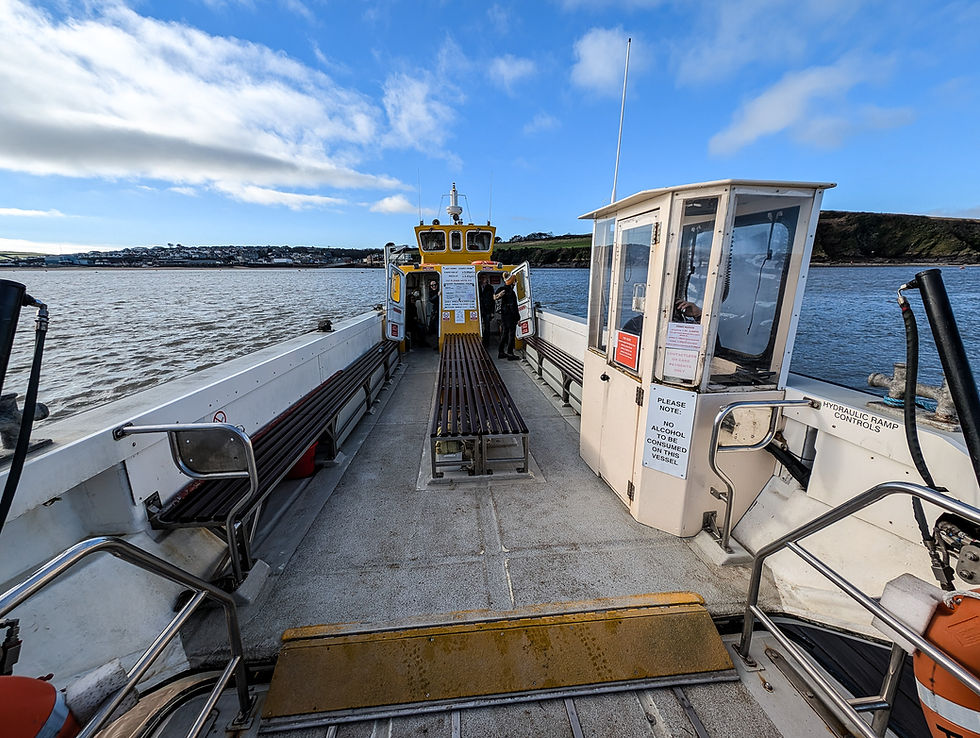
Oh all right, it was the Camel Estuary and I was aboard the ferry from Padstow to Rock, but somehow a hike that begins with a boat ride always seems to have an extra edge of adventure to it.
Indeed, this walk has an added bonus in the way of edge and danger, which requires the nimble dodging of small, round, white missiles – but we'll get to that later.
First we must allow the ferry to land at Rock and, while it does so, we can admire the St Minver Lowlands.
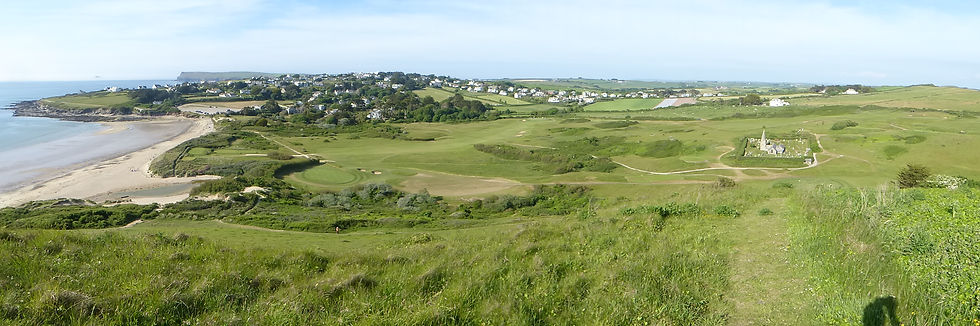
It's the curiously named parish which is to be our stomping ground for the next two hours and from the ferry you can see its estuarine frontage which presents itself in the form of huge sand dunes.
CHECK OUT OUR REVIEW OF ANOTHER HOTEL NEARBY - THE WONDERFUL ST MORITZ
Why is Rock called Rock?
So why Rock?
What an odd name for a village built upon sand.
I looked up the place in J.R.A. Hockin's Walking in Cornwall – which, if you can find a copy, I heartily recommend – and could find nothing in his fine prose to explain the name.
Hockin prefers to witter on at length about the strange fact that Cornwall's estuary harbours tend to be on the west banks of their rivers. Fowey, Falmouth and Padstow are his examples and then he goes on at some length about the Romans, long-lost roads and the early tin trade.
He suggests – at least he did so in 1936 – that you ponder all this at the inn at Rock, describing it thus:

"Though its company is mostly of the cocktail class it is not in the least proud..."
The cocktail crowd is still there.
Indeed, Rock exudes an air of wealth. I even saw a middle-aged woman whisking silently along on one of those scooters much beloved by kids nowadays – except this thing was powered by a powerful electric motor.
I must say, she cut quite a dash weaving between the humble tourists who had disembarked from the ferry.
And you know you are somewhere posh when you pass the gates of the golf club.
For that is what you must do to begin this hike: walk about 500 yards along the road to the right of the ferry landing, then turn left up the lane that leads to the links.

Beware the golfers
A small path slinks through a hedge just to the left of the golf club gates but, before you join it, peer into the car park and witness a unique instruction painted on the tarmac.
"Saloon Cars Only," says the missive repeated in various parking bays.
But why?
Are sports cars, shooting brakes and coupes unwelcome in these spots?
This question irked me all around the walk and eventually I could only come up with the conclusion that Rock is so posh that many golfers turn up in giant limousines that will not fit into the saloon-cars-only slots.
I say the path slinks through the hedge because you get the impression that this public right of way is there by historic merit and by sufferance.
Golfers and walkers do not mix well – and at Rock the two are thrown together with the potential for alarming and painful outcomes.

For the walkers, that is. They do not hurl missiles about the place. Golfers do.
The ball that just missed me came hissing out of the sky like an Exocet.
Look at the Ordnance Survey map and you will see that the footpath passes right through the very heart of this glorious links course. Signs regularly tell you that balls are likely to be driven this way and that, but you need eyes in the back of your head to remain out of harm's way.Or a crash helmet.
"Fore!" yelled a fellow adorned in vibrantly chequered trousers.
What on earth did he mean?
The fear of the firing range goes on all the way across to noble Brea Hill where I hoped the danger would cease. But it didn't.
The path swung inland of this grassy dome – and the golfers did too.
Swing being the operative word.
Those great clubs make a rather threatening sound as they whiz down to make contact with the small spherical missile.
I put my hardback copy of Hockin over my head and made a bolt for it towards St Enodoc.
St Enodoc Church and Sir John Betjeman
And what a refuge it was. No wonder old Betjeman loved this place.
The little church of St Enodoc sits remarkably among the dunes, half swallowed by the sand and surrounded by the landscape that inspired the poet.

His ornately carved headstone can be seen just inside the lych gate, but the best view is from the wall at the top of the graveyard where you are treated to a vista of church, hill, dune, wood and sea.
"Blessed be St Enodoc, blessed be the wave,
Blessed be the springy turf, we pray, pray to thee...."
So wrote Betjeman in his poem Trebetherick, which is where we're going next.
It's a village on the slight hill to the north of the old church and, to get to it, you can take any number of public footpaths which are to be found in the area.
Go up any of the north-leading paths and, on the road just past the Post Office, a footpath branches right down into the leafy valley near Shilla Mill.
"The lichened branches of a wood
In summer silver-cool and still;
And there the Shade of Evil could
Stretch out at us from Shilla Mill."
Know what you mean, John. There is something creepy about the valley. But I'd just read Trebetherick, so maybe the poem influenced my mood.

From Shilla Mill to Polzeath
Anyway, this footpath brings us to the sea at Polzeath – which is nowhere near as posh as Rock and is a jolly surfing sort of place full of wetsuited folk romping to and fro from the icy waves.
Turn left and we find this column's best friend – the South West Coast Path.
It takes us south past Broadagogue Cove, around Trebetherick Point to Daymer Bay.
If the tide is out you can cut across the sands and think of the bell that rings so forlornly in St Enodoc's small tower.
It came from the Italian vessel Immacolata, which was wrecked here in 1875 but, strangely perhaps, is inscribed "Sahel".
On we go around the coastal slopes of Brea Hill and along the low dunes to the ferry landing where I, for one, felt pleased as punch that at last I had been drawn toward St Enodoc.

St Enodoc Hotel: a new chapter
There is now another reason to return.
When I stayed at the St Enodoc, it was already one of those hotels that seemed to have got the important things right: a beautiful position, views across the Camel, gardens, comfortable rooms and an excellent base for exploring Rock, Daymer Bay, Polzeath and Padstow.
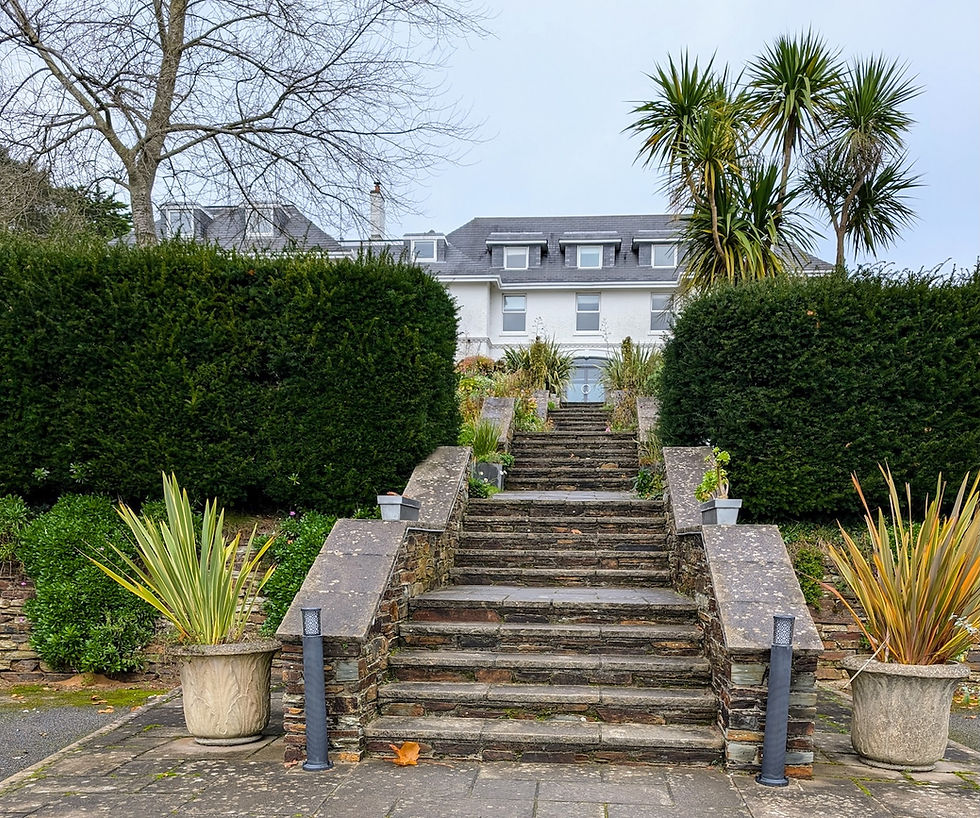
But the hotel has since entered a completely new chapter.
Paul and Emma Ainsworth, whose hospitality businesses include the Michelin-starred Paul Ainsworth at No6 in Padstow, acquired the 21-bedroom hotel in January 2025. After an 18-month transformation, it reopened on 27 July 2026 as St Enodoc by Paul Ainsworth.
Emma Ainsworth has overseen the redesign with interior designer Eve Cullen-Cornes, while Paul has brought his food and hospitality expertise to the hotel.
The new St Enodoc is intended to be more than somewhere to sleep after a day walking the coast.
The centrepiece of the new food offering is the Estuary Grill, concentrating on Cornish meat, fish and seafood cooked over an asado grill, with dishes also reflecting Paul's Seychellois heritage. There is also the seasonal Flour Garden, an informal, family-friendly outdoor restaurant serving pizzas and salads, while the St Enodoc Bar provides another place to sit, drink and admire the surroundings.
There are new spaces for weddings, celebrations and other events, including the Oyster Salon and Porthilly Pavilion.
The rooms have also been refreshed, with the hotel retaining its particular attraction: many look towards the estuary or gardens, and the location puts the ferry to Padstow and a remarkable collection of coastal walks almost on the doorstep.
So, although my own stay belongs to the St Enodoc's earlier incarnation, the essential attraction remains unchanged.
You are in Rock, overlooking the Camel Estuary.
You can walk to St Enodoc church and Sir John Betjeman's grave.
You can follow the coast path to Polzeath and Daymer Bay.
You can catch the ferry to Padstow.
And, after all that, you can return to a very good hotel and let somebody else worry about the cooking. That sounds to me like a pretty good reason to go back.
Fact File: Rock, St Enodoc and the Betjeman Walk
Walk: Rock ferry landing – St Enodoc Golf Club – St Enodoc Church – Trebetherick – Shilla Mill – Polzeath – South West Coast Path – Daymer Bay – Rock.
Distance: Approximately five miles.
Going: Generally easy, although there are some paths and sandy sections. Take particular care on the section crossing St Enodoc Golf Club.
Warning: Golf balls can be hit towards the footpath. Pay attention to warning signs and listen for calls of "Fore!"
Map: Ordnance Survey Explorer 106 – Newquay and Padstow.
Where to stay: St Enodoc by Paul Ainsworth, Rock – a 21-bedroom hotel overlooking the Camel Estuary, relaunched in July 2026 following its acquisition by Paul and Emma Ainsworth.
Nearby: Padstow, Daymer Bay, Polzeath, Trebetherick, Rock and the Camel Estuary.
Best feature: The combination of the ferry, the dunes, St Enodoc church, Betjeman's grave and the South West Coast Path makes this a walk with considerably more character than its five miles might suggest.
FIND PLACES TO STAY NEAR ROCK


