
The Best West Country Walks for a Heatwave: 10 Coastal, Moorland and Woodland Escapes

There are summer walks, and then there are heatwave walks.
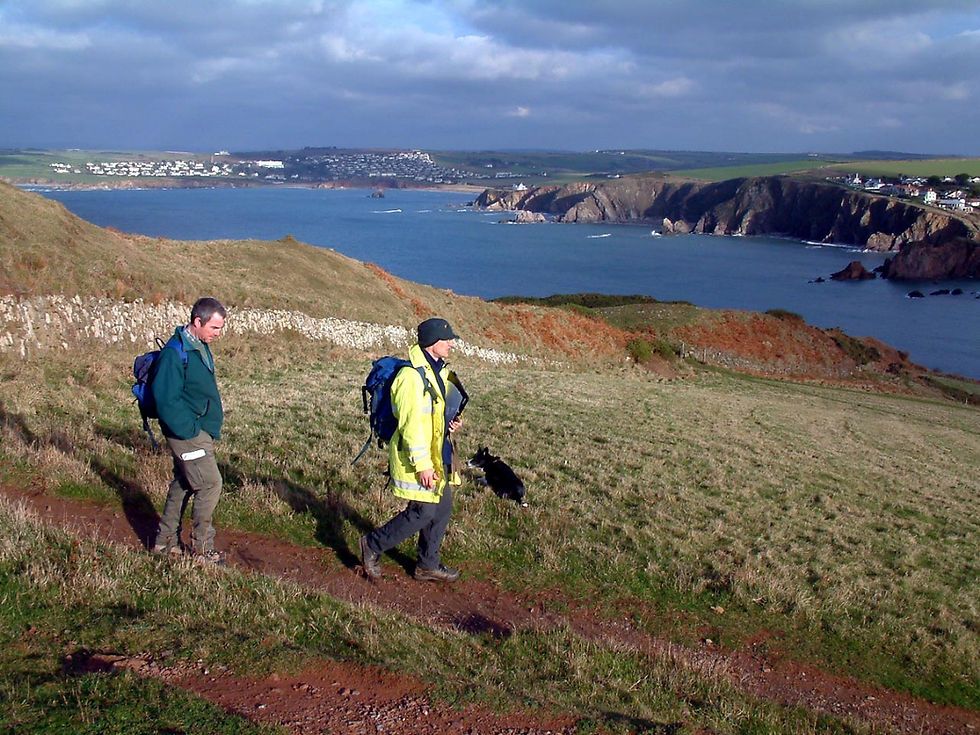
When temperatures soar, the sensible rambler looks for sea breezes rather than sheltered valleys, airy headlands instead of baking lanes, deep woodland instead of exposed farmland, or the high emptiness of the moors where the wind never quite seems to stop blowing.

The West Country is wonderfully blessed in this respect. From the wild cliffs of North Devon to the forests of the Tamar Valley, from the granite heights of Dartmoor to the islands of Scilly, there are countless places where walking remains a pleasure long after the beaches have become crowded and the pavements begin to shimmer.
Here are ten of my favourites. Some I've walked dozens of times over the years; others still surprise me every time I return. All have one thing in common—they come into their own when the thermometer starts climbing.

Walks included in this guide
Godolphin Estate, Cornwall – Ancient hills, mining history and breezy heathland.
Lerryn to St Winnow, Cornwall – Peaceful woodland and riverside walking beside the River Fowey.
Pentire Point, North Cornwall – One of Britain's finest headland walks above the Atlantic.
St Agnes, Isles of Scilly – An island stroll where cooling sea breezes are never far away.
Morte Point and Bull Point, North Devon – Dramatic cliffs, sea air and unforgettable coastal scenery.
Lustleigh Cleave, Dartmoor – Deep wooded valleys and spectacular granite viewpoints.
Larkbarrow, Exmoor – Open moorland where even on the hottest days the breeze is rarely absent.
Tamar Valley Trails – Shady woodland paths through one of Britain's great mining landscapes.
Lundy Island – A complete island adventure surrounded by ocean on every side.
Holford to Crowcombe, Quantock Hills – Ancient combes, literary history and one of my favourite pub lunches.
10 Best West Country Walks for a Heatwave: Cool Coastal, Woodland and Moorland Escapes
Godolphin Estate, Cornwall
Distance: 3½ miles
Difficulty: Easy to Moderate
Best for: Open breezy hilltops and mining history

One of the great pleasures of wandering the West Country is stumbling across places that somehow remain under the tourist radar. Godolphin is one of those rare treasures.
Hidden between Helston and Hayle, this National Trust estate spreads across 555 acres of heath, woodland and ancient mining country, all gathered around the magnificent hump of Godolphin Hill. The landscape is layered with history, from Bronze Age settlements to the engine houses that once echoed with the sounds of Cornwall's great mining age.
I usually begin at Mount Whistle, where an old mine chimney now overlooks a peaceful National Trust car park. From there it is an easy climb to the summit of Godolphin Hill, where sea breezes usually take the edge off even the warmest summer afternoon.
The walk then drops gently towards atmospheric Godolphin House before circling back beneath the western slopes of the hill. It isn't a demanding walk, but it is endlessly rewarding, with wide-ranging views, flowering heathland and reminders at every turn that Cornwall's landscape has been shaped as much by industry as by nature.
This is exactly the sort of place I seek out during a heatwave. While beaches fill with sunseekers, Godolphin remains surprisingly peaceful, the breeze is almost constant, and there is always another corner waiting to be discovered.

Lerryn to St Winnow, Cornwall
Distance: 5 miles
Difficulty: Moderate
Best for: Woodland shade and riverside tranquillity
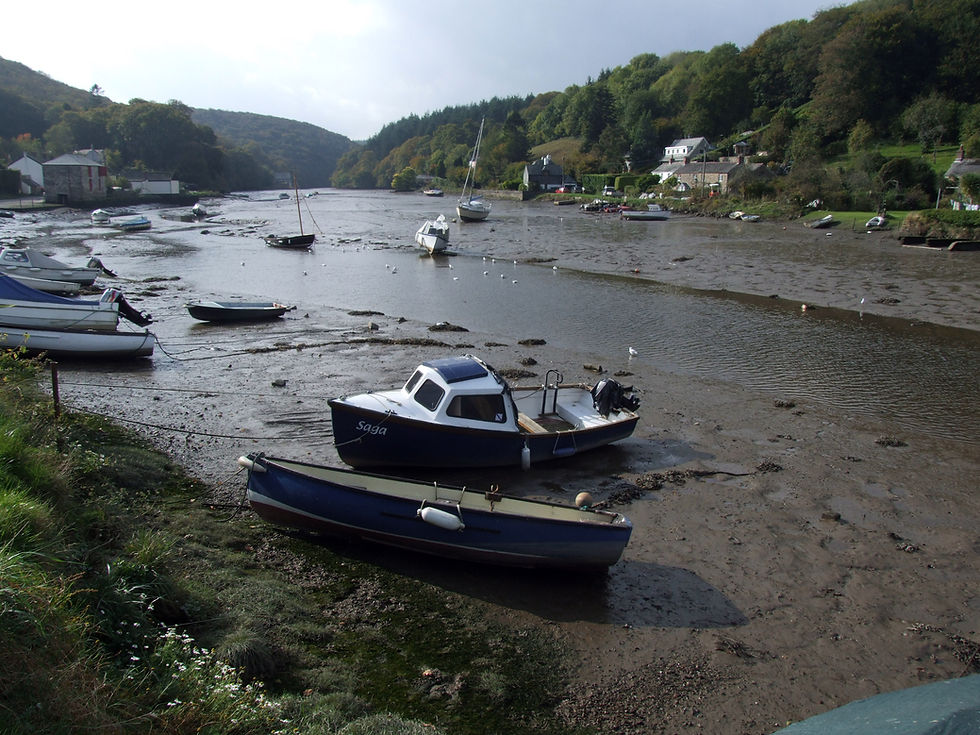
This has long been one of my favourite walks anywhere in Cornwall, especially when the weather turns hot.
It begins innocently enough by hopping across the famous stepping stones at Lerryn before climbing through quiet fields towards Ethy House. Soon afterwards the path slips beneath the trees into woodland that many believe inspired Kenneth Grahame's Wild Wood in The Wind in the Willows. Whether or not the story is entirely true hardly matters; once inside these deep, cool woods it feels entirely believable.
Beyond the forest lies the sleepy little parish of St Winnow, one of those timeless Cornish places where herons glide across the river and little seems to change from one decade to the next.
The return journey is pure delight. The path hugs the wooded banks of the River Fowey before following peaceful Lerryn Creek back to the village. It is cool, green and wonderfully quiet, with the river never far away and birdsong replacing the traffic noise of modern life.
If someone asked me to recommend one walk that perfectly captures Cornwall's wooded river valleys, this would be very close to the top of the list.

Pentire Point, North Cornwall
Distance: 4 miles
Difficulty: Moderate
Best for: Sea breezes, cliff scenery and Atlantic views

Some walks seem to have been designed by nature itself, and Pentire Point is one of them.
Jutting boldly into the Atlantic at the mouth of the River Camel, this magnificent National Trust headland escaped development back in the 1930s thanks to a determined campaign that prevented it being covered in holiday bungalows. Every time I walk here I'm grateful those protestors won.
The route begins at Pentireglaze, just beyond Polzeath, before dropping through a peaceful valley towards the little beach below Pentire Farm. Almost immediately the cliffs begin to rise and the Atlantic starts to dominate the view. On a hot day the breeze rolling in from the ocean can make the difference between an exhausting hike and an exhilarating one.
The broad grassy summit of Pentire Point positively invites you to stop and simply gaze out to sea, but I always recommend pressing on to The Rumps, the spectacular twin headland that guards the entrance to the Camel Estuary. The rocks here look as though they have been twisted and folded by some giant hand while, nearby, The Mouls rise sharply from the waves like the remains of some forgotten kingdom.
Returning along the coast path completes one of Cornwall's classic cliff walks, with the sea rarely out of sight and the cooling Atlantic never far away.

St Agnes, Isles of Scilly
Distance: Around 3 miles (plus optional circuit of Gugh)
Difficulty: Easy
Best for: Island tranquillity and constant sea air

If ever there was a place made for walking in warm weather, it is the Isles of Scilly.
The islands seem to create their own climate. Even when mainland Cornwall is sweltering, the sea breezes here keep conditions wonderfully comfortable, and nowhere demonstrates that better than tiny St Agnes.
Leaving the quay at Porth Conger, the path soon reaches the sandbar linking St Agnes with neighbouring Gugh. If the tide allows, it's worth crossing over for a short detour before continuing around the coast.
The western shoreline is full of quiet delights. Beady Pool still occasionally yields colourful beads from a seventeenth-century shipwreck, while the weather-sculpted granite around Castella Down seems to have been carved by giants rather than wind and salt. I never pass St Warna's Well without thinking of the old story that the patron saint of shipwrecks landed here in a humble wicker coracle.
Eventually the path reaches the famous Troy Town Maze before looping back inland past the lighthouse, Britain's smallest school, cosy cafés and tiny flower-filled lanes.
Walking on St Agnes is never about covering great distances. It is about slowing down, breathing deeply and allowing the rhythm of island life to work its quiet magic.

Morte Point and Bull Point, North Devon
Distance: 3 miles
Difficulty: Moderate
Best for: Spectacular coastal scenery and invigorating sea air

There is something about walking beside the Atlantic that no inland ramble can quite match. The sea sharpens every sense. You smell the salt long before you reach the cliffs and hear the surf long before you see it.
Morte Point delivers that experience in abundance.
From the village of Mortehoe the path quickly reaches the narrow spine of the headland where ancient rocks rise like a procession of weather-beaten razorbacks stretching into the ocean. It is easy to understand why generations of sailors called the Morte Stone the Death Stone. These waters have claimed many ships.
After exploring the tip of the headland, the coast path swings north past secluded coves and dramatic cliffs before reaching Bull Point, where North Devon's coastline finally turns south towards Hartland. The lighthouse standing guard over this great corner of England has become one of my favourite landmarks anywhere on the coast.
Even on the hottest summer afternoons there is nearly always a brisk wind blowing here. The Atlantic never allows the air to become still for long, making this one of my favourite places to escape the heat while enjoying some of the finest coastal scenery in Britain.

Lustleigh Cleave, Dartmoor

Distance: 5 miles
Difficulty: Moderate
Best for: Woodland shade, granite tors and Dartmoor views
When the thermometer begins nudging thirty degrees, most people think of the coast. I often think of Lustleigh Cleave.
This great wooded chasm carved into the eastern flanks of Dartmoor is one of Devon's hidden masterpieces. William Crossing described it as "one of the loveliest nooks in the whole of Devon" and, having wandered here in every season, I'm not inclined to argue.
The climb begins gently from the picture-postcard village of Lustleigh before winding steeply through ancient woodland to the granite outcrops of Sharpitor. Suddenly the trees fall away and the enormous gulf of the Cleave opens beneath your feet.
From the famous Nut Crackers rocks you can gaze across to Hound Tor Wood and the distant slopes rising towards Manaton, while further along Harton Chest provides one of the finest picnic spots I know anywhere on Dartmoor.
Eventually the route swings beneath Hunter's Tor before returning through cool woodland paths where the shade offers welcome relief on even the hottest afternoons.
There are grander tors on Dartmoor and there are higher summits, but few walks combine woodland, rivers, granite and breathtaking viewpoints quite so perfectly. On a sweltering summer's day it feels like nature's own air-conditioning.

Larkbarrow, Exmoor
Distance: 6 miles
Difficulty: Moderate
Best for: High moorland and wide open spaces

There are moments when only a big landscape will do.
West of Dunkery lies one of the loneliest corners of Exmoor, a place where the horizon stretches away in every direction and the wind seems determined never to stop blowing. On hot summer days that breeze is worth its weight in gold.
Beginning at lonely Larkbarrow Corner, the walk heads out across the high moor towards Elsworthy before following one of Exmoor's enduring mysteries – the remains of a supposed canal that was never really a canal at all.
Whether it was intended to feed mines, supply a railway or serve some forgotten Victorian scheme is still debated. What remains today is simply another curious thread woven into Exmoor's remarkable history.
Beyond the old earthworks the landscape becomes wonderfully empty. There are no villages, no cafés and often no other walkers. Just rolling moorland, distant skylarks and the occasional glimpse of wild red deer moving across the heather.
The return route drops through the lonely ruins of Larkbarrow Farm before climbing back to the road.
If your idea of escaping a heatwave is leaving civilisation behind for a few glorious hours, this is one of the finest walks in the South West.

Tamar Valley Trails, Devon
Distance: 4½ miles
Difficulty: Easy to Moderate
Best for: Deep woodland shade and industrial history

Not every heatwave walk has to be about sea cliffs or open moorland. Sometimes the coolest place to be is beneath a leafy canopy beside a river.
The Tamar Valley Trails offer exactly that.
Created as part of an ambitious heritage project, these paths explore the remains of Devon Great Consols, once the largest copper mine in the world before becoming the world's biggest producer of arsenic. It is difficult to imagine today that such peaceful woodland was once alive with engines, tramways and thousands of miners.
The route begins beside the visitor centre before following old railway beds, canals and woodland tracks through a landscape where nature has quietly reclaimed its industrial past. Along the way you pass the evocative remains of Wheal Emma, Wheal Josiah and other great mines whose names still echo through Cornish and Devon mining history.
Towering trees provide almost continuous shade, while the surrounding woodland hums with birdsong rather than machinery. It is one of those places where history and nature seem perfectly balanced.
This is a leisurely walk rather than a strenuous hike, making it ideal for families or anyone wanting to enjoy the outdoors without battling the full force of the summer sun.

Lundy Island, Devon
Distance: 8–9 miles (full circuit)
Difficulty: Moderate
Best for: Wildlife, sea views and the ultimate island adventure

There is something wonderfully liberating about walking on an island. Once the ferry has steamed away, the mainland seems to belong to another world.
Lundy is only three miles long and half a mile wide, yet it feels infinitely larger. Rising from the meeting place of the Bristol Channel and the Atlantic, this great granite outcrop offers some of the most exhilarating walking anywhere in the British Isles.
The climb from Landing Beach is steep, but once you reach the tiny village, the island quickly works its magic. Heading west towards South West Point, the route follows magnificent cliffs above Goat Island before reaching the Old Light. If you have a head for heights, climb the lighthouse tower for a breathtaking panorama across the surrounding seas.
Further north the island becomes quieter still. Ackland's Moor, the old Quarter Wall, Earthquake and Needle Rock lead you through landscapes alive with seabirds, where puffins, guillemots and razorbills make their homes on towering cliffs.
At the wild North End the sense of isolation reaches its peak before the route turns south again along the eastern coast, passing old quarries, forgotten gun batteries and the ever-present sound of waves breaking below.
Lundy is far more than a pleasant walk. It is a complete escape. Even during the hottest spell of summer the ocean is never more than a few hundred yards away, carrying cool breezes and reminding you that this remarkable island belongs as much to the sea as it does to the land.

Holford to Crowcombe, Quantock Hills, Somerset
Distance: 4 miles (one way, with return options)
Difficulty: Moderate
Best for: Woodland combes, sweeping views and a rewarding pub lunch
The Quantocks may not possess the dramatic grandeur of Dartmoor or Exmoor, but they have a quiet magic all of their own.

This walk begins in the lovely village of Holford, where ancient combes climb gently into some of the most beautiful woodland in Somerset. It was a landscape loved by both Samuel Taylor Coleridge and William Wordsworth, and it is easy to understand why. The valleys possess a timeless, almost enchanted quality.
The steady ascent through Hodder's Combe eventually reaches the broad crest of the Quantock ridge. Suddenly the trees disappear and enormous views open out across the Bristol Channel towards Wales, while behind you the rolling hills of Somerset stretch away into the distance.
Turning towards Crowcombe, the route follows high tracks before descending through the edge of Crowcombe Park into one of the prettiest villages on the hills.
There is, I confess, another reason this has always been one of my favourite walks. It finishes within easy strolling distance of the Carew Arms, one of those proper English country pubs where a pint of good bitter and a satisfying lunch somehow taste even better after a morning spent crossing the hills.
It seems an entirely fitting way to end a summer walk.

Final Thoughts
One of the greatest pleasures of living in — or visiting — the West Country is that there is always another path waiting to be explored. When the beaches are crowded and the roads are busy, these walks offer something different: cool woodland glades, windswept headlands, lonely moors and islands where the sea breeze is never far away.
I've walked every one of these routes, many of them several times over the years, and each has earned its place here for a different reason. Some are exhilarating, others peaceful; some reveal fascinating fragments of history while others simply allow you to escape into nature for a few precious hours.
If this collection inspires you to lace up your boots and head out during the next spell of fine weather, then it will have done its job. The South West has no shortage of magnificent walks — these just happen to be ten that I return to time and time again.
Happy walking.
More West Country Walking Inspiration


