Walking the Imbros Gorge, Western Crete

Updated: Aug 7

If you want to experience a dramatic Cretan ravine without the crushing crowds of Samaria, walking the Imbros Gorge in Western Crete is the perfect alternative.

This spectacular 8km (5-mile) descent takes you through towering limestone cliffs—including the famous two-metre-wide 'Iron Gates'—dropping from the village of Imbros down to Komitades near the Libyan Sea. Here is everything you need to know about the route, logistics, and where to find the best traditional lunch at the finish line.

The adventure starts at the quaint village of Imbros, located approximately 700 metres above sea level. This traditional Cretan village, with its narrow streets and stone houses, offers a glimpse into the local lifestyle and culture. Here, hikers can gear up and prepare for the journey ahead, amidst the backdrop of the White Mountains.

Descending into Natural Splendour
The Imbros Gorge, approximately eight kilometres long, is renowned for its striking rock formations and diverse flora and fauna. As the trail descends, hikers are greeted by towering cliffs and narrow passages, some only two metres wide, famously known as the "Iron Gates."

This dramatic section is a highlight for many, providing awe-inspiring photo opportunities and a sense of being enveloped by nature's grandeur.

Quick Guide to Imbros Gorge
Highlight | Details | Top Tip for Hikers |
Trail Distance | 8 km (approx. 5 miles) one-way down to Komitades. | Takes about 2 to 2.5 hours at a relaxed pace—much easier and less crowded than Samaria Gorge. |
Difficulty Level | Easy to moderate, downhill walk through a narrow canyon. | Wear sturdy walking shoes/boots; the rocky riverbed path can be uneven underfoot. |
Key Highlights | The "Narrow Pass" (only 1.6 metres wide with soaring 300m rock walls). | Look out for dramatic limestone arches, scent of wild thyme, and native mountain goats. |
Return Logistics | Local taxis and mini-buses run continuously from the bottom exit back to the top. | Park at Imbros village, walk down, and grab a return taxi at Komitades for around €5–10 per person. |
A Flora and Fauna Haven

Throughout the hike, one can observe a rich tapestry of plant and animal life. The gorge is home to endemic species such as the Cretan Wildcat - we certainly didn’t see any of those - and the Griffon Vulture, which we also failed to spot.

Never mind, the botanical diversity is also noteworthy, with fragrant herbs, wildflowers, and ancient cypress and pine trees adorning the path.

In spring when we were there, the gorge is particularly vibrant, with wildflowers blooming in abundance.
Echoes of History
The Imbros Gorge is not just a natural wonder but also a site of historical significance. During World War II, it served as an escape route for Allied soldiers heading to the southern coast of Crete. Remnants of this past, like old stone shelters and pathways, add an element of historical intrigue to the hike.

Reaching the Sea
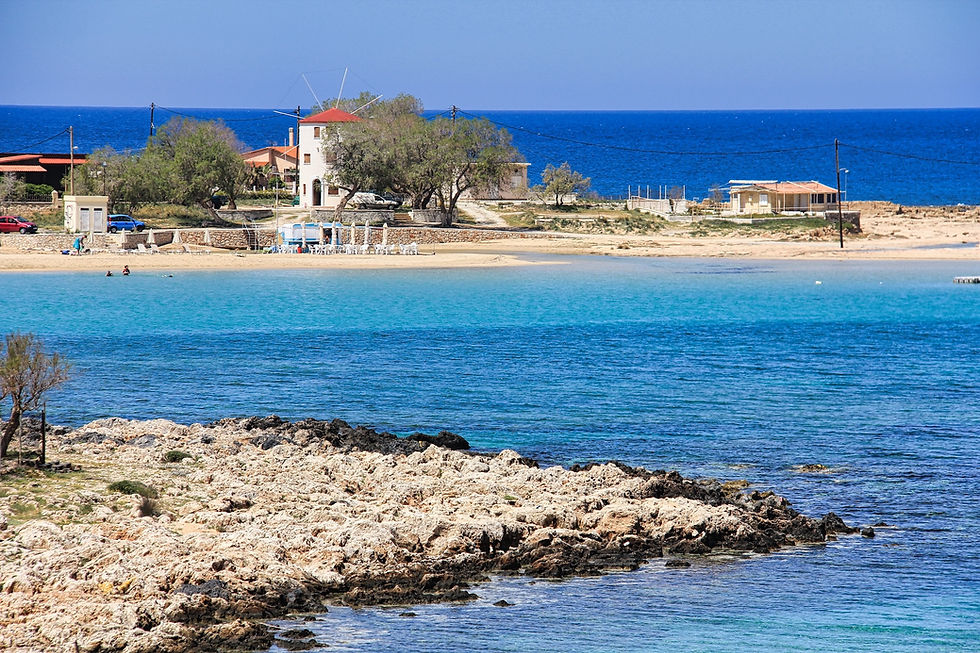
The trek concludes at the village of Komitades, where the gorge opens up to magnificent views of the Libyan Sea.

Here, hikers can relax and enjoy local Cretan cuisine in one of the tavernas, a perfect way to end the journey. The nearby coastal village of Sfakia offers opportunities for further exploration or a relaxing swim in the crystal-clear waters.

Our hike leader had organised a truly delicious lunch at Komitades, the small village that hugs the southern coastal mountain slopes beneath the gorge, but high above the sea.

It was a miracle of her organisational skills because it was Easter Day and the taverna had invited many family members to a huge meal. But taverna owners Giorgos and Annette put on a massive spread for we hungry hikers, which their entire family of polite young sons helped serve.

Practical Tips for Hikers
Best Time to Visit: The gorge is most accessible from late spring to early autumn. Avoid winter and rainy seasons due to potential flooding.
Gear Up: Wear comfortable hiking shoes, and bring water, snacks, a hat, and sunscreen.
Fitness Level: The hike is of moderate difficulty, suitable for anyone with average fitness.
Transportation: Consider arranging transportation back to Imbros or your next destination from Komitades.

Imbros Gorge Walk: Frequently Asked Questions
How long does it take to walk the Imbros Gorge?
The 8km (5-mile) trail is a steady, continuous descent that takes most walkers between 2 to 3 hours at a leisurely pace. Because it doesn't require the grueling physical commitment of the nearby Samaria Gorge, you can easily complete the walk in a morning and have plenty of afternoon left for lunch and a swim.
Is the Imbros Gorge hike difficult?
It is generally classified as a moderate walk. Because the route is an entirely downhill gradient, it doesn't demand massive cardiovascular fitness. However, the terrain underfoot is loose, rocky, and uneven. You will need decent ankle support—leave the flip-flops at the hotel and wear proper walking shoes or sturdy trainers.

How do I get back to the start of the trail?
When you emerge from the gorge at the village of Komitades, you will find plenty of local taxi drivers and minibus operators offering rides back up the mountain pass to the village of Imbros (where you started or parked). The drive takes about 20 minutes and is very reasonably priced.
Is there an entrance fee for Imbros Gorge?
Yes, there is a small entry ticket fee (usually around €2 to €3) collected at the little booth at the top of the trailhead in Imbros village. The funds go toward maintaining the path and keeping the route clear, so keep a bit of loose change handy in your pockets.

Can you walk the gorge in the winter?
It is highly discouraged and often closed during the winter and rainy seasons. Because it is a narrow ravine, heavy mountain downpours can trigger flash flooding and falling rocks, making the path incredibly hazardous. The gorge is best experienced from late spring to early autumn.
Where should I eat after finishing the hike?
The trail finishes in the lovely village of Komitades, which hugs the southern coastal mountain slopes. Do not rush straight back to your car—stop at one of the traditional tavernas for authentic Cretan hospitality. If you are lucky, you might even cross paths with local hosts like Giorgos and Annette, who know exactly how to feed hungry hikers after a day in the mountains!