
Importance of Local Grown Food

Updated: Jul 12
We all enjoy fresh food, but have you ever stopped to think how far it has travelled? Across Britain, farm shops, farmers' markets and independent producers are bringing people closer to the source of their food. Choosing local produce isn't just about flavour—it supports rural communities, reduces food miles and keeps traditional farming alive.
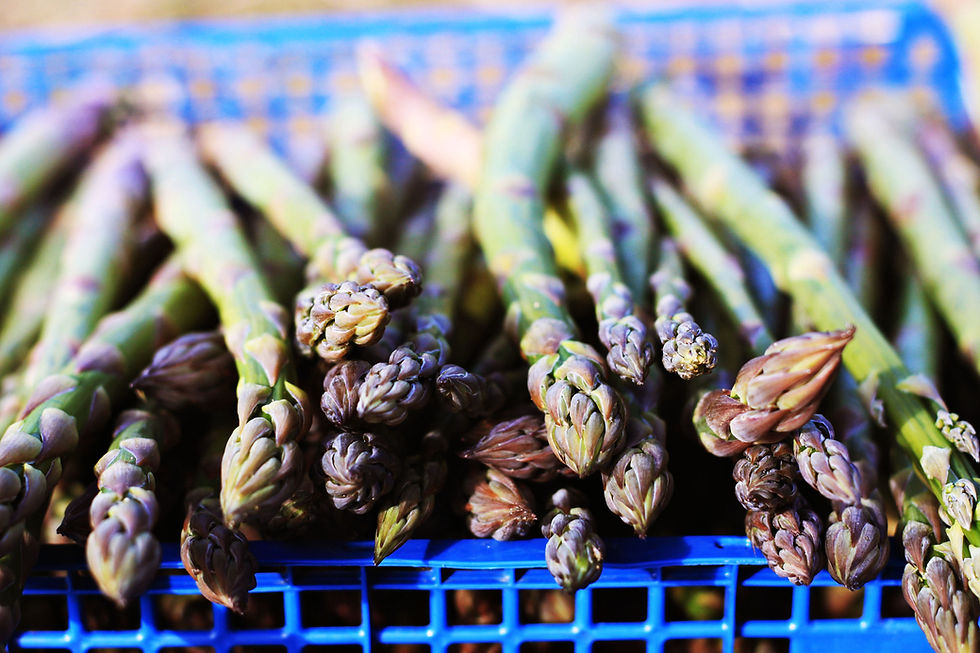
It can be the little things that you miss… And what I miss right now are those little honesty boxes you used to see dotted all over the place selling a few home-grown vegetables and eggs.
I am now the proud owner of a brace of carrots and three onions. That’s it on the Hesp vegetable front. Thank god for wild garlic and stinging nettles…
We’ve got pulses and some other dried veg that I put in jars last year in times of plenty - life dried wild mushrooms and apple rings - and we’ve got some meat in the freezer I managed to rescue from my storm damaged outbuilding. But if you are in lockdown and not going anywhere near major shops or supermarkets, fresh green vegetables are a difficult thing to come by.

Why Local Food Tastes Better
Oh for those little honesty boxes you used to see. There are not so many now, alas, but in my 20 years working for the Western Morning News as a roving feature wearer I built up a mental network of such places where I’d call to buy fresh vegetables, eggs and the like from the gateways of little smallholdings here and there or just from places where very good gardeners had a surplus which they’d sell for a few pounds, or more likely pence…
The Benefits of Seasonal Eating
Here’s what a reader called Rosie Oxenham, of North Devon, once wrote to me in an eloquently call for us to do more to celebrate the region’s micro-producers. …
“I absolutely adore being out in the wilds, turning a corner, and there… a table or cupboard outside a cottage, selling their own produce,” enthused Rosie.
But she added: “It is a rare sight these days - so all the more thrilling to find. Sweet-peas tied up with wool in little bunches - giving off a perfume that no shop flowers ever have - freshly laid brown eggs, cakes, lettuce, bundles of runner beans, the most delicious jams and chutneys, pots of herbs and plants. It is endless. The 'honesty box' for payment, often holding small change…
“Ah, that feeling of being watched - so that you make all your actions in an exaggerated way to prove you are honest!”

Supporting Local Farmers
I knew exactly what Rosie meant - and now wish the my parish had a few such places where we could do a bit of hyper-local germ-free shopping for home-grown items.
My old friend, Matthew Mason, once head chef at the hugely successful Jack in the Green at Rockbeare, just outside Exeter, is another fan of such places…
“I run to work most days so I spend an awful lot of time in country lanes,” Matt once told me. “If there’s a breed of cow, I’m interested. If I run past the fresh eggs on sale out in front of the cottages, I’m interested. You get boxes of cooking apples on sale – then I know it’s time to get apple sauce with pork on Sunday.”
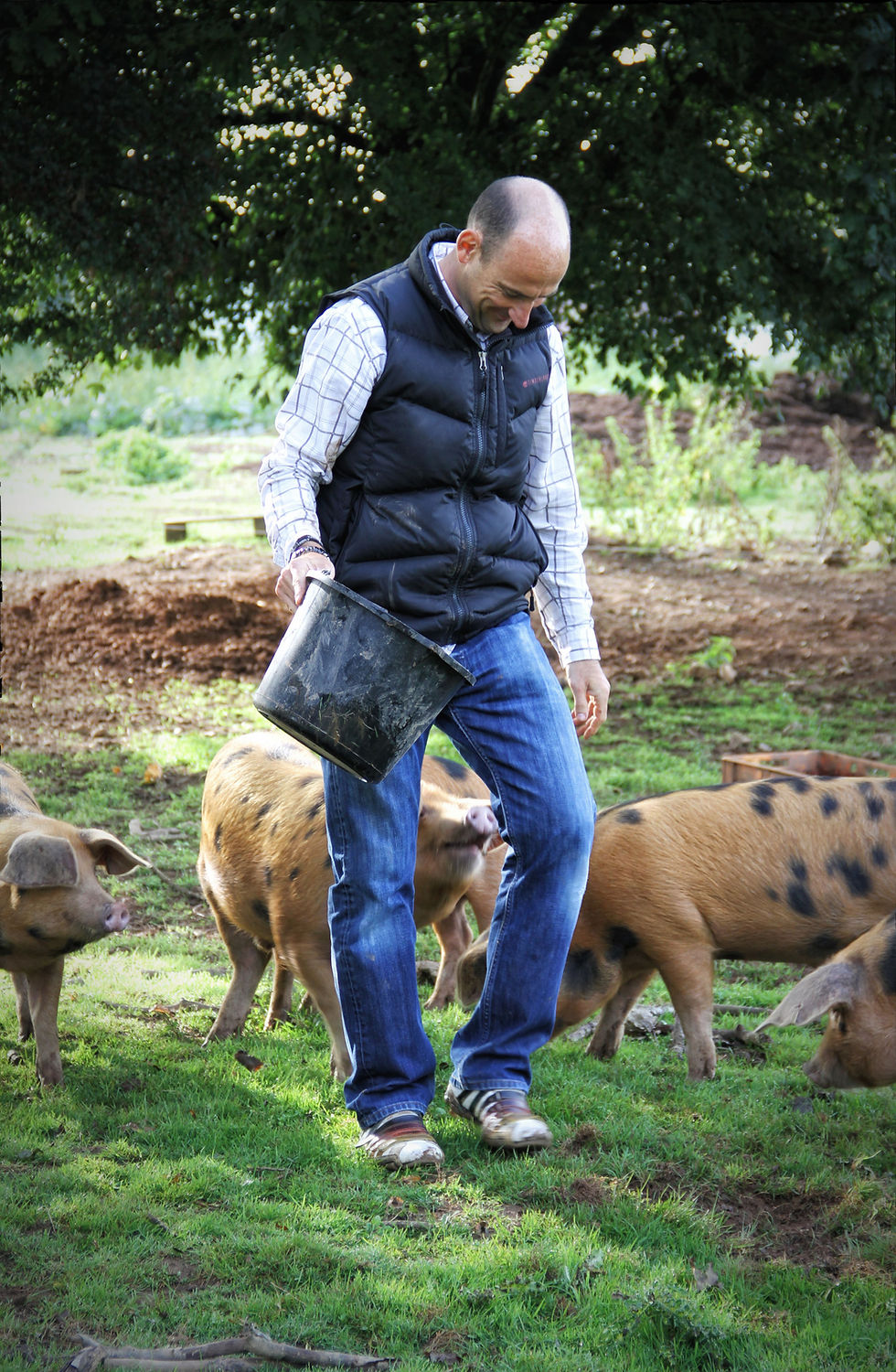
Matthew has been at Jack in the Green for more than a quarter of a century and is a long-term adherent to the concept that food should come from a local landscape – the “terroire” as the French call it.
“It is all about the quality - you mentioned terroire and that is what should be happening here in the West Country. But it's as much about the people as well - you have to forge these relationships and that’s just as important.”

Reducing Food Miles
All this - and the old fashioned farm gate honesty box - is a long way from the food we have become used to buying. The idea that we eat burgers from cattle raised in prairies that were recently Brazilian rainforest, that we consume lettuce leaves grown hydroponically in polluting Spanish poly-tunnels, that we slurp fruit drinks made from industrially grown produce located thousands of miles from our own homely orchards… all this is crazy.
In his book We Want Real Food, my good friend Graham Harvey describes how he recently looked down on the M5 while standing on a bridge in the West Country – his intention was to count how many food lorries would pass under his feet within an hour. After 20 minutes he gave up.

Why Restaurants Should Source Locally
“By then the total stood at 36, most of them in the livery of the major supermarkets,” writes Graham who for many years was agricultural story editor of the BBC radio soap, The Archers. “And I hadn’t even counted the unmarked refrigerated trucks that seemed very likely to be carrying food.
“Every hour of the day, thousands of food products are hauled across the road system of Britain,” he says. “Food transport now accounts for a quarter of all miles driven in the UK by heavy goods vehicles, and it’s responsible for almost ten million tonnes of carbon dioxide emissions.”
In the book, Graham despairs over the ruination of the nation’s rich fertile soils caused by what has, until now, been a rapidly increasing reliance on chemical fertilisers, herbicides and pesticides – and he pleads for the good, sensible, tried and tested, agricultural techniques of yesteryear. Techniques that were once prevalent in the hills and dales of the West Country…

Not far from where Graham was standing on the motorway bridge there is a beautiful, largely unspoilt vale that is a heavenly patchwork of fields, woods and hedges. The rich and fertile valley is formed of new red sandstones in which you can grow just about anything, and it is protected from the weather by the hills of the Brendon and Quantock escarpments.
As Mr Harvey explains in his book, this vale was once referred to as “hillock and dingle country” by the writer H.J. Massingham, who was an astute observer of rural matters in the 1930’s and 40’s. Massingham came to West Somerset to visit farmers in the vale and was hugely impressed by their farming techniques. Relying on no artificial fertilisers whatsoever, most were able to harvest huge quantities of produce from relatively small parcels of land.
“One couple grew enough on their tiny four and half acre plot to feed an entire village,” says Mr Harvey, who has made a study of Massingham’s work. “Their wartime crops included strawberries, early and main crop potatoes, orchard fruits, plus a greater diversity of vegetables than many a grower with 44 acres of ‘fat and level land’.
How Villagers in the South West Would Feed Themselves From Within the Parish
“In addition there were enough pasture, fodder crops and flowers to support a pony, over 100 chickens, goats, ewes, a breeding sow and her litter of eight, and 30 hives of bees…”
It seems almost mind-boggling when you realise that such people barely exist any more. I say that as a person whose own great-grandfather farmed parcels of land in the heart of “hillock and dingle country”.

Every village in West Somerset had such people when I was a boy – now I know of not a single one.
Graham Harvey calls this “real farming”. It’s the art of growing things without having to go to the bank manager to borrow money to pay the man who sells you the chemicals that grow your crops but which ruin your soil.
It’s the sort of age-old farming that relies on the rotation of crops and plenty of good manure gleaned from the animals which live upon the plants you grow. It is a cycle and it is about putting something back as well as taking stuff out. It is not rocket-science.
I will return to the subject of real local food - and to chats and interviews I’ve had with Graham - in upcoming posts.
You may not have time to read the stuff or to listen to it - but I have a feeling that time is one thing we will all be rich in over the coming weeks, even if we have run out of onions…
IF YOU'VE ENJOYED THIS ARTICLE, TAKE A LOOK AT OUR PAGE ON CIDER AND PERRY

Frequently Asked Questions
Q: Why is locally grown food better?
A: Locally grown food is often fresher because it travels a much shorter distance from field to plate. This can mean better flavour, improved nutritional value and a smaller environmental impact through reduced food miles.
Q: What are the benefits of buying local food?
A: Buying local food supports independent farmers, growers and food producers, helps strengthen rural economies, preserves traditional farming practices and keeps more money within local communities. It also gives shoppers access to seasonal produce at its best.
Q: What are food miles?
A: Food miles measure the distance food travels from where it is produced to where it is eaten. Reducing food miles can help lower transport emissions and encourage more sustainable food choices, although production methods also play an important role in a food's overall environmental impact.
Q: Where can I buy locally grown food in Britain?
A: Farm shops, farmers' markets, independent greengrocers, pick-your-own farms and many local delicatessens offer fresh regional produce. Increasingly, restaurants and pubs also highlight locally sourced ingredients on their menus.
Q: Why does seasonal food taste better?
A: Fruit and vegetables harvested at their natural peak are generally fresher, more flavourful and often require fewer preservatives than produce imported from overseas or grown out of season.
Q: How does buying local food help the environment?
A: Choosing local produce can reduce transport emissions, support environmentally responsible farming and encourage greater biodiversity. Buying from nearby producers also helps protect the countryside by supporting farms that maintain landscapes and wildlife habitats.
Q: Why should visitors look for local food when travelling?
A: Sampling local food is one of the best ways to experience a destination's culture and heritage. Whether it's Cornish seafood, Somerset cider, Devon cheeses or Exmoor lamb, regional specialities tell the story of the landscape and the people who produce them.
Have you discovered a wonderful farm shop, food producer or market in Britain? I'd love to hear your recommendations in the comments, and don't forget to explore more of my food and travel guides celebrating the very best of the West Country.


