
Lucerne and the Swiss Mountains

Updated: Aug 25
As midwinter brings yet more damp dark wet weather to the UK, it is tempting to recall wonderful trips to Switzerland and the mountains at this time of year. The often crisp cold sunny weather in the Alps comes as a surprise and a sensation for we poor rained-upon Brits.
Just before Covid struck, I visited the beautiful Swiss city of Lucerne during the depths of winter.
Lucerne is lovely by day - but for a few January nights it is transformed by a number of spectacular light installations dotted around the old town and lake-side areas.
Called the Lilu Festival of Lights, it featured an array of both Swiss and international artists showcasing illumination in all its fascinating facets. Every evening during the festival you could walk through the city between 6pm and 10pm and be enthralled by the luminous artworks.
Planning your own mountain escape or exploring the Swiss Alps? Read my comprehensive Switzerland Travel Guide: Unspunnen, Alpine Culture, Historic Rails & Mountain Flavours for more features on scenic mountain railways, historic hotels, local festivals, and culinary heritage.


The most gobsmacking of all the illuminations was to be found in one of Lucerne’s massive old churches where a truly spectacular light-show - beamed across the giant vaulted roof - was accompanied by the most amazing music and sounds. The 25-minute show made you feel as though you knew what time-travel could mean.

I have been fortunate enough to visit Lucerne many times, but never before have I seen the historic city like this. It was thrilling and thought provoking - which is why I can imagine that many larger towns and cities might soon be staging such events in the future.
But enjoying the light festival was only one of my winter treats in this special area. Based for a few nights at the majestic and altogether wonderful Hotel Schweizerhof, located right on the lakeside close to the city-centre, I was able to soak up the best Lucerne has to offer, like the riverside market in the January sunshine and a memorable lunch at the Hotel Wilden Mann, which is one of the oldest hostelries in the region.

The Hotel Schweizerhof, by the way, is a grand and classy establishment that has the vibe of being reminiscent of a bygone and more elegant age. Think grand ballrooms and grand pianos in the lounge. They serve excellent food too - which they also do at the Wilden Mann where I’ve had lunch several times before. Both do classic Swiss cuisine - which is no bad thing, especially when it comes to exceptional soups and salads.
I’ll tell you somewhere else that does good food in the area - or rather, 7000 feet above the city centre. And it brings me to the second part of my short city-break.
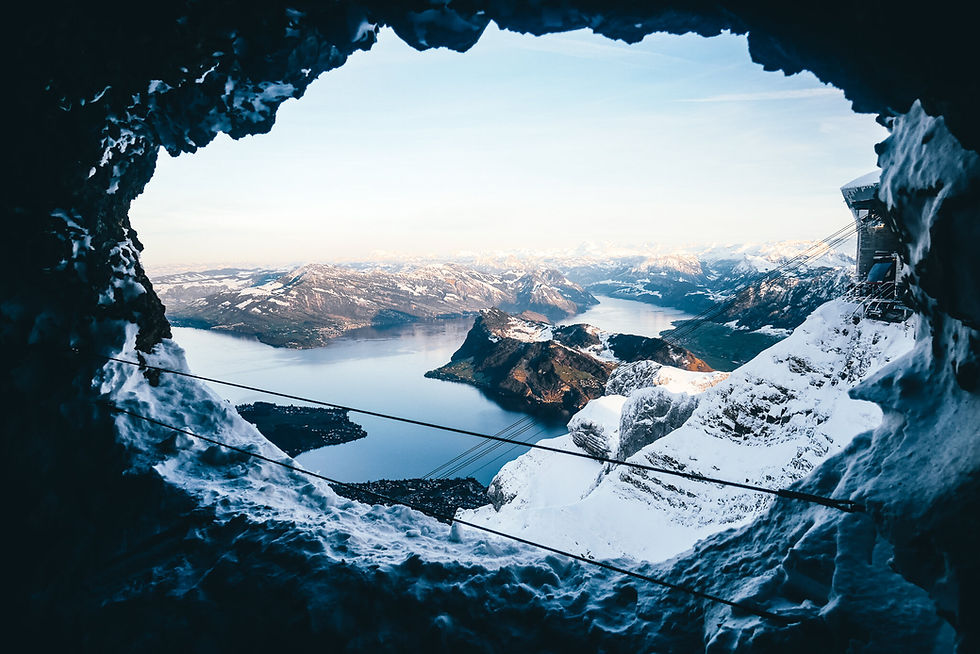
If you travel just five minutes by bus from the city centre to the southern edge of Lucerne you can alight at a stop which is just a short walk to the cable car that will take you up Mount Pilatus. What you are about to enjoy is one of the best cable car journeys in the Alps - and I say that because the views all the way up are among the most amazing in all of Europe.

That is because 7000 foot high Mount Pilatus stands alone, unlike most mountains in the Alps which are, of course, connected to other surrounding peaks. We’re at the northern edge of the main massif of mountains here, so everything north and west is located far lower down on an undulating plain that descends eventually to Zurich and the German border.
Directly beneath the mountain, there’s Lucerne and its beautiful lake. Then, once you’ve reached the summit on the exhilarating cable car ride, you can look south and see a massive panorama of alpine peaks stretching east to west.


This is made all the more dramatic because every side of Mount Pilatus drops away steeply. Far too steep for any skiing. So there you are, right up there close to the heavens with nothing but fresh mountain air in every direction. A fact which makes it all the more amazing that there’s not one, but two hotels up here.
I stayed one night at the cosy Mount Pilaus Kulm and enjoyed every minute of it. Not only did my the window of my warm and snug bedroom (just as well it was snug given it was minus 20 degrees outside) give me truly splendid mountain views, but I was also treated to a massive and delicious seven course meal up there halfway to heaven.


And, talking about heaven, I also managed to visit to one of my favourite villages in the world while on the brief January trip. Vitznau is located at what seems to be the far eastern end of the lake opposite Lucerne - and it’s a truly wonderful ferry ride that will take you here. Especially if you have booked a three course lunch aboard one of the ferries that plies the lake 365 days of the year.
Indeed, if you were really pressed for time while visiting the city and you wanted to do just one thing, I would suggest catching a ferry to Vitznau. Lunch on board or no lunch - the surprisingly upmarket meal is just a bonus. The real deal is travelling slowly and gracefully through some of the most beautiful mountain scenery in Europe.

You call at Weggis for one thing - where Mark Twain lived for a short while, claiming it was the most beautiful village in the world. But Weggis doesn’t have the incredible Mount Riga railway and Vitznau does. That alone - and the opportunity to trundle all the way to the top of another stand-alone mountain views - gets the village my vote.

The Lucerne area is a winter-wonderland of a place in January when the Lilu Festival of Lights is on, but it’s just as fabulous at any time of year in my opinion. Switzerland - the Alpine region, indeed - at its best…

Planning your own mountain escape or exploring the Swiss Alps? Read my comprehensive Switzerland Travel Guide: Unspunnen, Alpine Culture, Historic Rails & Mountain Flavours for more features on scenic mountain railways, historic hotels, local festivals, and culinary heritage.

Frequently Asked Questions About Lucerne and the Swiss Mountains
Is Lucerne worth visiting in winter?
Yes. Lucerne is particularly atmospheric in winter, when the surrounding mountains can be covered in snow and the city remains lively with its historic centre, lake, restaurants and cultural events. January can also bring the Lilu Festival of Lights, when illuminated artworks appear around the old town and lakeside.
What is there to do in Lucerne in winter?
Winter visitors can explore Lucerne's historic centre and lakeside, enjoy its restaurants and markets, take boat trips on Lake Lucerne and travel into the surrounding mountains. Mount Pilatus, Vitznau and Weggis are among the places that can be reached from the city.
What is Mount Pilatus famous for?
Mount Pilatus is one of the most dramatic mountains overlooking Lucerne. Its summit rises to around 2,132 metres and its steep sides provide spectacular views across Lake Lucerne and the surrounding Swiss Alps.
Can you visit Mount Pilatus from Lucerne?
Yes. Mount Pilatus is easily accessible from Lucerne, with transport connections taking visitors towards the mountain and its cable car. The journey provides spectacular views as the mountain rises above the city and Lake Lucerne.
What is Lake Lucerne like?
Lake Lucerne is one of Switzerland's most beautiful lakes, surrounded by mountains and historic lakeside settlements. Boat trips provide an especially enjoyable way to experience the scenery, with services connecting Lucerne with places including Vitznau and Weggis.
Is Vitznau worth visiting?
Vitznau is a beautiful village on the shores of Lake Lucerne and makes an excellent excursion from Lucerne. It is also the starting point for the famous Rigi railway, which climbs into the mountains above the lake.
Can you take a boat from Lucerne to Vitznau?
Yes. Regular boat services connect Lucerne with destinations around Lake Lucerne, including Vitznau. The journey itself is one of the great attractions, offering a slow and scenic way to experience the mountains and lake.
What is Weggis famous for?
Weggis is a picturesque lakeside village on Lake Lucerne. It is also associated with the American writer Mark Twain, who spent time there and famously described the area in highly complimentary terms.
What is the Lilu Festival of Lights?
The Lilu Festival of Lights is a winter event in Lucerne featuring spectacular light installations around the city's historic centre and lakeside. The festival transforms parts of Lucerne after dark and adds another attraction to a winter visit.
Is Lucerne a good base for exploring the Swiss mountains?
Yes. Lucerne is particularly well placed for exploring the mountains and lakes of central Switzerland. From the city, visitors can combine urban sightseeing with trips to places such as Mount Pilatus, Vitznau, Weggis and the wider Lake Lucerne region.


