West Country Beaches I Love Most

Updated: Jun 25
It has most definitely been one of those “Phew, what a scorcher!” weeks. Not sure what the weather will be like on Saturday when these words are published but, as I write, it’s so hot everyone I know is actively looking for shade, or a cooling breeze at least.
And where better to find the latter than a beach? The big hot-water bottle, otherwise known as the Atlantic Ocean, which keeps us warm in winter, also does a good job of keeping us cooler in summer. Earlier I drove along Minehead beach and the car’s external temperature was 27 C - a mile or two inland it had gone up to 30 degrees - which proved to me that the amazing coolant effect really does exist.
And, of course, if it really does get too hot you can always jump in the sea - in most places anyway - but admittedly not at Minehead if the tide is out and halfway to the horizon.
Anyway, beaches are the places to be in a heatwave - and a great many people agree with that notion if my drive earlier today was anything to go by. There were several thousand people on Minehead beach which, because of the huge tidal drop, is not the most popular strand in the West Country.

About 1.5 million years ago a man or woman walked out of a cave in Africa and spent the day on the beach. They were called Homo Erectus - Upright Man – and during those very early lifetimes they spent an awful lot of time by the seaside. In fact, the first real humans spent the best part of a million years on the beaches of Africa before their successors, known as Homo Sapiens, began to travel over the land bridges into Europe some 500,000 years ago.
Beaches were, and are, good places to be. For a start, they’re fairly safe when compared with impenetrable jungles – and they’re rich in food. Shellfish are easy to harvest and are extremely nutritious, as is seaweed. And, if you’re clever enough, you can even catch fish in quantities that will sustain you for days.
And, as I say, we still love to be beside the seaside today, though most of us think more in terms of lounging about in deckchairs eating ice-creams and sandwiches than grabbing wild food. Some folk though, are still bound up in the ancient world of harvesting the bounties of sea and shore - then there are the artists, boat builders, coastguards and a whole host of others who rely upon the littoral to making a living.

“I must go down to the sea again, to the lonely sea and the sky,” wrote John Macefield. And I know exactly what he means. There is something magically alluring about the shore, and this peninsula has more shores – and better shores – than most.
During my extensive travels for this newspaper, I have skived off down some sea-lane or other a thousand times - sometimes just to catch the briefest glimpse of the waves. It is like being addicted to a saline solution. Even the lanes leading to beaches have a certain quality about them. They are places of sea holly, sea spurge and squill - rock samphire, fennel and sandwort.
The names, the sounds, the scents, the heady euphoria of breathing ozone… Such are the delights of the sea. Who can blame anyone for wanting to work on, or near, the ocean?
One of the factors of human interaction with the sea that intrigues me most is how localised the various traditions are. Every stretch of coast seems to have its own style of boat, there are different nets, rigs and even oars.
But today it is too hot to go on writing about our love affair with the seaside. I am simply going to point you towards a random selection of my favourite beaches in the hopes you might one day enjoy at least one of the following…
Pedn Vounder
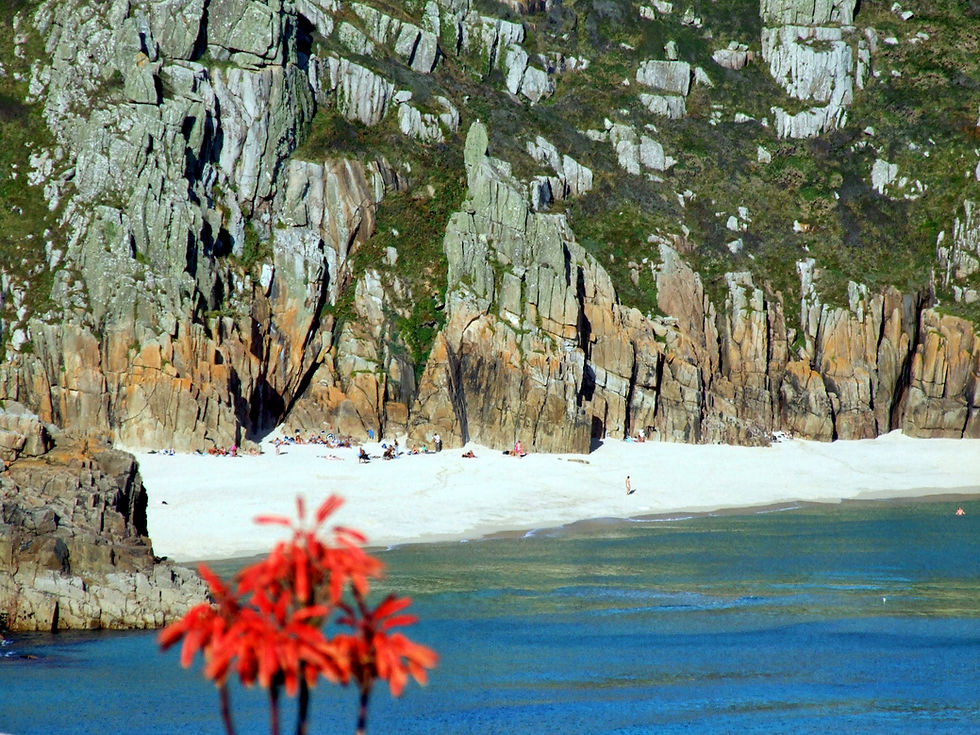
My No1 favourite. Just thinking of its perfect rocks, sea and sand makes me want to jump in the car and drive the 160 miles it would take to reach this westerly spot. Pity it’s so distant in furthest West Penwith. And, be warned, the climb down requires you to hang on to a rope.

Woolacombe
The antithesis to Pedn Vounder. Easy-to-reach, huge, extremely popular… But the crowds don’t go there for nothing - fabulous sand and surf, this is England’s answer to California. And you can always escape the hordes by walking along the dunes to Baggy Point.

Beer
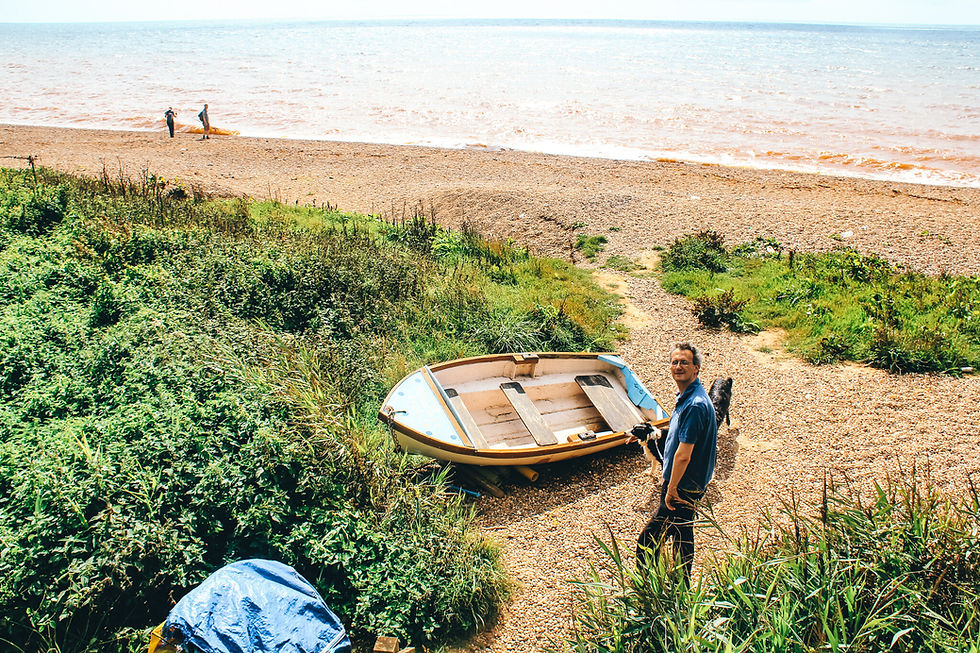
Not the booze but the wonderful old-fashioned cobble beach under the East Devon village of that name… Think: excellent tea-shops located in wooden beach huts, clinker-built motorboats you can hire, fishermen hauling their crab boats up on winches and local families who’ve been hanging out here for summertime decades.

St Martins Bay, Isles of Scilly
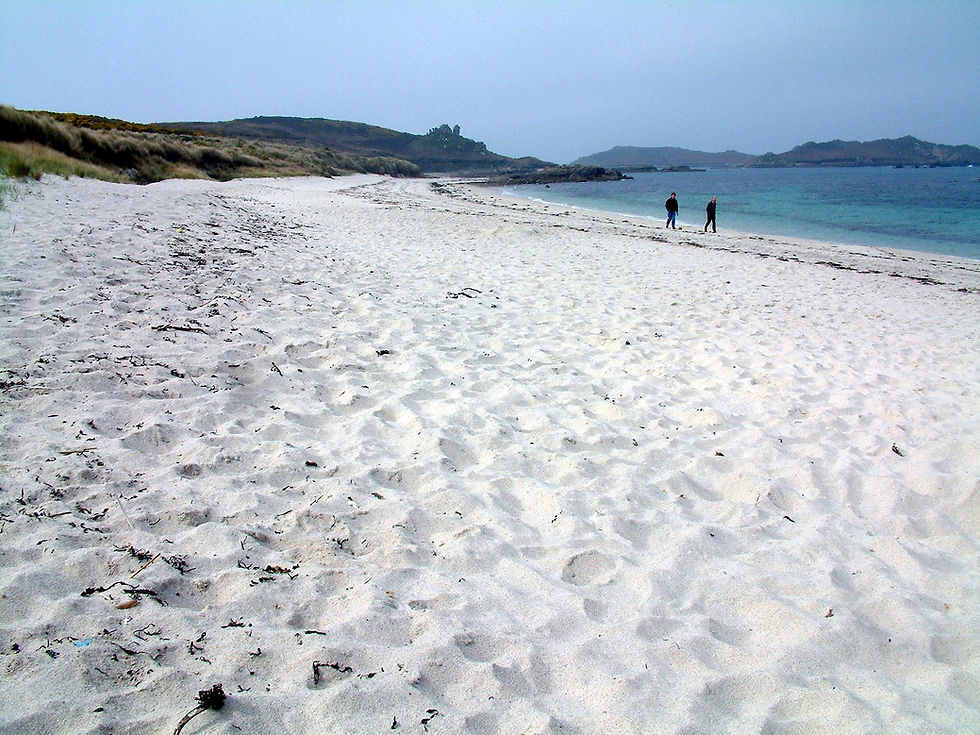
Simply the best, finest, white sand to be found anywhere in Europe. This is where the West Country turns into the Caribbean - the blue-green waters are so clear you can see that fine white sand 40 feet down when you are snorkelling. Remote. Beautiful. Unforgettable.

Doniford
The opposite of the above. You can’t see a single inch through the waters on this Bristol Channel beach. It is not even very beautiful - at least, not in a classic way. But it is fascinating. Daniel Defoe thought so when he came here in 1724. He was amazed at the large fossils that he found dotted among the great natural stone pavements.

Maceley Cove
If you adore distant, empty coves where a small horseshoe of sand is bordered by rocks and pools and a restless, crystal-clear sea, then Maceley Cove is for you. So wonderfully wild, picturesque and oddly foreign are the environs around the charming little village of East Prawle - that the area long ago ascended straight to the top of my list of favourite places.

Porthcothan
One of the finest beaches on the North Cornish coast. Great sand and surf, with plenty of alluring rock-pools when the tide goes down. You might even recognise the place where Ross Poldark in the recent TV series forever galloped along the top of the cliffs.

Lantic Bay
Another small horseshoe of sand bordered by rocks and pools and crystal-clear sea classic… And like Maceley and so many other coves, a bit difficult to reach on foot from nearby Polruan. Which is why this one is so popular with boating beach-goers all summer long.

Portheras Cove
Another West Penwith special. Portheras, tucked away under the Pendeen Watch Lighthouse, is a jewel among coves. A golden sand beach of near perfect proportions. A remote bit of rocky littoral that hangs in the mind like a beautiful dream. A fabulous, oceanic, ozone-filled dream…

Ayrmer Cove
An untouched gem on the South Devon coast, Ayrmer Cove is a secluded, sandy haven flanked by dramatic, dark shale cliffs. Reached via a picturesque, half-mile walk through a deep, wooded valley from the National Trust car park at Ringmore, this quiet beach bypasses the usual resort crowds. At low tide, it reveals a fascinating network of rock pools and striking geological formations, including the iconic Ayrmer Rock rising from the surf. It is an idyllic, breezy spot for walkers tackling the rugged South West Coast Path, offering panoramic views out toward Burgh Island and the open English Channel.