Beating the Heatwave: Where to Find Cool Relief in the West Country Landscape


First thing every morning for weeks we’ve opened our east-facing front door and walked out into an early morning wall of heat. Shouldn’t complain. We all can remember too many summers in recent decades when it did nothing but rain. But a wall of heat first thing in the morning, every day for weeks? You can find yourself wishing for a break in the weather.
And that’s just me as a semi-retired journalist. Goodness knows what you think when you’re a farmer looking out at a parched and unproductive landscape.
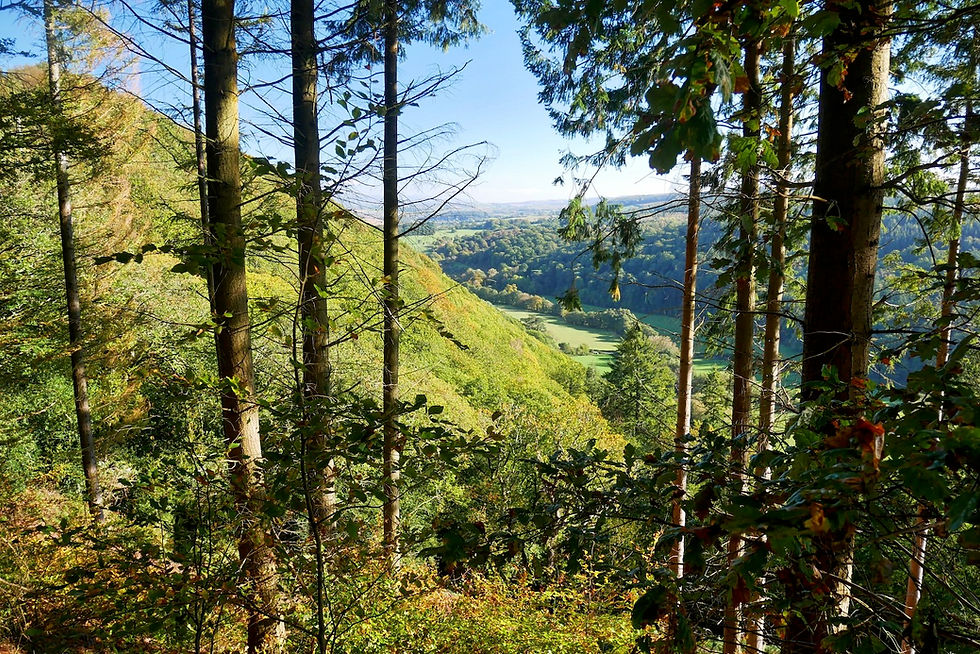
Unlike a lot of people, I have an instant remedy. Between the cottage and the lane, a path descends past a copse where there is a footbridge across a stream—and there, in that dark damp place, we find the cool. Leaning over the wooden rail watching the resident trout who lives in the slow-moving water under the bridge, there’s a degree of coolness even on the hottest days.
IF YOU ENJOY THIS POST TAKE A LOOK AT OUR EXMOOR PAGE

I say “a degree of coolness” because, just up the lane, there’s an old railway cutting which, for some reason I can never understand, almost always verges on being cold. Even in the fiercest heatwave you can walk through the deep little canyon and wish you’d worn your fleece. I don’t know what causes that dip in temperature because, in really hot weather, all the other shady places in the valley can become stuffy and warm by midday. But not in the cutting. It’s as if the place has its own natural refrigeration system. On a winter’s day, it’s like walking through a deep freeze.
So there are places in the landscape which can offer some cooling relief as the heatwaves continue. Indeed, here in the Westcountry we do have a secret weapon to help us—the myriad, deep, sunken lanes that wend and weave their way from one end of the region to the other.

It was already hot on my dog-walk this morning at 9:30, but the ancient sunken lane which crosses the old West Somerset Mineral Line remained damp and cool despite the heat.
Other regions have narrow country roads, but nowhere else can boast quite such deep, hollowed-out, ancient byways that are one of the features of our peninsula. The hedges lining them are the English equivalent to the tropical rainforests. They teem with life. More than 600 plant species, 1,500 types of insects, 65 birds, and 20 different mammals have been recorded living or feeding in the region’s magnificent hedgerows, which are the main feature of the sunken lanes. Devon alone has an astounding 33,000 miles of hedgerow.
Our “hollow lanes” (as some people call them), full of life and coolness, are a feature of a good many parts of the South West peninsula—mainly in places where the underlying rock is soft enough to have been easily eroded by a thousand years of hooves, wheels, and rain. The lanes don’t get too deep in hard granite areas, but if you visit the red sandstone zones of Dorset, East Devon, the South Hams, or Exmoor and West Somerset, you can easily find yourself in a semi-subterranean world tinged with green.
As for the hedges, a countryside officer for the North Devon Coast and Countryside Service once told me: "Devon is the only county that has a type of hedgerow named after it. The Devon hedge is unique, it is basically an earth bank that may be faced with stone or turf with a line of shrubs on top—elsewhere most areas don't start with a turf bank but at ground level."
"There are a lot of theories, but no one knows exactly why our ancestors put structures in with a combination of wildlife and shrubs on top, as well as flowers, but it does make them very special. Many are very old," he added. "A quarter are more than 800 years old—and you could compare them to a parish church in historical importance."
He regretted that sorry time when farmers were encouraged to grub them out. Records in the 1950s show that Devon alone had a staggering 45,000 miles of hedges compared to the 33,000 still left today.
"Some have gone and what we’ve got left we must look after," said the countryside officer. And I bet there are a lot of people (and creatures) who’d wholeheartedly agree this summer as they hunt for some shade in the heat.
If you went out and about this week you’ll have seen landscapes which are almost entirely yellow and parched—but you will also have seen streaks or smudges of healthy-looking green—and they’ll have been provided by the hedges and woodlands.
Here are four other types of landscape that can offer a degree of cool in a heatwave…
SEE MORE COOLING WALKS ON OUR DARTMOOR PAGES
1. Airy Ridges
All uplands tend to be cooler than lowlands, but in a heatwave the centre of a large plateau like Dartmoor, or Salisbury Plain where I was last week, can be just as stifling as a West Country vale. Ridges, however, attract breezes from all angles and so offer a pleasant respite—and one with views…

Perhaps the best of them all for a breezy stroll with views is the Quantock Hills—which rises between Taunton and Bridgwater in the south, and marches north to the Bristol Channel. The northern end offers a good airy entry point to the ridge. Turn right off the main Minehead to Bridgwater road, ascend past the villas of St Audries, and go straight up the steep lane that will take you to the northern tip of the Quantocks.
Pass the forest and take the track up to Beacon Hill, and you enter an altogether cooler upland world—or, as Coleridge put it, perhaps inspired by this very spot: "Sea and hill and wood, with all the numberless goings on of life, inaudible as dreams…"
Beacon Hill plays host to a track called the Great Road, which eventually joins the main ridge path going south past Bicknoller Post to Thorncombe Barrow. You can stroll along it recalling Coleridge’s cooling words...
"On seaward Quantock's heathy hills, / Where quiet sounds from hidden rills / Float here and there, like things astray, / And high o'erhead the sky-lark shrills."

2. Coastal Areas With Potential for Shade
There’s often a breeze at the coast and as I write these words in a heatwave, a cooling sea-breeze seems just about the most wonderful thing imaginable. The trouble with coasts, though, is that they tend to be fairly treeless places devoid of shade. Salt-laden winds and plants don’t always mix, but you need some shade in a heatwave even if you have a breeze.
The area between Combe Martin and Ilfracombe offers both shade and interest. If you climb west out of the former and follow the Coast Path, you’ll find it eventually descends through a cool and elegant tunnel of beeches where you can catch glimpses of the National Trust-owned Golden Cove far below. The wonderful little beaches are north-facing and so get quite a bit of shade.
You could take a detour to enjoy this strand, or continue past Egg Rock and Turk’s Cave before sweeping down over the meadows to Watermouth where you could walk out along the picturesque Warren, the west-pointing headland that turns this breezy inlet into a kind of fjord.

3. Foray in a Deep Cool Forest
The shady forests and cooling waters of the Tamar can offer some respite in a heatwave. Cool Cotehele is beautiful in so many respects, and at Cotehele Quay you will discover one of the most lovely corners of the Tamar—one which has a rich and interesting history.
There’s a short circular walk which takes you through deep woodlands. A few yards downstream from the wharf there’s Cotehele Bridge.

This crosses the Morden Stream where a path enters the trees. Head up through Elbow Wood, and eventually leave it to cross the lane at Newhouses where you can enter the reassuringly named Comfort Wood. Then walk alongside the stream until the path swings right to climb out of the trees and up over the fields to the hamlet of Newton.
From here there are several routes down the valley which lies to the north-east, but I’d recommend the walk along to Norris Green so that you can drop into cool, deep Danescombe where you’ll find the ruined paper-mill which has been renovated by the National Trust. Further down there’s evidence of more industry as you pass disused mine shafts and the remains of a sawmill.

It’s a case of returning along the tree-lined path which leads back to Cotehele Quay, past a fantastic viewpoint where you can enjoy a vista of Calstock and its viaduct. Reeds will rustle, trees will sough, and the soft quackings of wading birds will speak of the river’s cool, yielding ooze. What more could you wish for in a heatwave?
4. Gorges and Ravines
Some indentations in our landscape are cooler than others. The coolest I know on a grand scale is the Teign Gorge, which makes its way deep through the heart of Devon under the ramparts of Castle Drogo.

Last year on a hot day we went to Fingle Bridge for a simple up-one-side and down-the-other walk. The mix of tree cover, fast-flowing river, and deep gorge ensured a very pleasant temperature indeed.
We crossed Fingle Bridge to the southern bank and turned right, upstream, passing the old turbine house where electricity for Castle Drogo was generated until 1994. Further on, we crossed the elegant suspension bridge. Upstream again, the river rushes and roars down parts of the defile, falling over rocks in its bustle to be gone.
Crossing the footbridge, our route then followed the Teign back downstream where it curves under mighty Hunters Tor. Sticking to the riverside path, the gorge remains deep, remote, and other-worldly. Sharp Tor looms vast and imposing above the valley floor before a long, pleasant meander down-river brings you back to Fingle Bridge for a well-earned pint in the pub.
On a hot summer’s day, it’s one of the most perfect, coolest strolls in the West Country.

Frequently Asked Questions
Q: What are sunken lanes and where can you find them in the South West?
A: Sunken lanes (or "hollow ways") are ancient byways carved out over centuries by rain, hooves, and cartwheels. They are particularly common in areas with softer rock, such as the red sandstone zones of Exmoor, West Somerset, East Devon, Dorset, and the South Hams. Because they are shaded by tall, ancient hedgerows and bankings, they stay remarkably damp and cool during heatwaves.
Q: Why are Devon hedgerows so special?
A: Devon hedges are unique because they are built as earth banks faced with stone or turf, topped with shrubs and flora—unlike hedges in other regions that start at ground level. A quarter of Devon's 33,000 miles of hedgerows are over 800 years old, supporting over 600 plant species, 1,500 insect species, and dozens of bird and mammal species.
Q: What are the best cool walks in the West Country during hot weather?
A: Great places to escape the heat include:
Airy Ridges: High, breezy routes like Beacon Hill and the Great Road in the Quantock Hills.
Shaded Coastal Paths: Wooded coastal tracks, such as the beech tunnel route near Combe Martin and Watermouth.
Deep River Valleys & Forests: Shaded woodland strolls like those around Cotehele Quay and Comfort Wood on the River Tamar.
Steep Ravines & Gorges: Deep river cuts like the Teign Gorge beneath Castle Drogo near Fingle Bridge.