
Authentic Halloumi: Exploring Authentic Food, Wine and Village Life in Cyprus

Updated: Aug 10
What makes halloumi different from every other cheese? A chance encounter in rural Cyprus reveals the secret behind its famous squeak and resistance to melting, leading into an unforgettable journey through mountain villages, wineries, artisan food producers and authentic Cypriot culture.

Drop a slice of almost any cheese onto a hot grill, and within seconds you will be left with a smoky, ruined puddle of grease. But there are a handful of world cheeses which won’t melt at the mere sight of a naked flame. As foodies know, halloumi - Cyprus’s most famous culinary export - behaves like a gentleman under fire. Drop a slab into a pan or onto the coals, and instead of melting it forms a much-loved caramelised golden crust while retaining its firm, squeaky bite.
I’d always wondered about the science behind this miracle. The secret, it turns out, lies in a cooking process where the freshly pressed curds are boiled for nearly an hour in their own whey, effectively ‘cooking’ the proteins into a permanent, heat-resistant matrix.

This is the sort of thing I love about travelling. You can discover stuff you’ve never known before. I must have visited over 100 cheesemakers as a journalist so am well-versed in the basics - but when I saw an elderly lady boiling her fresh-made curds in an ancient bakery, high in the hills of Cyprus the other day, my jaw dropped.
I’d never seen anyone boil fresh curds and in that moment I realised what it was that made halloumi so different from most other cheeses (with the exception of Indian paneer and Finnish leipäjuusto - see our panel to find out how this process works). It came as a revelation. I stood there in the sunshine feeling amazed and impressed.

Meeting Traditional Halloumi Makers in Rural Cyprus

Sophia Vasileiou and her husband Andreas have been making bread, cheese and other basic Cypriot delights, in the village of Letymbou above Paphos, for decades, but some years ago they turned their knowledge and skills into something of a cultural attraction.
Originally, it wasn’t a formal business at all - Sophia and Andreas were simply making food and baking bread in their front yard for their own family. Then one day, two passing tourists wandered up the lane, drawn in by the rich aroma of the wood-fired oven (or fourno). Being naturally hospitable, Sophia invited them into the courtyard, fed them, and showed them how the bread and cheese were made.

The visitors were so enchanted they told others, and that encounter slowly transformed the Vasileiou home into the living museum and traditional tavern it is today. It’s an authentic bakery, making bread and cheese for the surrounding villages, but it also acts as a showcase for visitors. All very fascinating, delicious and educational it is too.

How Cyprus Is Reinventing Tourism Through Agritourism
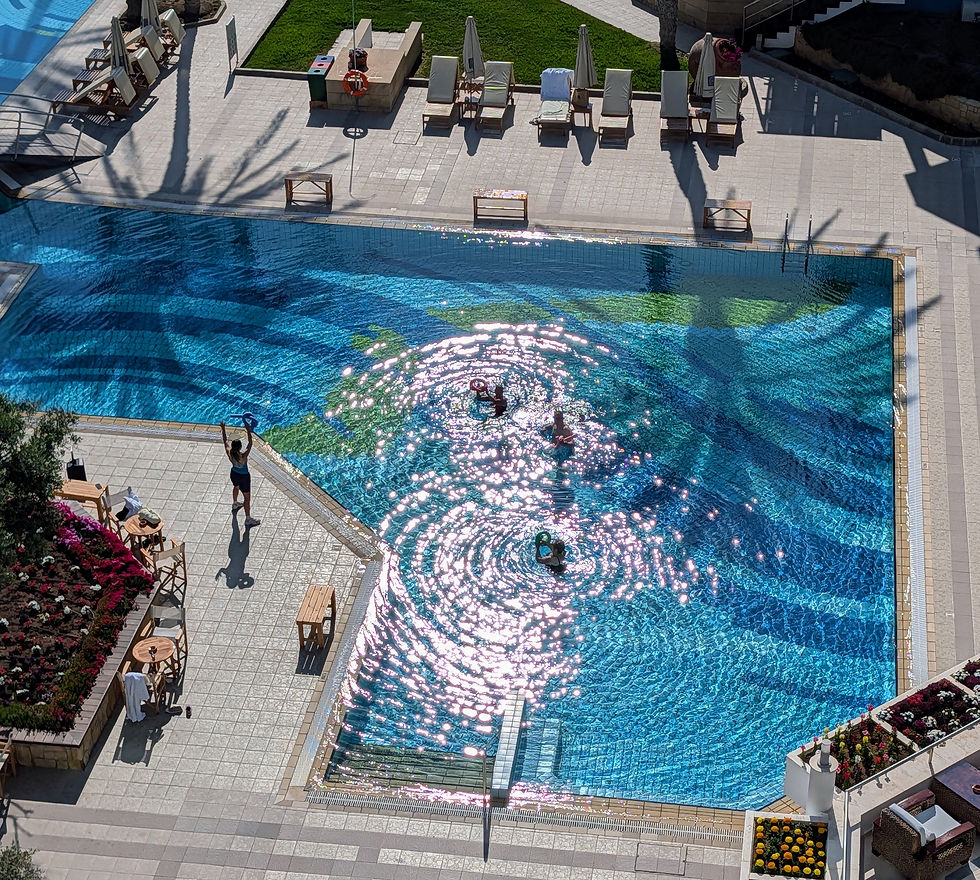
In a recent post I described how I was staying in Paphos at the newly revamped Asimina Suites Hotel - a five-star, all-suite property that has just undergone a significant revamp.
The hotel is owned by the Constantinou Brothers, a well known family-run outfit, founded by the family of that name in the late 1970s - and anyone staying at their four hotels has the opportunity to join a selection of cultural tours which will show them more of the fascinating island of Cyprus.
I am not talking about 60-seater buses and tourists descending upon a place and ruining the very thing that attracted them in the first place.
The Paphos Regional Board of Tourism and the Cyprus Ministry of Tourism have been actively pushing back against the old “sun, sea, and massive tour bus” stereotype and have thrown funding and support into developing an ecosystem of small-group, culture-based, and agritourism initiatives.

Schemes like the government-backed Heartland of Legends have developed routes and independent agritourism networks. The purpose is to connect visitors directly with local micro-producers.
The initiative is designed around small-footprint authentic encounters rather than commercial mass-tourism landmarks - and for that I give it ten-out-ten.
The Real Taste of Halloumi: Fresh from the Whey

So there I was, standing in Sophia’s courtyard, watching a lady whose hands moved with the effortless rhythm of 50 years’ practice. She was pulling massive loaves of village bread from the belly of a fourno.
The aroma - yeasty, laced with the sweet smoke of burning olive wood - was enough to make a travelling journalist feel very hungry indeed.
But, as I say, Sophia wasn’t finished.
While the bread cooled, she coaxed a steaming cauldron of goat’s milk into the miracle that is fresh halloumi.
Plucked warm from the whey, dusted with dried mint, and sandwiched into a thick slice of that steaming bread, it was a revelation.
Forget the rubbery, salt-logged halloumi blocks we buy in plastic wrappers in Blighty.
Real, raw-milk version, eaten at the source, has a gentle milky bounce and a rich, complex depth that somehow echoes rugged hillsides and mountain herbs.
Cyprus Wine Country: Hidden Wineries in the Mountains

This was just our opening salvo of a gastronomic pilgrimage into the Cypriot interior.
Next, our little band of food-obsessed writers zig-zagged higher into the hills to eventually reach the mountain village of Statos-Ayios Fotios. Here, perched on a ridge 3,000 feet above sea level, sits the Kolios Winery - an imposing structure built of local stone by Marios Kolios, a countryman who treats his vines with the quiet reverence of an Orthodox priest.

Marios ushered us into the subterranean belly of the mountain. Outside, the Mediterranean sun burned down onto the rocky hillsides, but down in the cellar everything was cool and damp. That’s partly because a natural mountain spring trickles down through the rock, keeping the place at a constant, perfect chill without a single watt of air conditioning.
We tasted his Persefoni, a white wine crafted from the local Xynisteri grape that has a hint of citrus and mountain air. But it was his Ayios Photios red that stole the moment - made from Maratheftiko, an ancient, temperamental Cypriot variety that requires wild cross-pollination. It was deep, spicy, somehow rugged - a bit like the landscape itself.
Lunch with “The Master” of Amargeti

By now, after hours in the hills, we were in need of lunch so we headed for the village of Amargeti and a remarkable taverna. However, no matter how hungry I was, I could never do justice to the massive luncheon spread laid-on for us by the culinary tour-de-force that is Costas Papachristoforou. To the locals, and the wandering journalists he feeds, he is known simply and affectionately as Mastros - a Cypriot Greek title for The Master or The Boss. Which is a nod to his jack-of-all-trades artisan brilliance.

While Mastros commands front-of-house, his wife Constantina runs the kitchen, turning out wonderful family recipes passed down through generations. A mezze feast began to cover our table, plate after plate. There seemed to be no end to it - no tiny, precious portions here, but a generous, rolling tide of local flavour… Home-cured olives, sizzling wild boar sausages, and slow-cooked lamb that fell apart on your fork.

We soon learned that Mastros is a man who cannot sit still. Beneath the panoramic dining terrace lies his backyard production empire. He doesn’t just run a taverna - he operates the Mastros Winery and Mastros Microbrewery on-site. Perhaps the crowning glory of his backyard production line was a dark, viscous liquid he held up like a trophy… A pure carob syrup, known historically as “Cyprus Black Gold”. This unrefined nectar, pressed from local carob pods, has a deep, smoky sweetness akin to molasses but with a distinct, chocolatey undertone. Drizzled over fresh curd cheese, it struck me that I was somehow tasting the story of this ancient island civilisation.
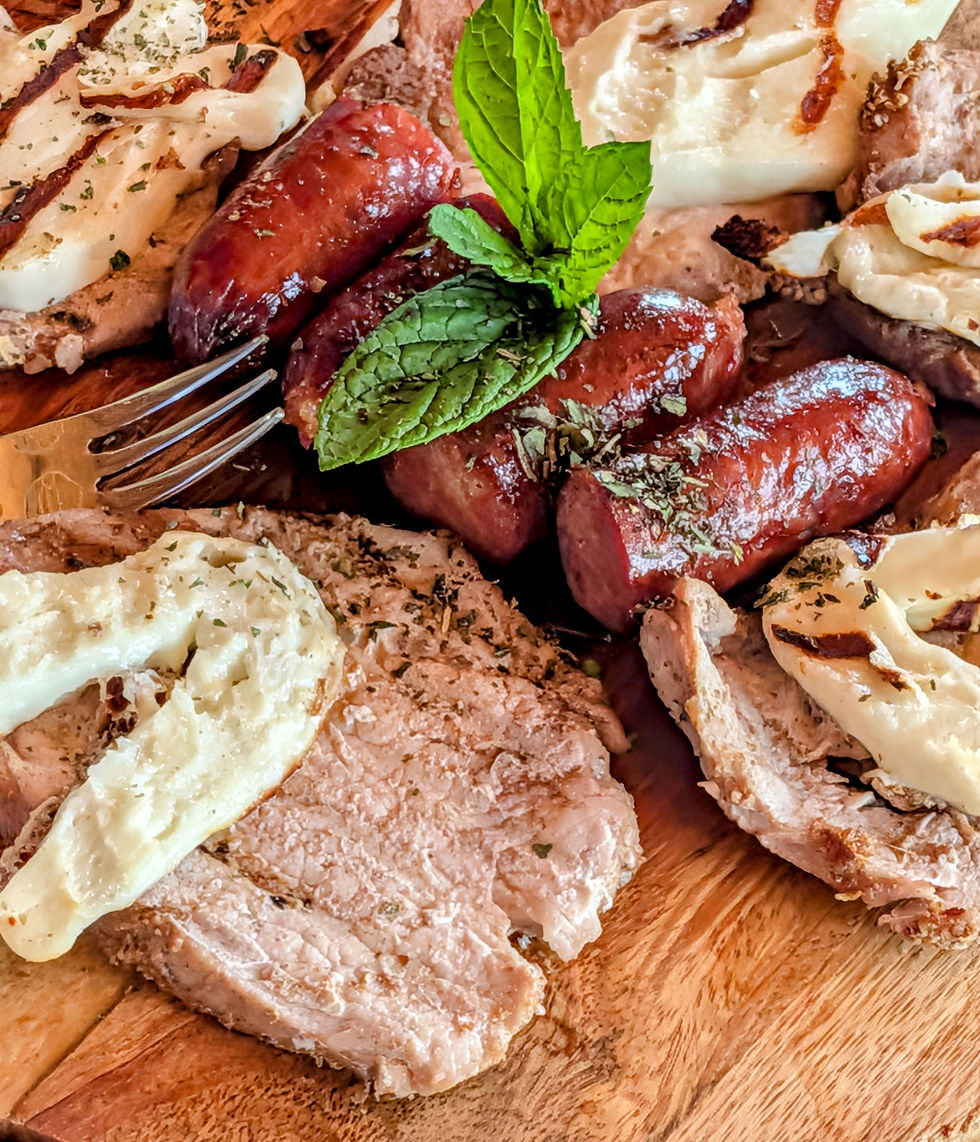
Mastros also happens to be village mayor. After our delicious and truly Herculean lunch, he took us on an impromptu detour through Amargeti, showing off the local community museum and church with the fierce, protective pride of a true countryman.

The Cyprus Most Tourists Never See
This is the Cyprus so many holiday-makers miss. But it’s not one locked behind a press pass, or reserved for those in the know- it is an active, vibrant, small-scale network waiting up in the hills for anyone willing to ditch the beach resort and discover it.

As we finally rolled back down the Diarizos Valley toward our hotel, the sun was dipping into the Mediterranean. Cyprus may attract legions for its beaches, but the real heartbeat of this island is found up in the hills, bubbling away in iron pots, baking in clay ovens, and aging quietly in stone cellars.

FACT FILE
Why Halloumi Doesn’t Melt: The Science Behind the Squeak
No Acidification - Unlike most cheeses, no acid or bacterial culture is used. The pH remains high, keeping calcium bonds strong.
The Boiling Phase -Curds are boiled in whey for 40–60 minutes, permanently locking proteins into a rigid structure.
Because those proteins are already fully cooked, subsequent heat cannot melt them.
Instead, halloumi crisps and caramelises.
TRAVEL INFORMATION
Martin was a guest of Constantinou Bros Asimina Suites Hotel and the Paphos Tourist Board.
Prices from £1,399 per person sharing a Junior Suite on B&B basis at Asimina Suites Hotel for seven nights in June including luggage allowance and private transfers via Jet2Holidays.
Hotel: Asimina Suites, Paphos
Parking: Martin uses Holiday Extras for airport parking and lounges.

Frequently Asked Questions About Visiting Rural Paphos & Authentic Halloumi
Why doesn't halloumi melt when grilled or fried?
Unlike most cheeses, traditional halloumi undergoes no acidification step during production. The freshly pressed curds are boiled directly in hot whey for 40 to 60 minutes. This high-temperature process pre-cooks the milk proteins, locking them into a heat-resistant matrix that allows the cheese to caramelise on the outside without melting into a puddle.
Where can you see traditional halloumi being made in Cyprus?
In the village of Letymbou, located in the hills above Paphos, Sophia and Andreas Vasileiou demonstrate traditional halloumi making and bread baking in their restored courtyard bakery. Visitors can watch fresh curds being shaped and boiled, then sample warm halloumi straight from the whey.
What are the best village food and wine tours near Paphos?
Letymbou: Artisan bread and cheese-making demonstrations at the Vasileiou family courtyard.
Statos-Ayios Fotios: High-altitude wine tasting at Kolios Winery, home to local Xynisteri (Persefoni) and Maratheftiko (Ayios Photios) wines.
Amargeti: Authentic Cypriot mezze lunches, microbrewery beers, and pure carob syrup ("Cyprus Black Gold") at Mastros Taverna.
How do you get to Cyprus's agritourism mountain villages?
Many small-group food, wine, and culture tours depart directly from hotels in Paphos, such as the Asimina Suites Hotel. Initiatives backed by the Cyprus Ministry of Tourism—like the Heartland of Legends network—connect travellers with small-scale local producers across the interior.


